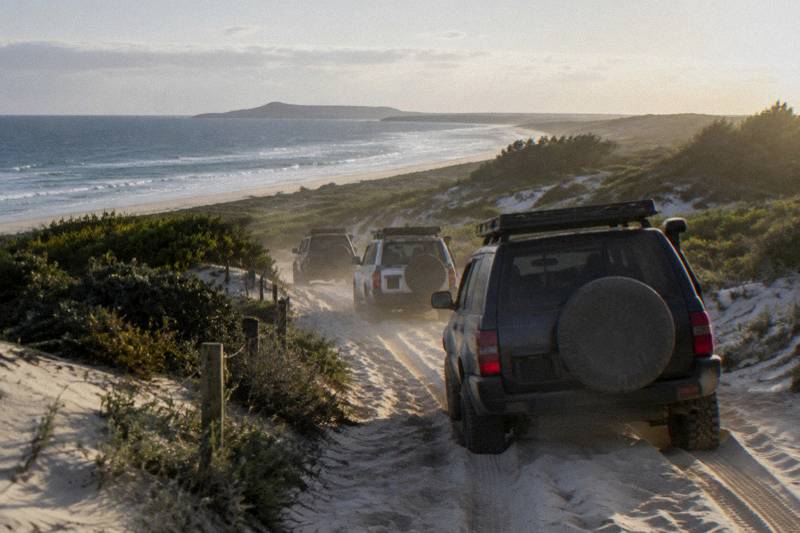
Can You Drive On The Dunes At Stockton Beach?
Self-drive dune driving at Stockton Beach is limited to the 350 hectare Recreational Vehicle Area behind Lavis Lane. Here is what the rules, permits and alternatives look like.
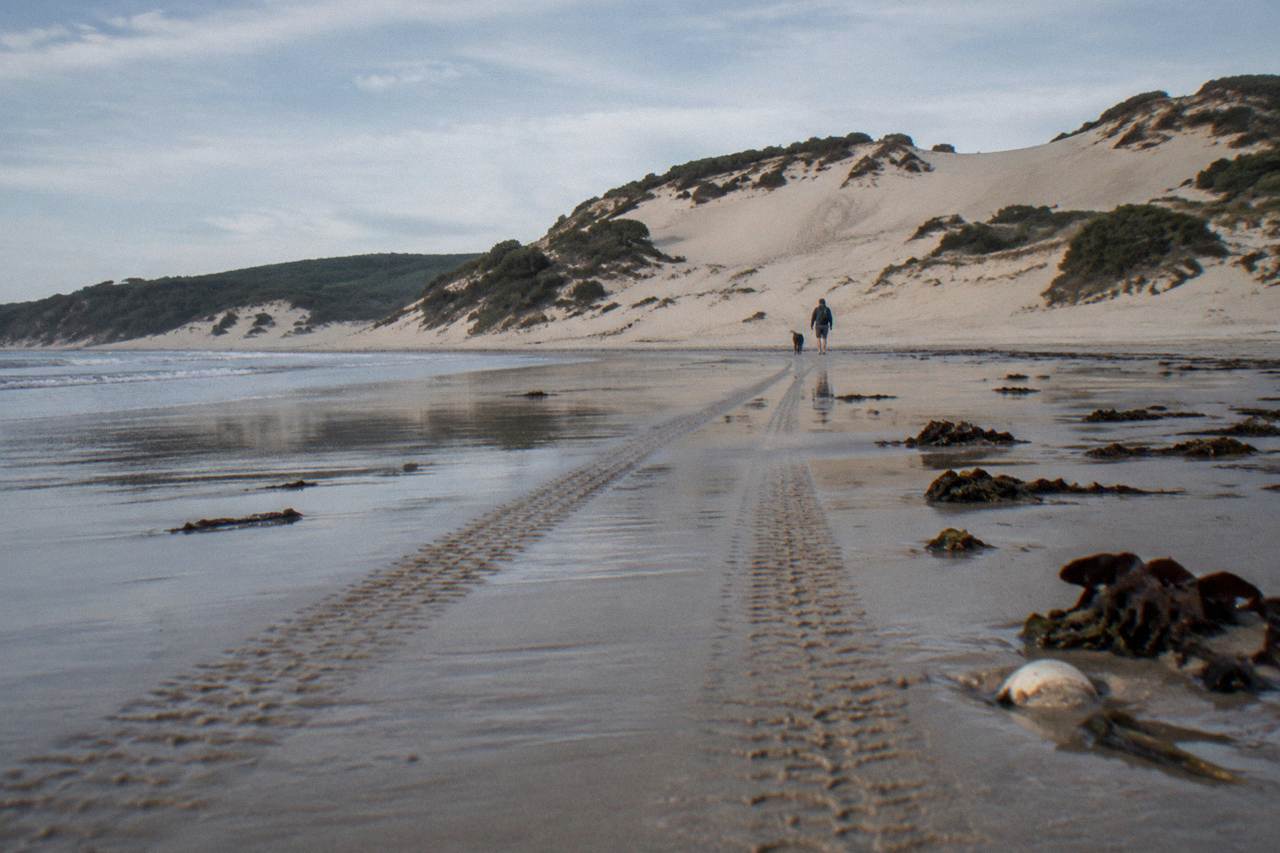
Stockton Beach, at 32 km the longest beach in New South Wales, sits at the heart of the Worimi Conservation Lands north of Port Stephens. People arrive at Birubi Point, see the sand rolling inland for kilometres, and ask the obvious question: can you take your own vehicle out there? The short answer is yes, but only in one tightly defined corner of the system, and the rules that govern the rest of the beach are strict, patrolled and tied to a permit system that moved fully online in March 2026. Get the boundaries wrong and the trip can end in a fine, a bogged vehicle, or worse.
The confusion is understandable. Postcards and tour brochures show four wheel drives perched high on dune crests, which suggests the whole sand mass is open. It is not. The Worimi Conservation Lands are owned by the local Worimi Aboriginal community and co-managed with NSW National Parks, and the driving rules exist to protect Aboriginal cultural sites, the recovering frontal dune and the people on the sand. This article walks through exactly where you can drive, what the permit costs, which entry point suits which vehicle, and when a guided 4WD tour is the smarter call. Before you plan the trip, a natural question is whether your own vehicle is even up to the task, and the rules on four wheel drives and beach permits answer that in plain terms.
Can You Drive On The Dunes At Stockton Beach?
Yes, dune driving is legal on the Stockton Bight system, but only inside the 350 hectare Recreational Vehicle Area at the southern end of the park, reached through the Lavis Lane entry at Williamtown. Everywhere else, driving is limited to the waterfront strip between Gan Gan and Lavis Lane, and crossing or riding the frontal dune is prohibited. Every vehicle needs a Worimi beach vehicle permit, which has been sold online only since 3 March 2026.
That single paragraph is the whole legal picture, and it surprises a lot of visitors. The Recreational Vehicle Area, usually shortened to the RVA, is the one place where conditionally registered quads and motorbikes, and permitted four wheel drives, can play on dunes rather than the flat beach. It sits south of Lavis Lane, well away from the busy Anna Bay end, and the official Worimi Conservation Lands page describes it as more than 350 hectares of dune driving. Everything north of it, the stretch most people see from Birubi Point, is off limits to dune riding entirely.
The reasons are not arbitrary. The lands hold middens, campsites and burials of Aboriginal cultural significance, some of them invisible under a thin skin of sand. Past illegal driving eroded the frontal dune badly enough to close sections of the park in 2012 and 2015, and rehabilitation since then has depended on keeping vehicles off the vegetated sand. NSW National Parks and the Worimi Conservation Lands Board of Management state plainly that self-driving on the dunes is restricted to the RVA to protect cultural sites and prevent another closure.
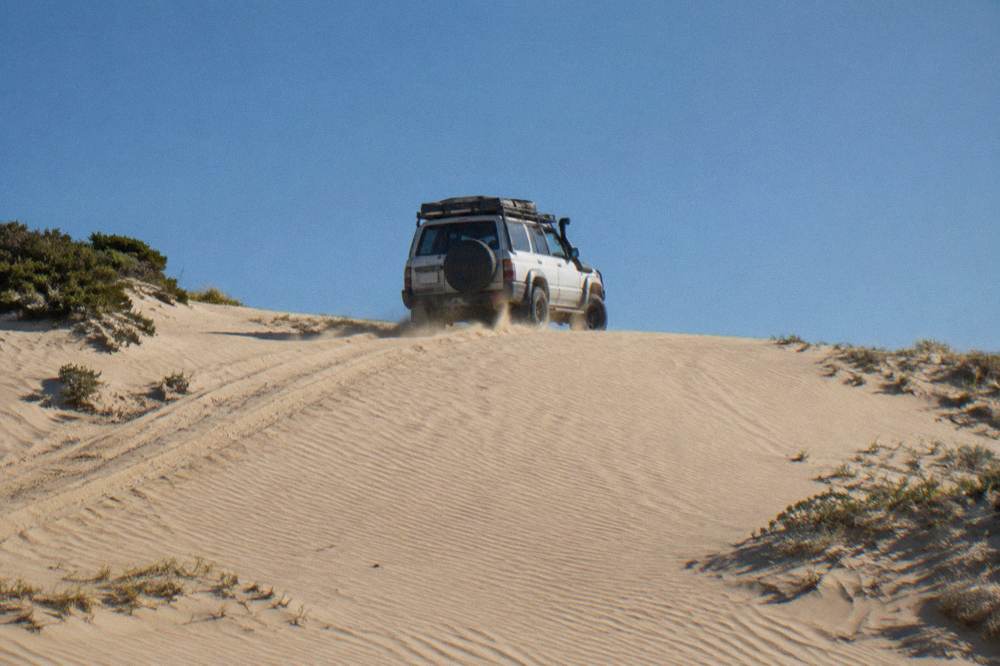
So if your mental picture is pointing your own 4WD at the big dunes behind Anna Bay and climbing, adjust it. That experience, the dune crest, the steep descent, the view from the top, belongs to licensed tour operators holding a Parks Eco Pass, or to you in the RVA if your vehicle qualifies. For most travellers, a guided tour is how they get up on the sand, and the trio below covers the three most useful ways to do it: a small-group passenger tour, a 75 minute beach and dune ride with sandboarding, and a quad bike adventure into the higher dunes.
The distinction between the beach and the dunes matters more here than almost anywhere else in Australia. On the beach itself, more than 19 km of waterfront between Gan Gan and Lavis Lane is open to permitted four wheel drives, which is one of the longest legal beach drives in the country. That is a genuine adventure in its own right and needs no dune riding at all. The dunes are a separate privilege with a separate set of rules, and conflating the two is the most common way visitors come unstuck.
Where Can You Legally Drive On The Stockton Bight Dunes?
The Recreational Vehicle Area south of Lavis Lane is the only legal dune driving ground on Stockton Bight, roughly 350 hectares of sand at the southern end of the park. Lavis Lane, at Williamtown, is the only entry point that admits conditionally registered quads and motorbikes and the only gateway to the RVA. Gan Gan at Anna Bay admits 4WDs but no recreational vehicles, and Fern Bay is a one way exit for experienced drivers.
Three entries serve the lands, and each has its own character. Gan Gan Road at Anna Bay is the entry most visitors find first, sitting a few minutes from Birubi Point, and it is the only one where dogs may travel in vehicles. It puts you on the waterfront run north, but conditionally registered recreational vehicles are not permitted through it at all. Lavis Lane at Williamtown is the workhorse entry: it admits everything, including trailers, and it is the staging area for the commercial quad bike tours that head into the higher dunes. Fern Bay, at the southern tip, is one way out to the beach and is recommended for experienced drivers only, with no trailers and no quads.
The geography explains the rules. The RVA was deliberately placed at the southern end because driving there does minimal damage to the frontal dune or the recorded cultural sites further north. The Worimi Conservation Lands driving page is explicit that the RVA is the only place dune driving is allowed, and that everywhere else vehicles must stay on the waterfront. The beach between Gan Gan and Lavis Lane, more than 19 km of it, is the legal beach run; the sand behind it is not part of the deal.
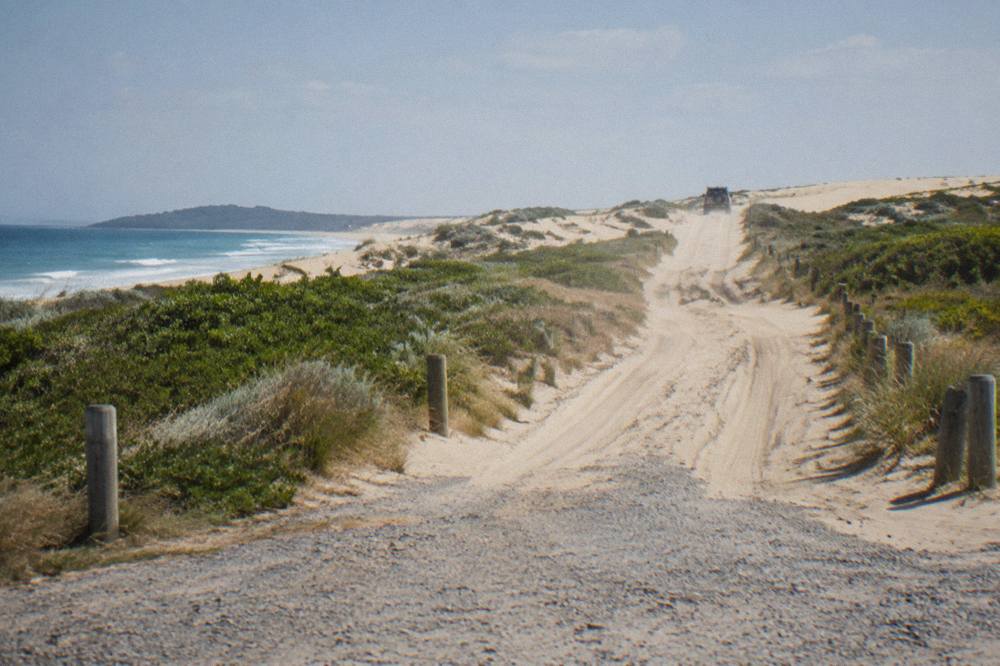
A practical way to think about it: if you enter at Gan Gan, you are buying a beach drive, flat sand, the water on one side, the dunes as scenery. If you enter at Lavis Lane with the right vehicle and registration, you can add dune driving in the RVA. If you want the tall dunes near Anna Bay, the ones in every photograph, you book a licensed tour, because no self-drive route leads to them. That is the trade, and it has held for years.
The Worimi Conservation Lands site carries the full entry and conditions detail on its beach driving page, which is the page to read before any self-drive trip. It spells out the entries, the permit types, the speed limits and the no go zones in one place, and it is the version rangers work from. Conditions can change after storms, so check it close to your travel date rather than relying on a blog summary, including this one.
Do You Need A Permit To Drive On Stockton Beach?
Yes, every four wheel drive and recreational vehicle on the Worimi Conservation Lands needs a Worimi beach vehicle permit, bought online only since 3 March 2026. A 3 day permit is A$33, an annual is A$88, an annual pensioner is A$44, and the annual RVA permit for quads and motorbikes is A$88. NSW National Park annual passes are not valid, and guided tours include park entry in the ticket.
The permit system is separate from everything else NSW National Parks sells, which trips up holders of annual state park passes. Those passes do not work on these lands, a point both the NPWS visitor page and the Worimi Conservation Lands page make explicitly, because the lands are Aboriginal owned and permit revenue is reinvested in their maintenance. There is no gate and no booth on most of the beach; compliance is checked by rangers patrolling the sand, and fines apply for driving without a valid permit or breaching conditions.
| Permit | Price | Who it covers |
|---|---|---|
| 3 day beach vehicle permit | A$33 | 4WDs and permitted vehicles, waterfront driving |
| Annual beach vehicle permit | A$88 | Frequent visitors, same conditions |
| Annual pensioner permit | A$44 | Pensioner card holders |
| Annual RVA permit | A$88 | Conditionally registered quads and motorbikes, dune area |
The March 2026 change is the biggest practical shift in years. The Worimi Conservation Lands Board of Management announced that from 3 March 2026 permits would only be available online, ending the old paper permit outlets. Prices, permit types and conditions did not change, and paper permits bought before the switch remain valid until they expire. In practice this means you buy before you arrive, on the official permit site, and carry the confirmation on your phone. Turning up at Anna Bay hoping to buy a permit over the counter no longer works.
One group can skip the permit question entirely: walkers. Entry is free for pedestrians, cyclists and horse riders, which means you can walk from the Anna Bay end onto the dunes and the beach without paying anything or holding anything. The money is only for vehicles, and the free-activity guide on this site covers what you can do on foot. If your plan is a drive, though, the permit is not optional, and buying it is a two minute job once you know which type you need.
What Are The Beach Driving Rules Between Gan Gan And Lavis Lane?
Driving on the waterfront between Gan Gan and Lavis Lane is legal with a permit, but it is beachfront only: diverting onto or behind the frontal dune is prohibited anywhere in the lands. The speed limit is 40 km/h, dropping to 20 km/h within 100 m of pedestrians or vehicles, all passengers must be seated inside the vehicle with seatbelts on, and the official advice is to avoid the beachfront within one hour either side of high tide.
The waterfront rule is the one that catches experienced beach drivers from other states. On many Australian beaches, crossing behind the frontal dune to find firmer sand is standard practice. Here it is banned outright, because the frontal dune is both a cultural protection zone and the natural barrier that shields the back dunes from storm surge. The NSW Environment and Heritage media release after a storm reopening put it plainly: between Gan Gan and Lavis Lane is beachfront driving only, and diverting onto or behind the frontal dune is not permitted.
Tide timing is the other practical constraint. The official advice is to avoid the beachfront one hour either side of high tide, when pinch points can put water against the dune face and leave no dry sand to run on. Conditions degrade quickly, and the standing guidance is to backtrack if the way ahead looks impassable rather than push through. A tide table and a plan for which end you will exit from are as important as the permit.
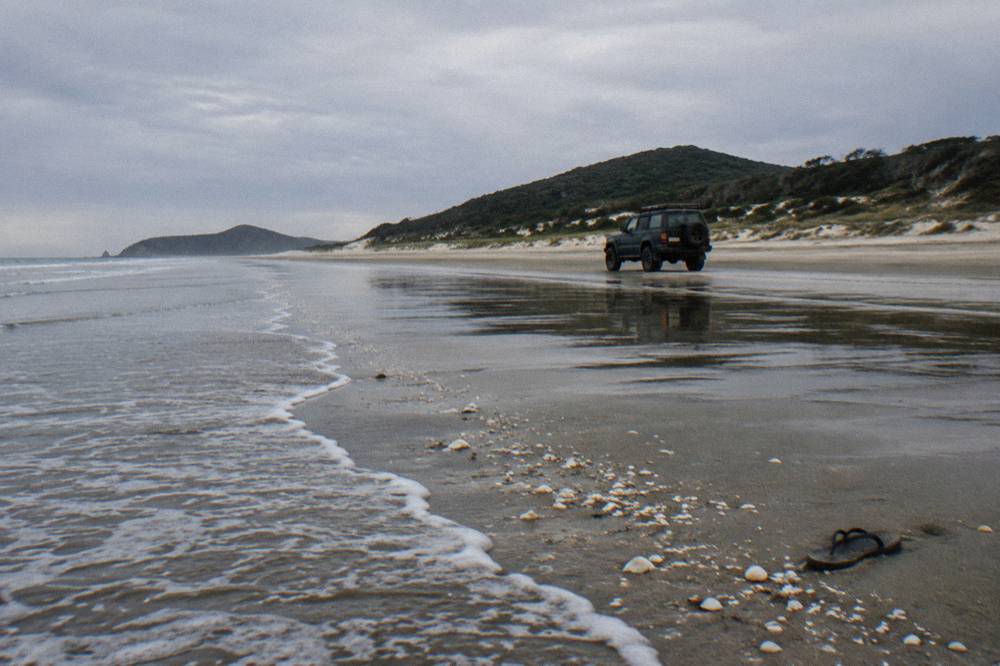
There is also one small exclusion to know about at the Anna Bay end. Vehicles are excluded from the short stretch of beach at Birubi left of the Gan Gan track, a public safety measure near the patrolled swimming area where foot traffic is heavy. That means the driving experience starts south of the crowds, which is no loss: the good kilometres are all in the long empty middle of the beach. Give way to pedestrians everywhere, keep speed down near anyone on foot, and expect rangers to be out on the sand, especially on weekends and school holidays.
The safety backdrop matters too. The Worimi beach is unpatrolled and NPWS currently lists it as unsafe for swimming due to hazardous surf, with the alert running to 28 April 2027, so a beach drive here is a drive, not a swim stop. If you want water time, Birubi Beach is the patrolled option nearby, and the swimming question is covered in full in our piece on swimming at Birubi Beach. Keep the visit to the sand and the driving and the day behaves itself.
Can You Drive Your Own 4WD Without A Tour?
Yes, if it is a proper 4WD with a current beach vehicle permit, low range gearing and tyres you can deflate, you can drive the Stockton Bight waterfront yourself and the RVA dunes if you meet the entry rules. But the tall dunes behind Anna Bay are closed to self-drive, and many visitors find a guided tour delivers the dune experience they actually came for, without the recovery risk.
Self-drive suits a specific kind of traveller: someone with beach driving experience, their own well prepared vehicle, and a healthy respect for tide tables. The preparation list is short but non negotiable. You need the online permit, a tyre pressure you can drop for sand, recovery gear, and a plan for the tide. Tyre pressure advice appears on the official signage and maps rather than as a single printed figure, so follow the on-park guidance. If you bog, the standing advice is simple: stop digging, drop pressures further, and call for recovery rather than making it worse.
For everyone else, the guided options divide neatly by what you want. The Port Stephens, Beach and Sand Dune 4WD Passenger Tour, run by 4WD Tag-Along and Passenger Tours, puts you in someone else's vehicle for a three hour small group trip of up to 14 travellers, rated 5.0 from 30 reviews, from $94.00 per person. It meets at the SPAR supermarket car park on Gan Gan Road, and it is the easiest way to feel the dunes without touching a steering wheel. One thing to know before you book: this tour is non-refundable, so lock your dates in first. You can Check availability on the operator's live listing.
There is also a middle path aimed at people who own a 4WD but not the confidence. The same operator runs a tag-along tour, from $257.96 per vehicle with the first two people included, where you drive your own vehicle in a guided convoy behind a lead vehicle that reads the sand for you. Extra passengers pay a National Parks fee of $6.50 on departure, the beach vehicle permit is not included, and like the passenger tour it is non-refundable. It is a genuinely useful format for a first Stockton Bight drive, and our guide to 4WD tours in Port Stephens compares it against the other options in detail.
The honest comparison is this: self-drive buys freedom and a long empty beach at a total cost of an A$33 permit plus your own fuel and wear, but it excludes you from the dune crests. A tour costs more per person and removes the freedom, but it puts you on the sand the brochures promised, with someone whose job is knowing where the soft patches are. Plenty of visitors do both across a weekend: a permit day for the beach, a tour for the dunes.
What About Quads And Motorbikes On The Dunes?
Conditionally registered quads and motorbikes can ride the Recreational Vehicle Area, entering only through Lavis Lane, wearing helmets, in daylight only, and holding the annual A$88 RVA permit on top of conditional registration. Gan Gan does not admit recreational vehicles at all. Riders without their own machine can book a guided quad tour with an Aboriginal owned operator instead.
The quad rules are stricter than the 4WD rules because the machines are easier to point at places they should not go. Conditional registration through Transport for NSW is the entry ticket: the vehicle needs to be street legal in the conditional sense, with the rider helmeted and riding in daylight only. The Worimi Conservation Lands page states that quads and motorbikes must hold RMS conditional registration for Stockton Bight and wear helmets, and the RVA permit sits on top of that. Lavis Lane is the only entry that takes them, which concentrates quad traffic at the southern end where the dune area sits.
If you do not own a quad, the guided route is excellent. The Worimi Sand Dune Quad Bike Adventure, run by Sand Dune Adventures, is a one hour ride from $82.57 per person, rated 4.8 from 254 reviews, with drivers 16 and over. Sand Dune Adventures is an Aboriginal owned operator that NSW National Parks lists for these lands, and the tour reaches higher dunes than any self-drive option legally can. Transfers run on Saturdays only, so on weekdays and Sundays you self-drive to the meeting point at Murrook Culture Centre. Free cancellation applies, which makes it one of the more flexible bookings on this site.
The quad format deserves a line of honesty: it is more physical than it looks in photos, and the one hour goes quickly. Riders report the guide-led, single file format on the listing, and the 4.8 rating across 254 reviews suggests the operation satisfies a wide range of people. Between the two, self-drive quad access in the RVA and the guided tour, the tour reaches the more dramatic country, and it does it with a cultural commentary the RVA cannot offer on its own.
When Should You Take A Tour Instead Of Driving Yourself?
Take a tour if you want the tall dunes behind Anna Bay, if you have no beach driving experience, if your vehicle is a 2WD or a soft roader, or if the tide and recovery logistics sound like work rather than fun. Drive yourself if you have experience, a permit and a free day, and treat the beach run as the destination rather than a means to reach dunes you cannot legally climb.
Vehicle type settles the question faster than anything else. A 2WD cannot legally or physically do this trip: the beach is soft sand, the entries are sand tracks, and the question of whether you need a four wheel drive is answered in full in our blog post on needing a 4WD for the beach. Between a capable 4WD and no 4WD sits a large population of visitors, and for them the tour decision is not a compromise, it is the only route to the experience.
Timing nudges the decision too. Spring school holidays ran 28 September to 9 October 2026 and summer holidays run 18 December 2026 to 27 January 2027, and holiday periods mean more vehicles on the beach, busier pinch points and a premium on local knowledge. An experienced guide reads the day's conditions in a way a first timer cannot. The lands may also close at short notice for poor weather or fire danger, an official point the NPWS visitor page makes, and tour operators track those closures daily; a self-driver who does not can burn a permit day on a closed gate.
For families, the mixed format often wins. The Port Stephens Birubi Beach 4WD Tour with Sandboarding, from $39.55 per person and rated 4.8 from 127 reviews, runs 75 minutes and combines a vehicle ride along the beach with sit-down sandboarding, which keeps children busy in a way a permit-and-drive day does not. It is the tour most often booked by people who considered self-drive and decided the group format suited their crew better. Check the live listing for session times before you plan the day around it.
Whichever way you go, the decision framework on Port Stephens Sand Dune Tours exists for exactly this fork in the road, and the price comparison guide breaks down what each listing includes so you are not comparing a dune tour against a beach cruise by accident. The one outcome to avoid is arriving at Gan Gan with a passenger car, no permit and a plan to wing it, because none of those three things ends well.
What Happens If Conditions Turn Bad?
The Worimi Conservation Lands are always open in principle but may close at times for poor weather or fire danger, and NPWS announces closures through its alerts page. On the beach itself, high tide creates pinch points, storms reshape the sand, and the standing advice is to backtrack rather than push through. Rangers patrol, fines apply for permit and condition breaches, and swimming is not advised anywhere on this beach.
Closures are not theoretical here. Past storm damage closed beach driving sections in 2012 and 2015, and the rehabilitation work that followed is part of why the frontal dune rules are now so strict. The official alerts page, maintained by NSW National Parks, is the source of truth: it currently carries the swimming safety alert running to 28 April 2027 and an H5 bird flu notice about avoiding contact with sick or dead wild birds, alongside any weather closures that appear. Checking it the morning of your drive is a two minute habit that saves a wasted trip.
On the sand, the failure mode is usually the tide, not the weather. A high tide against a reshaped beach can leave no dry passage, and vehicles that push on end up against the dune face with water at the doors. The official guidance is to avoid the beachfront within one hour either side of high tide, and to backtrack the moment the way ahead looks marginal. Recovery on soft sand is slow, expensive if you need a commercial operator, and entirely avoidable with a tide table. The National Parks visitor information for the lands, on the official Worimi National Park visitor page, carries the current access notes.
The last word goes to the simplest rule on the lands: if in doubt, stay on the waterfront, stay off the dune, and let the tours do the climbing. The beach drive alone, 19 km of it, is one of the great coastal runs in the country, and it does not need a single dune crossing to be worth the permit.
Common Questions About Driving On The Stockton Dunes
Can You Drive on the Dunes at Stockton Beach?
Yes, but only inside the 350 hectare Recreational Vehicle Area at the southern end of the Worimi Conservation Lands, entered through Lavis Lane. Everywhere else, driving is limited to the waterfront strip between Gan Gan and Lavis Lane, and the frontal dune is off limits to all vehicles.
Do you need a permit to drive on Stockton Beach?
Yes. Every 4WD and recreational vehicle needs a Worimi beach vehicle permit: A$33 for three days, A$88 annual, A$44 annual pensioner, and A$88 for the annual RVA permit for quads and motorbikes. Permits have been sold online only since 3 March 2026, and NSW National Park annual passes are not valid.
Which entry point should you use for dune driving?
Lavis Lane at Williamtown is the only entry open to conditionally registered quads and motorbikes and the only gateway to the Recreational Vehicle Area. Gan Gan at Anna Bay admits 4WDs onto the beach but no recreational vehicles, and Fern Bay is a one way exit recommended for experienced drivers.
Can you drive over the frontal dune to find firmer sand?
No. Driving on or behind the frontal dune is prohibited anywhere in the lands, and fines apply. The rule protects Aboriginal cultural sites and the dune itself, which was badly eroded by past illegal driving and helped force park closures in 2012 and 2015.
Is there a way to ride the tall dunes near Anna Bay?
Not in your own vehicle. The high dunes behind Anna Bay are reached only by licensed tour operators holding a Parks Eco Pass, including 4WD passenger tours, tag-along convoys and quad bike tours with Aboriginal owned operators.
Is swimming allowed while you are out on the beach?
It is not advised. The beach within the Worimi Conservation Lands is unpatrolled, and an NPWS safety alert lists it as unsafe for swimming due to hazardous surf, applying from 23 September 2026 to 28 April 2027. The nearest patrolled option is Birubi Beach at Anna Bay.