Can You Swim At Birubi Beach?
Birubi Beach is the patrolled swimming option at Anna Bay, while the Worimi Conservation Lands beach stays unpatrolled. Here is what the flags, the alerts and the seasons mean for your visit.
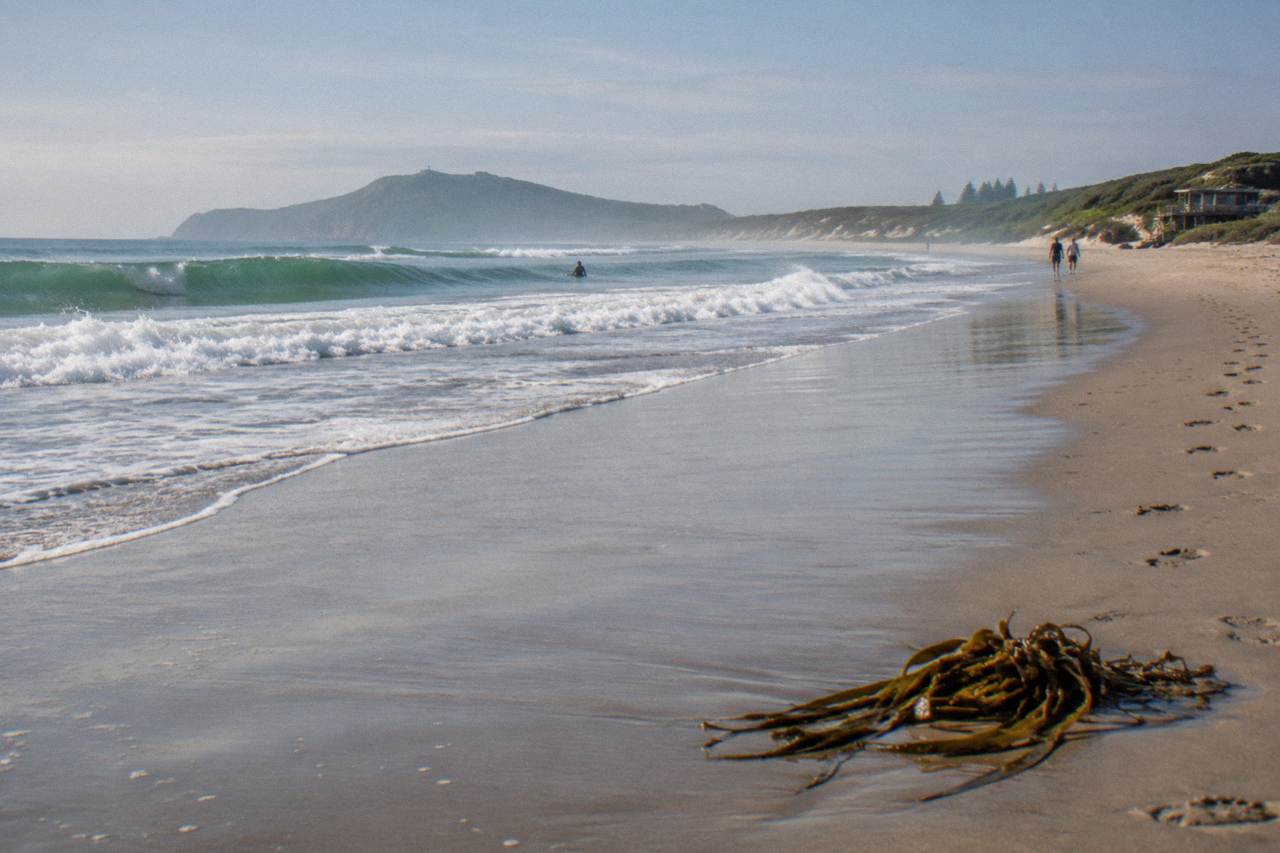
Birubi Beach is the one stretch of the Anna Bay coastline where swimming sits inside a patrol area, and that single fact separates it from the vast sand of the Worimi Conservation Lands immediately to the south. The Port Stephens region draws visitors for its sheltered bay, its dolphins and the Stockton Bight dunes, but the ocean side behaves very differently from the bay side. Rip currents, shifting sandbanks and surf that changes with every swell all shape this coast, and the authorities who manage it are blunt about where swimming is and is not advised.
Can You Swim At Birubi Beach?
Yes, you can swim at Birubi Beach, and it is the patrolled option for this part of Port Stephens: volunteer and lifeguard patrols run through the warmer months, generally September to April, and the safe rule is to swim between the red and yellow flags when they are up. The neighbouring Worimi Conservation Lands beach is a different matter entirely. It is unpatrolled, and an official safety alert advises against swimming there from 23 September 2026 to 28 April 2027.
That distinction is the whole story of swimming near the Stockton Bight dunes. Birubi Beach sits at the northern end of the bight, in front of Birubi Point, where the surf club and its patrol infrastructure stand. The Worimi beach, the 19 km plus of waterfront behind the dunes that people reach by 4WD or on foot from the Gan Gan track, has no patrol, no flags and no rescue service. The NSW National Parks alert page for Worimi National Park says it plainly: the beach within the park is unpatrolled and swimming is not advised.
So the practical answer for a visitor planning a day at the dunes is a two-part plan. Swim at Birubi when the flags are up, and treat the dunes beach as a place for walking, photography, sandboarding and 4WD touring rather than for getting in the water. The Birubi Point Surf Life Saving Club reported its "Flags Up" day for the 2026/27 season on Saturday 26 September 2026, which fits the usual spring start of patrols, though the club and the lifeguard service both ask visitors to check the flags on the day rather than assume.
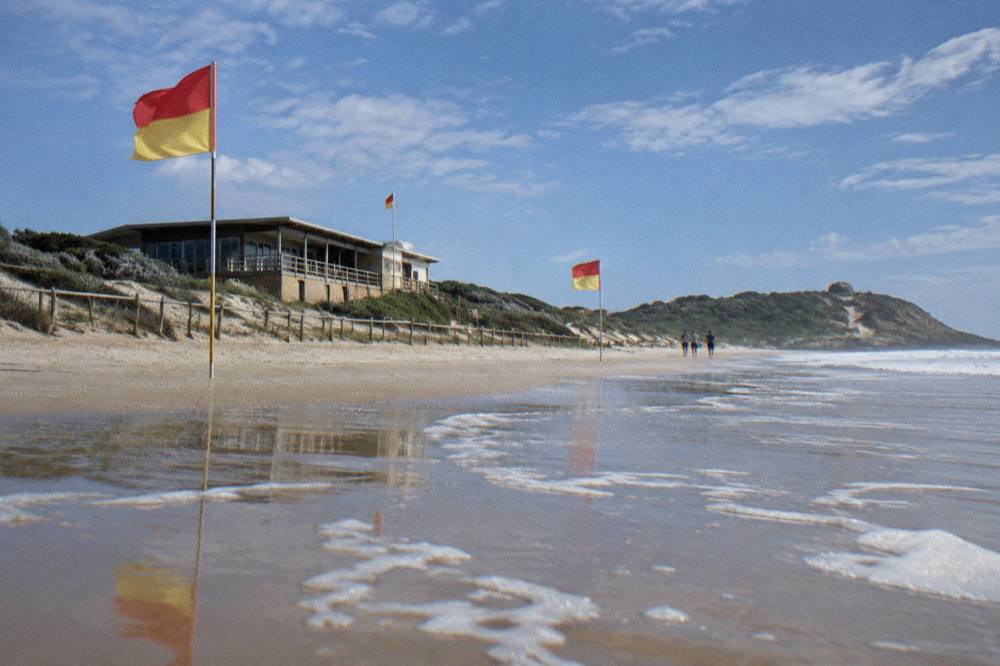
For travellers whose day is built around the dunes, this is worth building the itinerary around. A morning sandboarding session at Anna Bay, an afternoon swim between the Birubi flags, and a sunset walk at Birubi Point covers the best of the coast without ever stepping into unpatrolled water. The Birubi Point and Birubi Beach guide breaks down the car parks, the walking tracks and the viewpoint in detail.
If the dune session is the priority, these are the three listings most visitors compare for a Birubi-based day:
Is The Water Safe At Birubi Beach?
Inside the flags, yes: Birubi is a patrolled surf beach with volunteer surf lifesaving patrols through the warmer months, and the club's 2026/27 season began on 26 September 2026. Outside the flags, or on a day with no patrol, it carries the same hazards as any open-ocean beach in New South Wales: rips, shifting banks and unguarded surf. The safe habit is simple, swim between the flags, and if no flags are up, stay out.
The patrol season matters because Birubi is not a year-round, every-hour swimming beach. Patrols historically run from September to April, roughly 9am to 4pm daily, with extended hours in peak summer, though exact times change season to season and the club's own notices are the authority on the day. A winter visit, or an early morning one, means the beach is unpatrolled at that moment even though the sand looks identical. The ocean does not post a sign when the lifeguards go home.
The beach itself is a genuine surf beach, open to swells arriving from the Tasman Sea. That is what makes it popular with board riders and what makes rips a permanent feature. Sandbanks reshape after every decent swell, so the rip that ran next to the flags last month may have moved. This is the standard, honest condition of every patrolled surf beach in Australia, and it is exactly why the flags exist and why they are repositioned rather than planted permanently. Check the flags, check with the patrol, and swim where they say.
It also helps to know what sits next door. The small stretch of beach at Birubi to the left of the Gan Gan track is closed to vehicles precisely because foot traffic is heavy near the surf club, and that closure is a safety measure for swimmers and walkers. South of the track, the vehicle beach begins, and from that line the patrol zone ends. A family can walk from a patrolled swim to an unpatrolled 4WD highway in ten minutes without noticing any boundary except the flags disappearing behind them. That transition is where the swimming advice changes completely.
For a day where the surf is up and swimming is off the table, a dune tour fills the afternoon without depending on water conditions at all.
The cheapest tour listed here is the Sand Dune Safaris unlimited sandboarding session, from $27.76 USD per person, rated 4.7 from 212 reviews, and it runs with a 4WD transfer to the boarding slopes, boards and instruction included. Children 3 and under go free, which makes it a practical swap for a family whose beach plans the surf has cancelled. Check availability if the forecast looks mixed, because a land-based session holds up in conditions that close the water.
Why The Worimi Conservation Lands Beach Is Not For Swimming
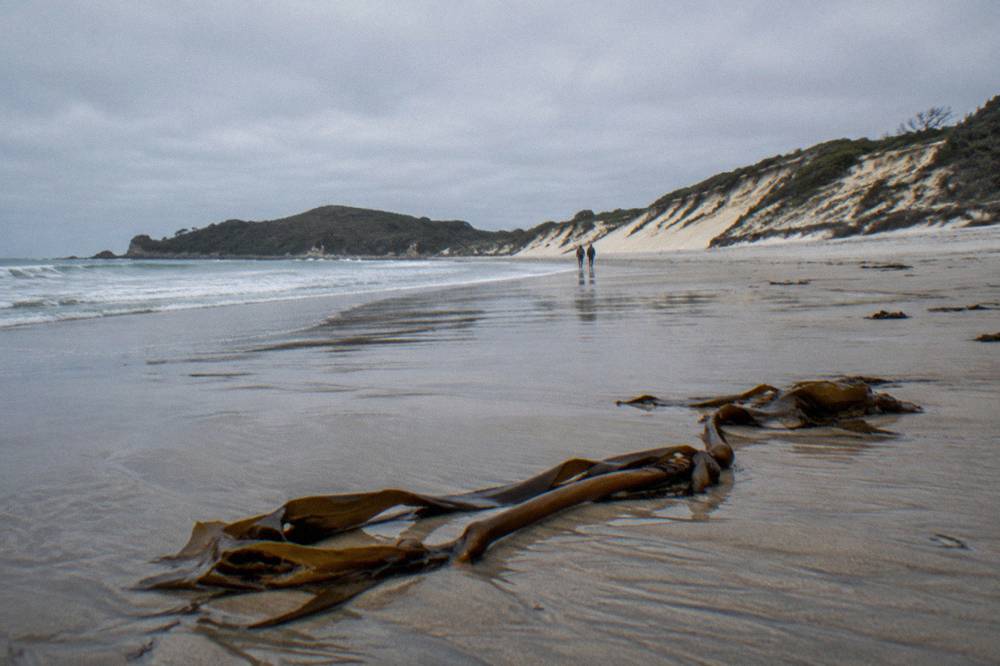
The Worimi beach, the long waterfront behind the Stockton Bight dunes, is unpatrolled and swimming is not advised: the NSW National Parks safety alert for hazardous surf runs from 23 September 2026 to 28 April 2027, and the standing advice on the official pages is that the beach within the park is not suitable for swimming due to hazardous surf conditions. There are no flags, no rosters and no rescue service on that stretch.
The alert is worth reading carefully because it names the hazard, not just a generic warning. Hazardous surf means waves, rips and currents strong enough that the parks service does not want people in the water, and the alert window spans the entire warm season, which is exactly when most visitors arrive. This is not a short-lived closure notice after a storm. It is the parks service telling swimmers, for the whole patrol-adjacent period, that this particular beach is not their beach.
There are structural reasons the Worimi waterfront behaves this way. It is a 19 km plus open stretch with no headland shelter at the southern end, fronted by the largest moving coastal sand dunes in the southern hemisphere, as NSW National Parks describes the Stockton system. The beach profile changes constantly as sand moves, and there are no rock pools, no still-water corners and no patrolled swimming area anywhere along it. A swimmer who gets into trouble is a long way from help, and the nearest patrolled water is back at Birubi.
The same parks service has also issued an H5 bird flu alert for the Worimi area, applying from about 29 September 2026, asking visitors to avoid contact with sick or dead wild birds and to report sightings. That alert does not close the lands and does not concern the water itself, but it is one more reason the official guidance for this coast leans toward staying out of the water and keeping to the sand, the tracks and the tours.
Walkers enter the Worimi Conservation Lands free of charge, and walking the dunes and the beach is genuinely encouraged. The question of what it costs to access the lands, on foot or by vehicle, is covered in full in the is Stockton Sand Dunes free article, including the online-only beach vehicle permit system that replaced paper permits on 3 March 2026.
Here is the side-by-side picture of the two beaches:
| Birubi Beach | Worimi Conservation Lands Beach | |
|---|---|---|
| Patrol status | Patrolled in warmer months, flags when patrol is on | Unpatrolled, no flags at any time |
| Swimming advice | Swim between the red and yellow flags | Not advised, hazardous surf alert 23 Sep 2026 to 28 Apr 2027 |
| Vehicle access | Closed to vehicles near the surf club stretch | 4WD with a beach vehicle permit, waterfront driving only |
| Walking access | Free, car parks at Birubi Point | Free for walkers, cyclists and horse riders |
| Nearest facilities | Surf club, car parks, Anna Bay shops minutes away | No toilets, water or bins on the lands |
What The Current Safety Alerts Actually Say
Two safety alerts currently apply to the Worimi Conservation Lands: a beach unsafe for swimming alert, in effect from 23 September 2026 to 28 April 2027, covering hazardous surf on the unpatrolled park beach, and an H5 bird flu alert from about 29 September 2026 asking visitors to avoid contact with sick or dead wild birds. Neither closes the park, and the lands remain open but may close at times for poor weather or fire danger.
Reading alerts correctly is a skill worth having on this coast. The swimming alert applies to the beach within the park, the long Worimi waterfront, and it does not transfer to Birubi, which has its own patrol system. The bird flu alert is about wildlife contact, not about access. And the standing line on every official Worimi page, that the lands are always open but may close for poor weather or fire danger, is the umbrella under which everything else sits. A visitor checking the alerts page before a trip is doing exactly what the parks service asks. More of these guides are collected on Port Stephens Sand Dune Tours.
The other habit worth adopting is checking the source rather than a summary. The alerts live on the NSW National Parks local alerts page for Worimi National Park, which is refreshed by the parks service itself, and the patrol status at Birubi lives with the surf club and the lifeguard service. Between those two sources, a visitor can answer both questions that matter on any given morning: is the park open, and are the flags up.
One more thing the alerts cannot tell you: the sand. On hot days the dune slopes get far hotter than the beach sand at the waterline, and the practical consequence is that a no-swim day in summer is also a day to plan footwear and shade carefully. The operator pages for the sandboarding tours advise bare feet on the boards for exactly this reason, and closed shoes for the walk back to the car.
When Do Patrols Run At Birubi Beach?
Patrols at Birubi Beach run through the warmer months, historically September to April, with the Birubi Point club reporting its 2026/27 Flags Up day on Saturday 26 September 2026. Daily patrol hours have generally sat around 9am to 4pm, longer in peak summer, but the times shift season to season, so the working rule is to check the flags on the day and swim only when they are up and in view.
The September to April window aligns neatly with the seasons that bring most visitors. NSW spring school holidays ran 28 September to 9 October 2026, and the summer holidays run from 18 December 2026 to 27 January 2027, and both fall inside the patrol season. That is by design: the patrol calendar follows the crowd calendar, and the crowd calendar follows the weather. Mean maximum temperatures at nearby Williamtown, from the Bureau of Meteorology's long record, run from 28.3 degrees in January down to 17.2 in July, and the water follows a similar shape, which is why winter swimmers are rare and winter patrols are not offered.
Shoulder-season visitors get a good deal from this pattern. October and November, and March and April, combine patrols that are still running with crowds that have thinned, and mean rainfall in spring is actually lower than in autumn, with September averaging 60.1 mm against March's 127.2 mm at Williamtown. A spring morning can deliver a patrolled swim and a dune session in the same day without the summer peak-hour queues at the Anna Bay car parks.
The honest caveat is that a patrol season is a schedule, not a guarantee. Surf lifesaving is volunteer-based, conditions can see flags moved or lowered mid-session, and a beach that was patrolled yesterday may fly no flags today if the surf is beyond the safe envelope. The flag itself is the only real-time authority. The best time to go to the sand dunes article covers the seasonal trade-offs for the dune side of the day in more depth.
What To Do Instead When The Flags Are Down
When swimming is off the table, the Anna Bay coast still runs a full day: unlimited sandboarding from $27.76 USD per person, a 75 minute Birubi Beach 4WD tour with sandboarding from $39.55 USD, a quad bike adventure on the Worimi dunes, and free walking access to Birubi Point and the dune viewpoints. None of it depends on the surf, and most of it sits within minutes of the car parks at the end of James Paterson Street.
The sandboarding listings are the natural first swap. Sand Dune Safaris runs unlimited sandboarding with a 4WD dune transfer from $27.76 USD per person, rated 4.7 from 212 reviews, with sit-down, beginner stand-up and pro stand-up boards, which the operator says makes it the only company in Port Stephens offering both riding styles. 4WD Tours R Us runs its own unlimited session from $29.84 USD per person, rated 4.5 from 574 reviews, the most reviewed listing on this site, meeting at 80 Gan Gan Road. Both include boards, transfer and instruction, and both are licensed Worimi operators in the words of the NSW National Parks listing.
Port Stephens 4WD Tours offers a third format: a 75 minute Birubi Beach 4WD tour with sandboarding from $39.55 USD per person, rated 4.8 from 127 reviews, which combines a drive along the beach with sit-down boarding. Its unlimited sandboarding listing, from $31.80 USD, is sit-down only, and the operator caps its last 3:30pm session near an hour, so an earlier arrival buys more time on the hill. These are the practical differences that decide between three listings that otherwise look similar on a search page.
Beyond the boards, the quad bike option puts a different engine under the day. The Sand Dune Adventures quad bike adventure runs from $82.57 USD per person for a one hour ride, rated 4.8 from 254 reviews, with drivers 16 and over, an Aboriginal-owned operator, and transfers on Saturdays only. The quad biking in Port Stephens guide covers the age rules, the Lavis Lane entry and what conditional registration means for private riders.
And then there is the option that costs nothing. Walkers enter the Worimi Conservation Lands free, Birubi Point is one of the great free viewpoints on the east coast, and the sand itself, from the patrolled stretch to the dune slip faces, is open to anyone on foot. A no-swim day at Birubi is not a ruined day; it is a day the coast hands back to the sand.
How To Plan A Birubi Point Day Around The Water
A reliable Birubi day runs in this order: check the NPWS alerts page for the Worimi lands, check the flags at Birubi, book the dune session for the morning before the sand heats up, swim between the flags in the patrol window if they are up, and finish at Birubi Point for the view. Parking is at Birubi Point and Robinson Reserve, the sealed roads suit 2WD vehicles, and the whole plan works without ever entering unpatrolled water.
The morning-first pattern is not arbitrary. The sandboarding operators run morning sessions that suit cooler sand, the 4WD transfers take roughly ten minutes each way, and most visitors spend one to two hours on the hill, which lands the swim inside the patrol window rather than after it. The Sand Dune Safaris listing meets at the Anna Bay Lower Car Park ticket booth, the 4WD Tours R Us session meets at 80 Gan Gan Road, and the Birubi Beach 4WD tour meets at the operator's red 4WD and reception trailer, so all three cluster within a short drive of the Birubi flags.
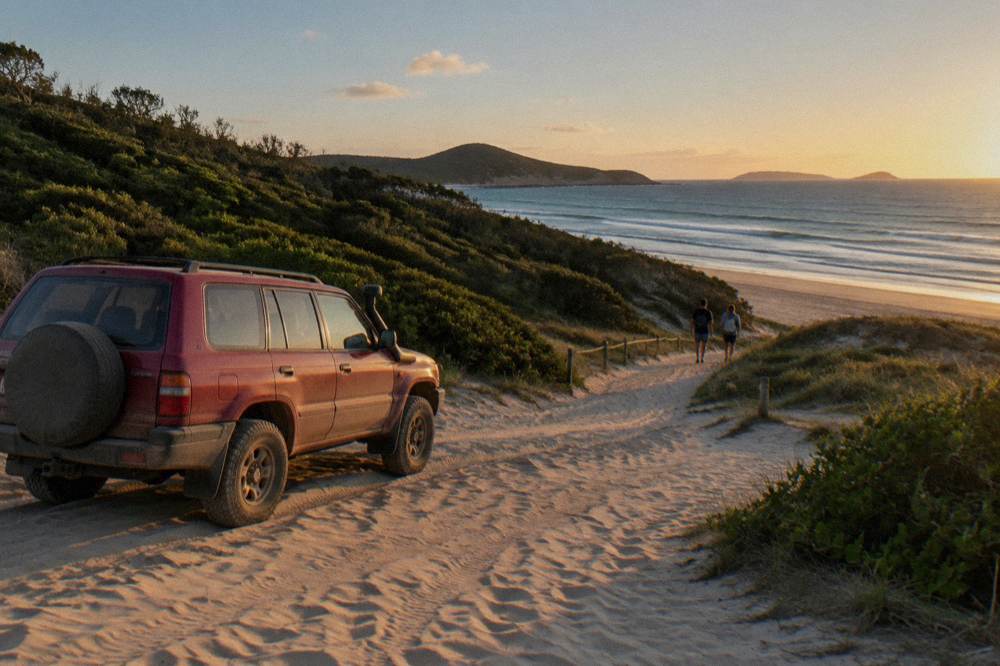
Here is how the main options stack up for a single-day plan:
| Activity | From price | Time needed | Water dependency |
|---|---|---|---|
| Sand Dune Safaris unlimited sandboarding | $27.76 USD per person | 1 to 2 hours at the dunes | None |
| 4WD Tours R Us unlimited sandboarding | $29.84 USD per person | 1 to 1.5 hours typical | None |
| Port Stephens 4WD Tours Birubi Beach 4WD and sandboarding | $39.55 USD per person | 75 minutes | None |
| Sand Dune Adventures quad bike adventure | $82.57 USD per person | 1 hour | None |
| Patrolled swim at Birubi | Free | Any length inside patrol hours | Depends on flags and surf |
Two practical warnings complete the plan. First, the tide and the driving: anyone taking their own 4WD onto the Worimi beach needs the online permit, bought in advance since 3 March 2026, and the official advice is to avoid the beachfront within one hour either side of high tide. Second, the swimming alert: the Worimi waterfront is out for the season regardless of how calm it looks, and Birubi between the flags is the only swim in the plan. A visitor who respects both lines gets the whole coast without a rescue story.
For the broader region picture, including where Nelson Bay, Anna Bay and the bay beaches fit into a swimming trip, the things to do in Port Stephens guide maps the alternatives, from the sheltered bay side to the Tomaree Head Summit Walk, about 2.2 km return and steep, with no entry fee stated.
Before the questions, one last look at the three listings that anchor most Birubi-based days:
Common Questions About Swimming At Birubi Beach
Can You Swim at Birubi Beach?
Yes. Birubi Beach is the patrolled swimming option on this stretch of coast, with volunteer patrols through the warmer months, and the safe practice is to swim between the red and yellow flags when they are up. The neighbouring Worimi Conservation Lands beach is unpatrolled and swimming is not advised there, with a hazardous surf alert running from 23 September 2026 to 28 April 2027.
Is Birubi Beach patrolled all year?
No. Patrols run through the warmer months, historically September to April, with the Birubi Point club reporting Flags Up for the 2026/27 season on Saturday 26 September 2026. Outside the patrol season, or outside patrol hours, the beach is unpatrolled and swimming is not advisable.
Why can't you swim at the Stockton Bight dunes beach?
The Worimi Conservation Lands beach is unpatrolled, has no flags or rescue service, and NSW National Parks advises against swimming there due to hazardous surf. A safety alert covering the warm season, from 23 September 2026 to 28 April 2027, restates the advice. Birubi Beach, at the northern end of the bight, is the patrolled alternative.
What does the swimming alert mean for a dune tour?
Nothing changes for the tours: sandboarding, 4WD tours and quad biking all run on the sand and do not depend on the water. The alert only means visitors should not swim off the Worimi beach before or after their session. A swim, if wanted, belongs at Birubi between the flags.
What else can you do at Birubi if swimming is off?
Plenty. Unlimited sandboarding sessions run from $27.76 USD per person, the Birubi Beach 4WD tour with sandboarding runs from $39.55 USD, and walking into the Worimi lands and to Birubi Point is free. Oakfield Ranch also runs walk-in camel day rides from the Birubi Point lower car park, though no bookings are taken for those.
Do you need a permit to walk to the Worimi beach from Birubi?
No. Entry is free for walkers, cyclists and horse riders on the Worimi Conservation Lands. A beach vehicle permit is only needed for driving, and since 3 March 2026 those permits are sold online only, at A$33 for three days or A$88 for an annual permit.