Is It Painful For Camels To Be Ridden?
A balanced look at camel ride ethics at Port Stephens: what the operator's own rules say about weight limits and ride length, what science says about camels carrying loads, and animal-free dune alternatives at Stockton Bight.
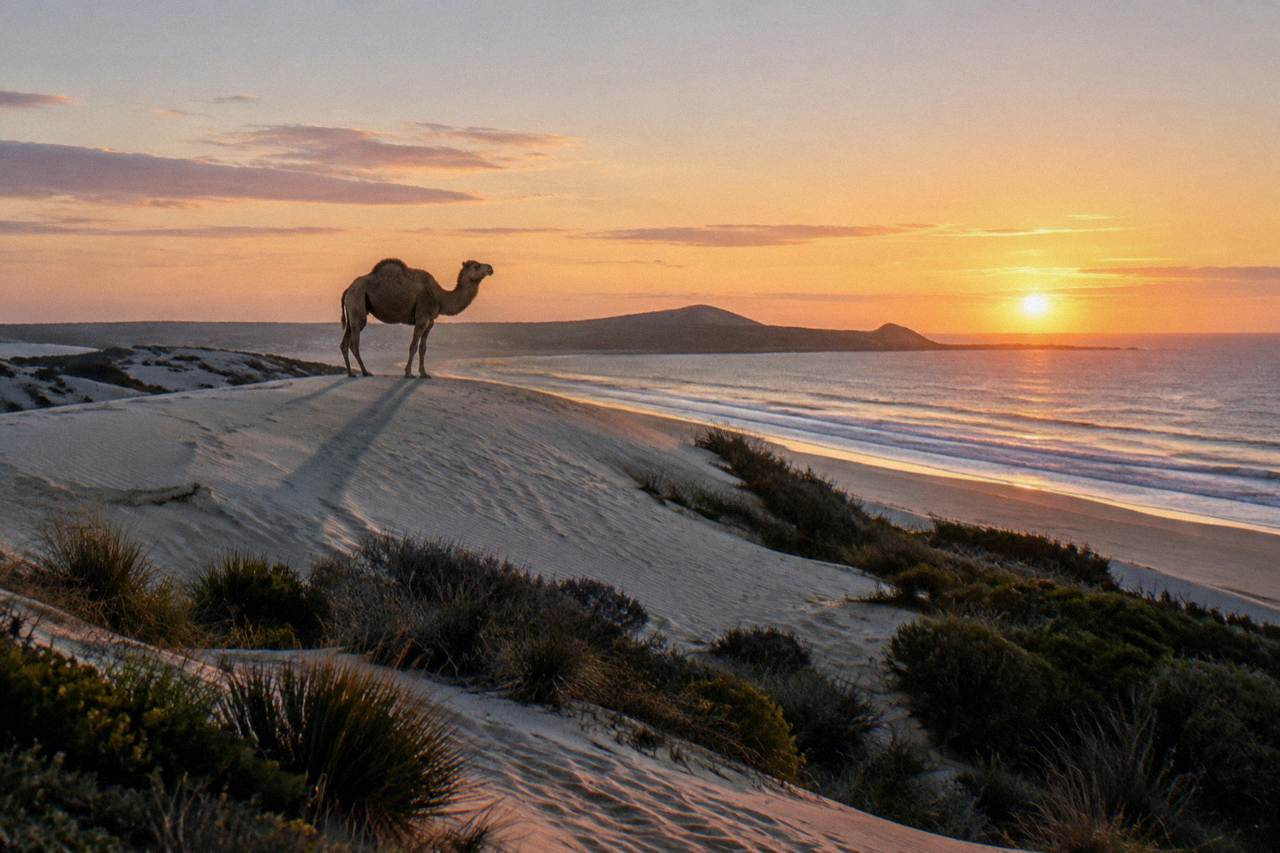
Camel rides along the Stockton Bight dunes at Birubi Point are one of the most photographed experiences in Port Stephens: a line of camels walking the sand between the Anna Bay car park and the surf. Yet the question that brings many readers here is an uncomfortable one, and it deserves an honest answer rather than a marketing one. Oakfield Ranch, the local operator, publishes no dated animal-welfare statement, so this article makes no claim about its welfare record in either direction. What it can do is lay out the operator's own published rules, the general evidence about camels carrying riders, the questions worth asking at the fence, and the dune tours at Stockton Bight that involve no animals at all. If you're planning the rest of your trip around the dunes, the guide to Port Stephens accommodation and dune access covers where to base yourself.
Is It Painful For Camels To Be Ridden?
There is no single answer, and anyone who gives you one without evidence is guessing. Camels are domesticated working animals with bodies built to carry loads, and a short ride with a light rider is a very different thing from a heavy rider on a long route in heat. The honest position is that pain depends on load, fit, duration, handling and condition, which is exactly why weight limits and ride length matter more than reassurance.
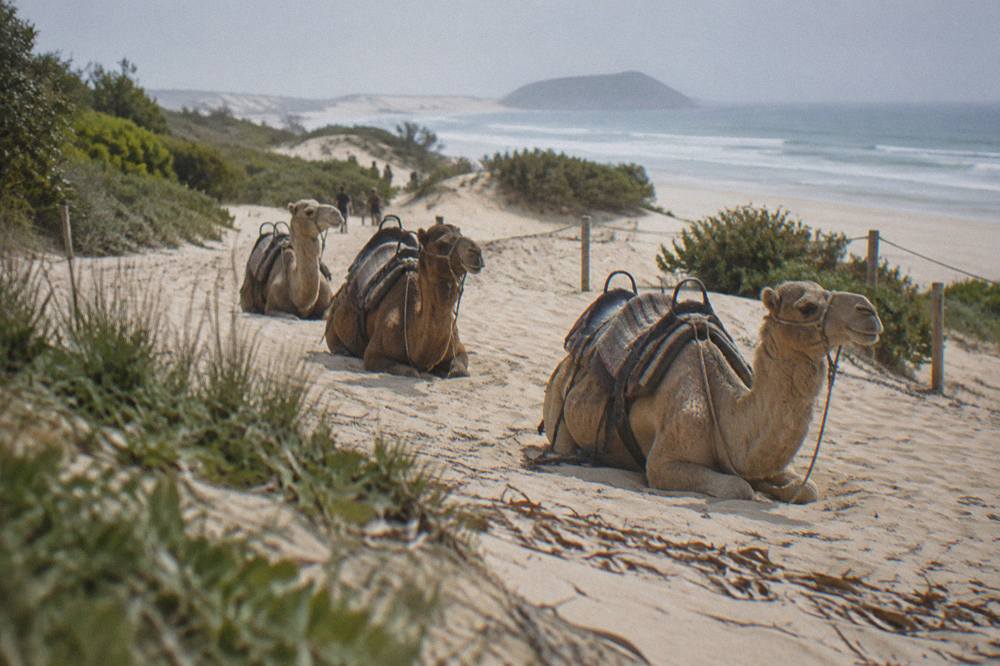
The starting point is biology. Camels were domesticated thousands of years ago, largely as pack and transport animals, and their broad backs, sturdy legs and padded feet reflect that history. A healthy camel carrying a balanced load within its capacity is doing something close to what the species was bred for. That does not automatically make every tourist ride comfortable for the animal: an uneven saddle, a rider who grips or kicks badly, an overloaded animal, or repeated trips in hot sand without rest can all turn a routine walk into a hard afternoon of work.
The scientific literature on camel welfare is thin compared with the literature on horses, and much of it concerns working camels in North Africa and the Middle East rather than beach tourism in Australia. What it broadly agrees on is that lameness, saddle sores and heat stress are the main welfare risks, and that all three are preventable with sensible load limits, good tack maintenance, adequate rest and water. That is why this article focuses on the operator's rules rather than on sentiment: the rules are the observable part of welfare.
For Port Stephens specifically, the relevant operator is Oakfield Ranch Camel Rides, which runs day rides from the Birubi Point public lower car park on James Paterson Street in Anna Bay. NSW National Parks lists the company as a licensed commercial tour operator holding a Parks Eco Pass, conducting rides in the Worimi Conservation Lands, which is worth knowing because it means the rides operate inside a protected area under a permit, not on a free-for-all beach. The operator's own FAQ page is the source for the limits set out below, and it is the page to re-read before any visit because operators can change their rules.
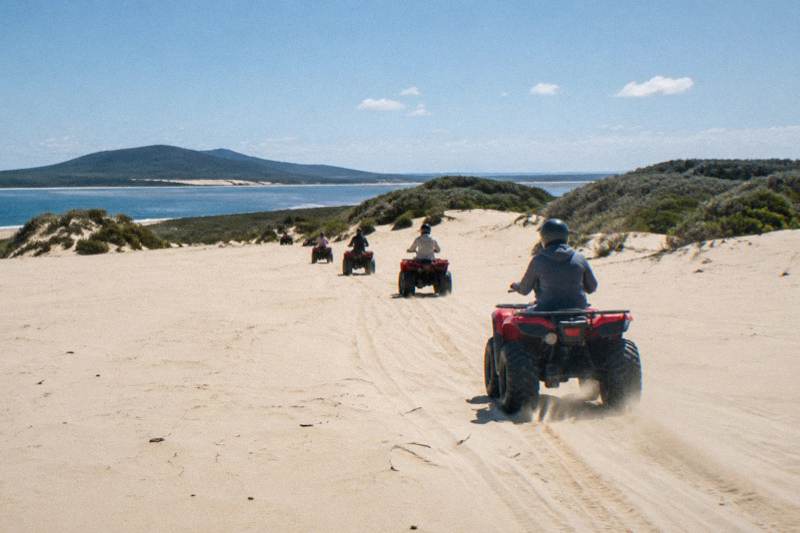
If the ethics question leaves you uneasy, it is worth saying plainly that the dunes themselves need no animals to be spectacular. Sandboarding, 4WD tours and quad biking all cover the same Stockton Bight sands, and the full comparison lives in the camel rides guide for Port Stephens, which sets out prices and formats side by side.
What The Operator's Own Rules Say About Weight, Riders And Ride Length?
Oakfield's published rules cap each camel at 130 kg, put two riders per camel on 20 minute day rides and one rider per camel on 60 minute sunset rides, and keep day rides short with departures roughly every half hour from 10:00am to a last departure at 3:30pm. Those numbers are the operator's stated limits, and they are the closest thing to a public welfare standard the ride has.
The 130 kg weight limit is the most consequential rule. A limit of that kind exists to keep the load within what the animal can carry comfortably, and it is the kind of measure welfare researchers look for when assessing working-animal operations. The two-riders-per-camel arrangement on day rides splits that load across the saddle, typically pairing an adult with a child, while the longer sunset rides move to one rider per camel, which is consistent with a longer route needing a lighter relative load.
Ride length matters as much as weight. The day rides run about 20 minutes, walk-in only, with no bookings taken, departing roughly every half hour between 10:00am and 3:30pm. Short, frequent rides with gaps between departures are structurally different from continuous trekking: they give the animal a rest between trips and keep the work session bounded. The sunset rides are 60 minutes, held on Fridays and Saturdays only, with online booking essential, riders aged 10 and up, and the operator states they are weather dependent. The shorter day format is also the cheaper one, as the camel ride pricing breakdown explains in full.
| Operator rule | Day ride | Sunset ride |
|---|---|---|
| Length | About 20 minutes | 60 minutes |
| Booking | Walk-in only, no bookings | Online booking essential |
| Days | Six days a week, closed Wednesdays, daily in school and public holidays | Fridays and Saturdays only |
| Riders per camel | Two | One |
| Weight limit | 130 kg per camel | 130 kg per camel |
| Departures | About every half hour, 10:00am to 3:30pm | Seasonal times, weather dependent |
| Minimum age | Children 2 and up | Riders 10 and up |
Two further details from the operator's pages are relevant to comfort. The rides run in light rain if conditions still allow a pleasant experience and cease in inclement weather, which at least ties the operation to conditions rather than to a fixed schedule. And the operator asks that no drones be flown, with staff offering to take photos on guests' own devices instead. Neither point is a welfare claim, but both suggest an operation attentive to its surroundings.
What Can A Visitor Actually Check At The Fence?
A traveller cannot inspect a saddle or weigh a camel, but five things are visible from the queue: whether animals look sound and unhurried, whether saddles sit square and padded, whether handlers are calm, whether the animals get rest and water between rides, and whether the weight rule is enforced rather than estimated. If any of those fail, the walk away costs nothing.
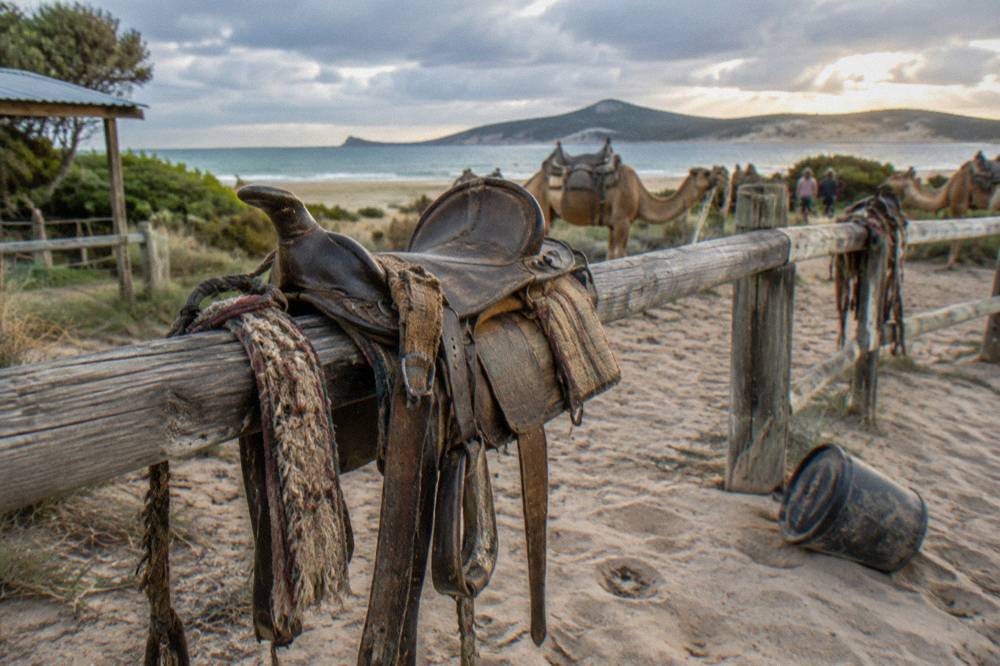
Welfare researchers describe most of what matters in working animals as observable: gait, body condition, tack fit and handling style. A camel walking evenly on all four legs, with no visible sores under the saddle line and no flinching at the handler, is showing you the basics. Handlers who shout at, yank or strike animals are showing you something too. The weight limit is the easiest rule to watch being applied, because a group at the fence will reveal quickly whether riders are being weighed or waved through.
The questions below are reasonable to ask any ride operator, in Port Stephens or anywhere else, and a good operation will answer them without hesitation. None of them is an accusation; all of them are the kind of question a licensed operator with a Parks Eco Pass should expect.
- How old are the camels working today, and how many trips does each one do per day?
- Where do the animals live, and who is the vet who sees them?
- What happens on a day that is very hot, or when the sand surface temperature is high?
- How are the saddles checked for fit, and how often are they replaced?
- What are the signs the team watches for that a camel needs a rest?
The operator's own materials answer some of this indirectly: the closure on Wednesdays, the half-hour spacing between departures and the weather dependence of the sunset rides all imply a rhythm rather than a continuous treadmill. But a visitor's own eyes at the fence are worth more than any website, and arriving early, before the first 10:00am departure, is the best time to see the animals being prepared.
What Does The Evidence Say About Camels And Loads?
Camels are load-carrying animals by ancestry, and a body of veterinary research treats them as such, but the research also identifies lameness, saddle-related skin damage and heat stress as the recurring welfare problems in working camels. Load management, saddle fit, rest and water are the standard preventions, which maps directly onto weight caps, short rides and rest gaps.
It helps to be precise about what "pain" could mean here. Acute pain, the kind from an injury or a badly fitted saddle pressing on a spine or flank, is one category. Chronic strain, the kind from repeated heavy loads over long periods, is another. A 20 minute walk with two riders under a 130 kg cap, on flat wet sand near the water line, is a low-intensity task by the standards of the camel's working history, which included desert caravans carrying goods and riders for hours across hot terrain. That comparison does not prove comfort on any given day, but it frames the scale of the task.
The honest gap is this: no published welfare audit, veterinary statement or animal-care certification exists for the Port Stephens ride, and this article will not invent one. Some Australian animal-tourism operators publish welfare charters or third-party accreditation; the absence of such a statement here means the reader's own inspection and questions carry the weight. The balanced conclusion is not "camel rides are cruel" and not "camel rides are fine", but "the animal's comfort depends on rules that are partly visible and partly not, and the visible rules at Birubi Point are at least specific".
One more angle deserves a mention: the cultural one. Camels are not native to the Stockton Bight dunes; they are descendants of animals imported to Australia as transport and pack animals, and the dunes themselves are Worimi country, holding middens, campsites and burials of Aboriginal cultural significance. Some visitors weigh that history as part of the decision too. Neither the operator's permit nor the ethics question changes because of it, but a fuller picture includes the landscape the camels walk across, which the Stockton Sand Dunes guide covers in detail.
What Are The Dune Tours With No Animals?
Every experience the dunes are famous for can be had without a camel: unlimited sandboarding starts from $27.76 per person, a 75 minute 4WD beach and dune tour with sandboarding runs from $39.55, and a one hour quad bike adventure starts at $82.57, all with free cancellation. For readers who stay uneasy about riding an animal, these are the honest alternatives, on the same sands.
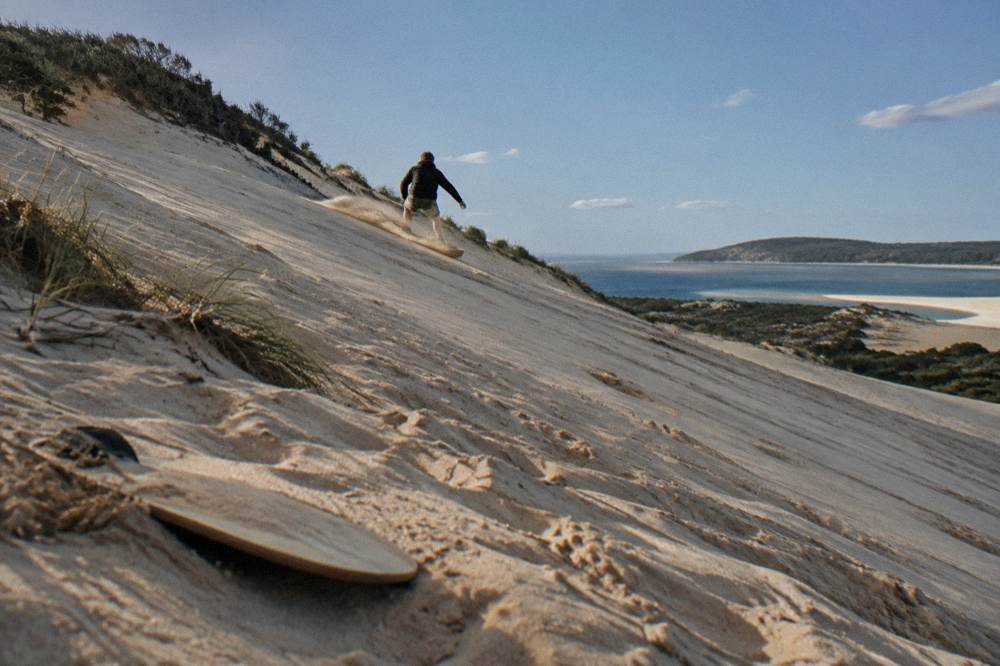
Sandboarding is the closest substitute in spirit: you still cross the dunes, you still get the view from the top, and the descent is faster than any camel. The cheapest listing here is Sand Dune Safaris' unlimited sandboarding with 4WD dune transfer, from $27.76 per person with a 4.7 rating from 212 reviews, meeting at the Anna Bay Lower Car Park. The most reviewed option is unlimited sandboarding with 4WD Tours R Us, from $29.84 per person, rated 4.5 from 574 reviews, meeting at 80 Gan Gan Road; Check availability if the price fits the plan.
The 4WD format swaps the camel for a vehicle, which removes the animal question entirely. Port Stephens 4WD Tours runs a 75 minute Birubi Beach 4WD tour with sandboarding from $39.55 per person, rated 4.8 from 127 reviews, and a longer three hour beach and dune passenger tour from $94 per person with a 5.0 rating from 30 reviews, though that one is non-refundable, a difference worth knowing before booking. The quad bike option, a one hour Worimi Sand Dune adventure from $82.57 per person with a 4.8 rating from 254 reviews, is run by an Aboriginal-owned operator and takes drivers aged 16 and over; the quad biking guide explains the Saturday-only transfers and the Lavis Lane entry. If you're still weighing whether the sandboarding add-on justifies the tour price, the honest verdict on whether sandboarding is worth it weighs the ratings against the cost.
| Animal-free dune tour | Format | From price | Rating | Cancellation |
|---|---|---|---|---|
| Unlimited sandboarding, Sand Dune Safaris | 1-2 hours at the dunes, 4WD transfer | $27.76 per person | 4.7 from 212 reviews | Free |
| Unlimited sandboarding, 4WD Tours R Us | 1-1.5 hours typical, unlimited | $29.84 per person | 4.5 from 574 reviews | Free |
| Birubi Beach 4WD tour with sandboarding | 75 minutes | $39.55 per person | 4.8 from 127 reviews | Free |
| Worimi quad bike adventure | 1 hour, drivers 16 and over | $82.57 per person | 4.8 from 254 reviews | Free |
For a reader whose concern is specifically the camel, the choice between these formats comes down to comfort with speed and machinery rather than ethics. A sandboard is silent, a quad is not, and a 4WD passenger tour sits in between: seated, guided and narrated. All three operate inside the same Worimi Conservation Lands under licensed operators, so the landscape and the cultural context are identical to what the camels walk through.
How Do You Fit A Camel Ride, Or A Decision Not To Take One, Into The Day?
Birubi Point puts the camels, the sandboarding operators and the patrolled beach within a few minutes of one another, so the decision can be made on the spot: watch the ride first, ask the questions above, and if the answer is no, the dune tours meet within the same Anna Bay pocket. Day rides need no booking, which means a visit costs nothing until you choose.
The geography helps the undecided. The camels load at the Birubi Point public lower car park on James Paterson Street. Sand Dune Safaris meets at the Anna Bay Lower Car Park, and 4WD Tours R Us meets a short drive away on Gan Gan Road, the same road that carries the Gan Gan 4WD entry to the Worimi lands. Birubi Beach, the patrolled swimming option while the Worimi beach itself is unpatrolled and under a swimming-unsafe alert running to 28 April 2027, sits between them. A family can park once, watch a camel departure, walk the point, and still make a 1:00pm sandboarding session.
Timing matters for the ride itself. Day rides run about every half hour from 10:00am, with the last departure at 3:30pm, closed Wednesdays but daily in NSW school and public holidays, and the spring holidays between 28 September and 9 October 2026 are exactly the kind of window when the queue is longest. Arriving early sees the animals being saddled and watered, which is the moment that answers more ethics questions than any FAQ can. The sunset ride, Fridays and Saturdays only, booked online and for riders 10 and up, is the format to choose only if the longer ride sits comfortably with your own reading of the load rules.
The weather caveat applies to everything on the dunes, camels included. The Worimi Conservation Lands are always open in principle but may close for poor weather or fire danger, the operator states the sunset rides are weather dependent, and the sandboarding operators run rain, hail or shine in at least one case. Checking the official NPWS listing for the camel rides and the park alerts page before travelling is the reliable habit, because a closure can appear overnight.
Where Does This Leave The Ethics Question?
A fair reading is that the Birubi Point ride is a short, load-capped, licensed operation whose visible rules line up with what welfare research says matters, but that no public welfare record exists to settle the question for you. Riders who ask the questions, watch the animals and respect the limits are making an informed choice; riders who stay uneasy have three excellent animal-free ways to see the same dunes.
The strongest version of the case for riding is structural: a 130 kg cap, two riders on a 20 minute walk, half-hour gaps between departures, a midweek closure and a weather-dependent longer ride are all constraints an operator did not have to publish. The strongest version of the case against is that no independent assessment, veterinary statement or certification has been published to back any of it up, and that a paying visitor sees only the twenty minutes of the animal's day that the ride consists of. Both versions are true at once, which is why this article has refused to hand down a verdict.
What this site can verify is the alternative. The dunes that make Stockton Bight famous, the largest moving coastal sand dunes in the southern hemisphere, are the same dunes whether you cross them on a board, in a 4WD or on a camel's back. The Anna Bay sand dunes guide covers the access points and free walking entry for anyone who prefers to cross them on foot, which is the cheapest and most animal-free option of all.
Whatever the choice, book the parts that need booking and leave the camel decision for the fence, where it can be made with the animal in front of you. That is the one advantage the walk-in format gives the thoughtful traveller, and it is worth using.
Common Questions About Camel Ride Ethics
Is It Painful for Camels to Be Ridden?
There is no verified answer for the Port Stephens ride either way. Camels are built to carry loads, and the operator caps each animal at 130 kg, allows two riders only on 20 minute day rides and one on the 60 minute sunset rides. Those limits reduce the main welfare risks, but no independent welfare record for the operation was found, so the decision rests on your own inspection and questions.
Do the Port Stephens Camels Work All Day?
Day rides depart about every half hour from 10:00am to a last departure at 3:30pm, six days a week, with the operation closed on Wednesdays. The half-hour spacing implies gaps between trips, but how many trips each camel does per day is not published, which is one of the questions worth asking at the fence.
Is There a Weight Limit for the Camel Rides at Birubi Point?
Yes. The operator's FAQ states a 130 kg weight limit per camel. Day rides carry two riders per camel and sunset rides carry one, and children on day rides must be aged 2 or over, while sunset rides are for riders aged 10 and up.
Can I Book a Camel Ride in Advance?
Not for the 20 minute day rides. They are strictly walk-in only, with no bookings taken by phone, email or online. Only the 60 minute Friday and Saturday sunset rides require booking, online, through the operator's own system.
What Can I Do on the Dunes Without Riding an Animal?
Sandboarding from $27.76 per person, a 75 minute 4WD beach and dune tour with sandboarding from $39.55, and a one hour quad bike adventure from $82.57 all cover the same Stockton Bight sands with no animals involved. Walking onto the dunes from Anna Bay or Birubi Point is free for walkers.
Who Regulates the Camel Rides at Birubi Point?
NSW National Parks lists Oakfield Ranch Camel Rides as a licensed commercial tour operator holding a Parks Eco Pass, conducting rides within the Worimi Conservation Lands. The lands are owned by the Worimi Aboriginal community and co-managed with NSW National Parks.