Should I Wear Pants To Ride A Camel?
What to wear for a camel ride at Birubi Point, Port Stephens: pants versus shorts, footwear, sun protection and the operator's own clothing advice, plus how to plan the walk-in day rides.
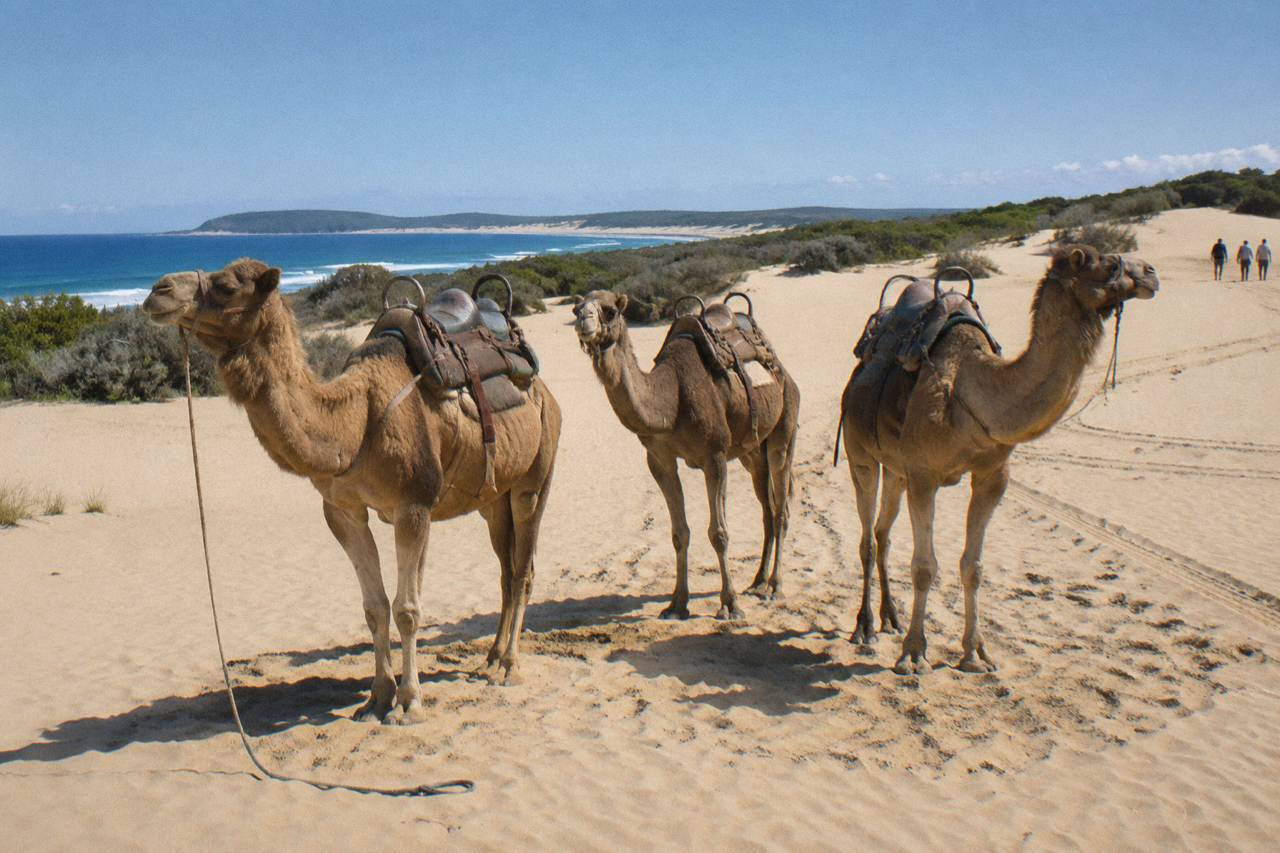
The camel rides at Birubi Point in Port Stephens are one of the few experiences on the Stockton Bight dunes that ask almost nothing of your wardrobe. Oakfield Ranch Camel Rides, the operator licensed to run rides on the Worimi Conservation Lands, states plainly on its own FAQ page that no special clothing or footwear is required, only comfortable casual clothes. So the short answer to the pants question is that either works, and the operator will not turn you away in shorts. The longer answer depends on the ride you choose, the time of year, and how your legs feel about an hour on a padded saddle in the sun. The camel rides leave from Birubi Point, and if you want the bigger picture on that stretch of coast, the guide to Anna Bay and its dune attractions covers everything the town is known for.
This article works through that longer answer using the operator's published advice and the practical realities of the ride: the mounting process, the shared-seat arrangement on day rides, the sand, and the sun. It also covers the walk-in timing for day rides at Birubi Point, the booked sunset rides on Friday and Saturday evenings, and what to pair with a camel ride if you are making a full dune day of it in Anna Bay. Before you plan your outfit, it helps to know what the ride itself will cost, and the full price breakdown for Port Stephens camel rides covers the day and sunset rates plus the dune tour pricing.
Should I Wear Pants To Ride A Camel?
No rule requires pants, and the Oakfield Ranch FAQ states that no special clothing is needed, just comfortable casual clothes. Shorts are entirely acceptable on both the 20 minute day rides and the 60 minute sunset rides. Long pants are a reasonable personal choice in cooler months or for riders who want a fabric layer between skin and saddle, but they are a comfort decision, not a requirement set by the operator or by the park.
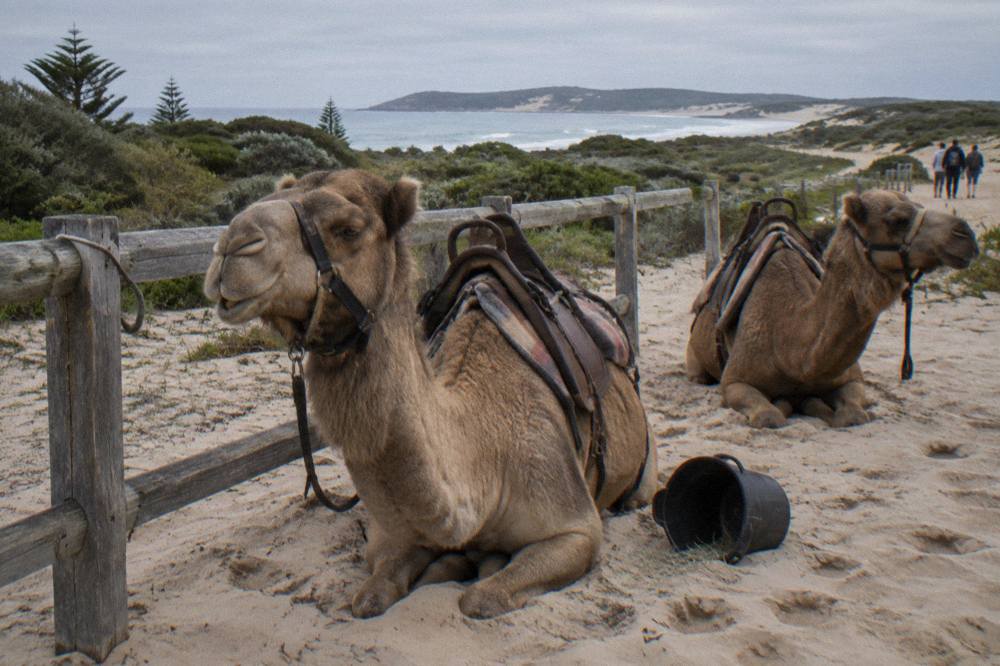
The question comes up more often than you would expect, and the reason is usually a memory of horse riding. Long pants are standard advice around horses because stirrup leathers, saddle edges and brush can scrape bare skin. A camel ride at Birubi Point is a different experience. The camels walk a set route across the sand, the pace is slow and steady, and there is no brush, no leathers and no jumping involved. The operator's own guidance reflects that: comfortable casual clothes, nothing specialised.
That said, "comfortable casual" still leaves a real choice between shorts and long pants, and the right pick shifts with the season and the rider. In summer, when midday temperatures at nearby Williamtown average a maximum of 28.3 degrees in January, shorts are the more comfortable option for most people, provided you add sunscreen to any exposed skin. In winter, when mean maximums sit around 17 degrees from June to August, long pants are the obvious call, and a warm layer matters more for the evening sunset rides, which run after the day's heat has gone.
One practical note that does influence the pants decision: on day rides, two riders typically share one camel, one in front and one behind, on a padded saddle. The seating is roomy, but the saddle edges and the camel's movement mean your inner legs rest against the mount for the duration of the ride. Riders with sensitive skin sometimes prefer a light fabric layer; riders who run warm are usually happier in shorts. Neither preference is wrong, and the operator does not weigh in beyond its casual-clothes guidance.
For the full picture on the rides themselves, prices and the walk-in system, the companion guide to camel rides in Port Stephens covers everything in one place.
What The Operator Actually Says About Clothing
Oakfield Ranch's FAQ page answers the clothing question directly: no special clothing or footwear is required, and comfortable casual clothing is all that is recommended. There is no dress code, no closed-shoe mandate published as a condition of riding, and no restriction on shorts. The only hard equipment rule the operator publishes is a ban on drones, with mobile phones and small handheld cameras allowed so staff can take photos on your device.
The value of that answer is that it comes from the operator itself rather than from a travel forum. You can read it in full on the Oakfield Ranch FAQ page, which also covers the weight limit of 130 kg per camel and the age rules. Because the operator has chosen to publish a "no special clothing" line rather than a list of requirements, anything stricter you read elsewhere is someone's personal preference being passed off as policy.
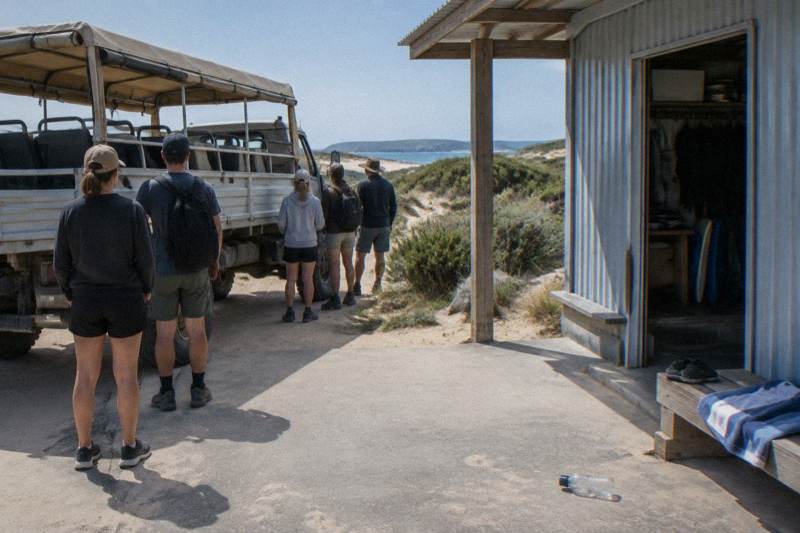
That matters for packing. Plenty of visitors arrive at Birubi Point straight from a beach morning, wearing swimwear, thongs and a hat, and the ride still works for them. Others come dressed for a bushwalk in full length trousers and hiking shoes, and that works too. The common thread in both cases is comfort across the 20 minutes of a day ride, or the full hour of a sunset ride, in whatever the weather is doing that day.
The no-drones rule deserves a mention because it interacts with clothing in a small way. If you were planning to film the ride from the air, leave the drone at home; the operator prohibits them outright. Handheld devices are fine, and staff offer to take photos on guests' own phones and cameras, which is worth taking up since both your hands will be occupied with holding on during the mount and dismount.
When Shorts Beat Long Pants On A Camel
Shorts are the better choice for most riders on a summer day ride: they keep you cooler on hot sand, they dry fast if the saddle is damp after rain, and no operator rule overrides comfort. Long pants win in winter, on the hour-long sunset ride as the evening cools, and for riders whose skin irritates easily against saddle padding.
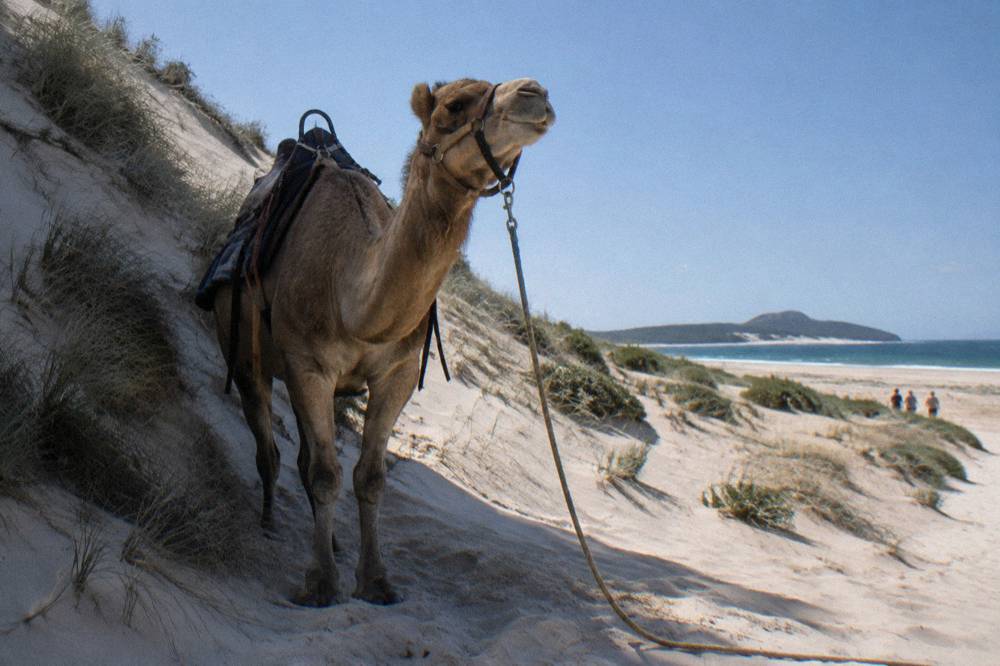
The case for shorts is mostly thermal. The Stockton Bight dunes hold their heat, and a camel sits lower to that hot surface than you might expect. On a January afternoon, with the mean maximum at 28.3 degrees and the sand considerably hotter underfoot, long pants can turn a 20 minute ride into a small sauna. Shorts in a light, breathable fabric solve that. Add sunscreen to your legs, since the sun off the sand hits from below as well as above, and you are set.
The case for long pants is about friction and warmth rather than rules. The saddle padding on a working camel is functional rather than plush, and the camel's rolling gait shifts your weight side to side more than a horse's walk does. Over an hour, that movement can chafe bare skin at the inner thigh where it meets the saddle. A thin pair of trousers, leggings or even long shorts that cover the contact points prevents it. In the cooler months, the same layer keeps you warm on the sunset ride, which departs around 4pm in winter and around 6pm in summer, well after the day's peak temperature. If you're also wondering how the camels themselves handle the workload, the question of whether camel rides hurt the animals is worth a closer look.
| Condition | Better Choice | Why |
|---|---|---|
| Summer day ride, midday | Shorts | Cooler on hot sand; sun exposure manageable with sunscreen |
| Summer sunset ride | Shorts or light long pants | Departure is later and cooler; either works |
| Winter day ride | Long pants | Mean maximums sit around 17 to 18 degrees in June to August |
| Winter sunset ride | Long pants plus a warm layer | Evening temperatures drop to single-digit minimums in winter |
| Sensitive skin, longer ride | Light long pants | Fabric layer reduces saddle friction over the full hour |
| Riding straight after swimming | Whatever is dry and comfortable | No dress code; avoid sitting on the saddle in soaked fabric |
A note on denim: heavy jeans are the one "long pants" option that rarely earns its place. They are hot in summer, slow to dry if they get damp, and stiff enough to restrict the slight leg spread the seated position asks for. Lighter trousers or activewear fabrics do everything jeans do here without the drawbacks.
Footwear, Sun Protection And The Small Details
Footwear is genuinely open: the operator publishes no shoe requirement, so thongs, sandals, sneakers and boots all appear at the departure point. The practical considerations are sand heat on the walk to the meeting area, stable footing during the mount, and how much sand you want in your shoes afterwards. Beyond shoes, a hat, sunglasses and sunscreen matter more than any clothing rule, because the ride offers little shade and the sand reflects sun upward.
The mounting process is the moment where footwear earns its keep. Camels kneel for you to board, then rise back to standing height in a two-stage motion, front then back, and you need to lean back and hold on while the world tilts. A secure shoe makes that moment calmer than a loose thong does. Riders who struggle with balance, including older visitors and young children, are usually happier in something that straps on. That is advice from the physics of the mount, not from the operator, whose only published line is that no special footwear is required.
Sand is the other factor. The departure point is the Birubi Point public lower car park at the end of James Paterson Street, Anna Bay, and the camels walk onto the dune sand from there. Sand in an open shoe is a certainty; whether that bothers you is personal. Many riders simply take thongs off and ride barefoot, which is common and permitted. Closed shoes keep sand out but get it in anyway around the ankles, so pick based on your tolerance rather than on any imagined rule.
Sun protection is where the real preparation should go. The ride exposes you to direct sun plus reflection off pale sand for its full duration, and there is no shade structure on the route. A broad-brim hat that will not blow off, sunglasses, and sunscreen on every exposed surface including the backs of your legs and under your chin are the items that actually protect the experience. Lip balm is a small addition that regulars swear by.
One more detail worth knowing before you go: the operator's staff offer to take photos on your own device, so a phone with charge and a free hand at the dismount is worth arranging. The no-drones rule means aerial coverage is off the table, but the ground-level shots from a staff member on your phone usually beat anything you could manage one-handed mid-ride.
How The Ride Itself Affects What You Wear
Two things about the ride shape the clothing question more than any dress code: day rides seat two riders per camel, one in front of one behind, and the ride lasts either 20 minutes or a full hour. Sharing the saddle means sitting slightly apart and holding a rail, and the longer sunset ride multiplies every comfort factor, from warmth to friction, by three. Dress for the duration and the seating, and the clothing question answers itself.
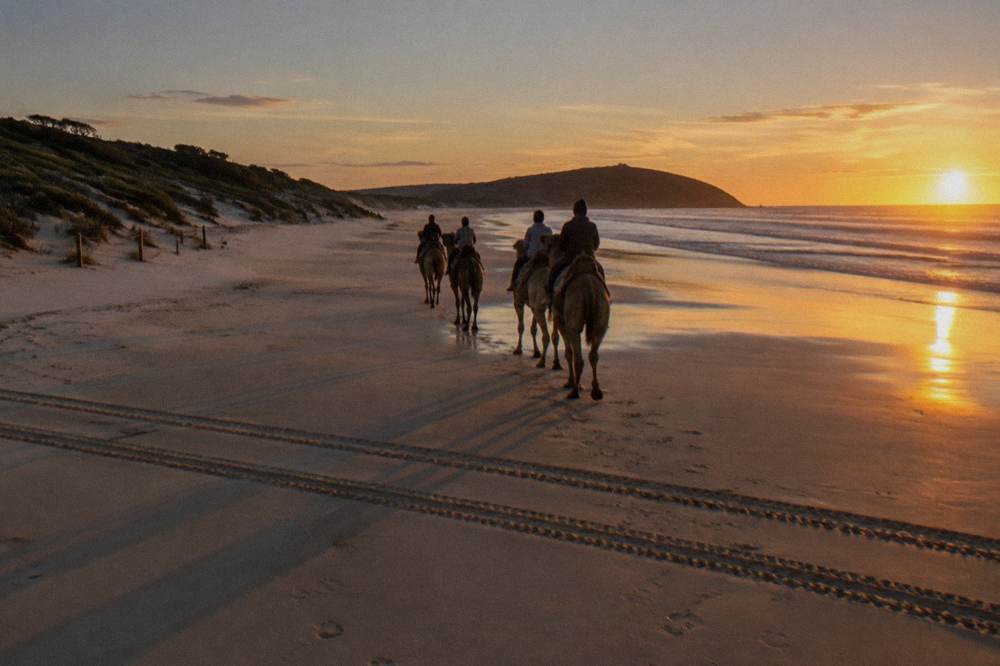
The two-per-camel arrangement surprises some visitors. On day rides, the operator typically pairs riders, which is part of why the walk-in system moves quickly: two people board per camel, departures leave about every half hour, and the queue drains steadily. If you are riding as a pair, you will likely share, with the lighter rider usually seated in front. If you are solo, you may be matched with another guest. Clothing-wise, this makes modest comfort relevant: skirts and dresses are workable but awkward on a shared saddle, and most riders find trousers, shorts or leggings the simplest options for the seated position.
The 20 minute day ride is forgiving of almost any clothing choice, because it is over before friction or cold becomes a problem. The 60 minute sunset ride is not. An hour on a camel as the light fades and the temperature drops asks for a warm layer even in late spring, and it asks for the friction planning covered earlier. The sunset ride also runs one rider per camel, which changes the seating but not the warmth equation. Riders aged 10 and up only, booked online in advance: this is the one camel experience at Birubi Point that involves a reservation, and the only one where the evening air should genuinely drive your outfit.
Weather policy is the last piece. The operator runs rides in light rain if conditions still allow a pleasant experience and stops them in inclement weather, so a foldable rain jacket earns its place in your bag from March to June, the wetter stretch of the local year. The Bureau of Meteorology's Williamtown records put mean monthly rainfall at 127.2 mm in March and 121.4 mm in June, against 60.1 mm in September, so spring visitors carry less weather risk than autumn ones.
For everything on prices and how the walk-in queue works, the companion piece on camel ride prices in Port Stephens sets out the A$50 adult day ride, the A$45 child rate and the A$140 sunset ride in full.
Planning Your Visit To The Birubi Point Camel Rides
Day rides run from the Birubi Point public lower car park, James Paterson Street, Anna Bay, about every half hour from 10:00am, with the last departure at 3:30pm, six days a week and closed Wednesdays, plus daily during NSW school and public holidays. No bookings are taken for day rides, so arriving with time in hand is the whole strategy. The sunset ride on Friday and Saturday is the exception: booked online, riders 10 and over.
Getting the timing right matters more than getting the clothing right, because the walk-in system has a hard stop. A 3:30pm last departure means a 3:00pm arrival is cutting it fine in busy periods, and school holidays are exactly the busy periods when the rides run daily. The NSW spring school holidays run 28 September to 9 October 2026 and the summer holidays run 18 December 2026 to 27 January 2027, so those windows combine daily operation with the biggest crowds. A mid-morning arrival, soon after the 10:00am start, is the calmest slot on most days.
The setting is worth understanding too. The rides operate on the Worimi Conservation Lands, the Stockton Bight dune system owned by the Worimi Aboriginal community and co-managed with NSW National Parks. Oakfield Ranch is a licensed commercial tour operator holding a Parks Eco Pass, listed on the official NPWS tour page for the rides, which describes the 20 minute day ride and the 60 minute sunset ride. Entry to the lands is free for walkers, so there is no gate fee to fold into your planning.
While you are on the lands, keep the water at arm's length. The park's own alerts page advises that the beach within the Worimi Conservation Lands is unpatrolled and not suitable for swimming, with a current safety alert applying from 23 September 2026 to 28 April 2027 for hazardous surf, and an H5 bird flu alert asking visitors to avoid contact with sick or dead wild birds. Birubi Beach, just south of the camel departure area, is the patrolled option in the warmer months. If your camel outfit doubles as a swimming outfit, swim at Birubi, not off the lands. The NPWS local alerts page carries the current status before you go.
Combining A Camel Ride With Sandboarding At Anna Bay
The camel departure point at Birubi Point sits minutes from the sandboarding operators at Anna Bay, which makes a two-activity morning easy: a walk-in camel ride, then a sandboarding session with a 4WD transfer onto the dunes. The three sandboarding listings on this site run from $27.76 to $39.55 USD per person, all with free cancellation, and the operators meet within a short drive of the camel car park.
This is the natural pairing, and clothing-wise it is where the pants question gets a second answer. Sandboarding at Anna Bay involves sitting or standing on a board as it slides down sand, and sand gets everywhere regardless of what you wear. Long pants protect knees during tumbles and sit-down slides; shorts keep you cooler on the climb back up. The sandboarding operators supply boards, instruction and the 4WD transfer, so the only gear decision you make is your own outfit, and the same comfortable-casual logic applies to both activities.
The featured option on this site is the Unlimited Sandboarding Experience in Port Stephens with 4WD Tours R Us, from $29.84 USD per person, rated 4.5 from 574 reviews, meeting at 80 Gan Gan Road. It is the most reviewed listing on this site, and NSW National Parks lists the operator as a licensed Worimi tour with a Parks Eco Pass. A typical session runs one to one and a half hours on the dunes, with unlimited time on the hill. Check availability if you are locking in a camel-and-sandboarding day.
An alternative format is the Birubi Beach 4WD Tour with Sandboarding from Port Stephens 4WD Tours, from $39.55 USD per person over 75 minutes, rated 4.8 from 127 reviews. It trades the unlimited-hill format for a structured 4WD tour of the beach and dunes with a sandboarding stop, which suits visitors who want the drive across the sand as much as the slide down it. That operator allows sit-down boards only, no stand-up, so factor that in if standing was the appeal.
A third choice is Unlimited Sandboarding with 4WD Dune Transfer from Sand Dune Safaris, from $27.76 USD per person, the cheapest listing here, rated 4.7 from 212 reviews. The operator says it is the only company in Port Stephens offering both sit-down and stand-up boards, with children 3 and under free. Whichever you pick, the same outfit that carried you through the camel ride will serve: comfortable, casual, sun-protected, and chosen for the weather rather than for any rule. For a deeper comparison of all three, the Anna Bay sand dunes guide walks through the operators, the formats and the prices side by side.
The broader planning picture is on the homepage of Port Stephens Sand Dune Tours, where the tour picker sorts the dune experiences by budget, format and travel style. A camel ride slots into almost any of those itineraries, because the walk-in system needs no booking and the departure point is the same Birubi Point car park most dune visitors pass through anyway.
Common Questions About Camel Ride Clothing
Should I Wear Pants to Ride a Camel?
No rule requires pants at the Birubi Point camel rides. The operator states that no special clothing or footwear is required, just comfortable casual clothes. Shorts are fine in warm weather; long pants are a sensible choice in winter, on the hour-long sunset ride, or if your skin is sensitive to saddle contact.
Do I need closed shoes to ride a camel at Birubi Point?
No. The operator publishes no footwear requirement. Many riders wear thongs or sandals, and some ride barefoot. Secure shoes make the mount and dismount steadier, since camels kneel and then rise in a two-stage motion, but that is a practical consideration rather than a rule.
Can I wear a dress or skirt on the camel ride?
You can, but the seating makes it awkward. Day rides typically seat two riders per camel on a shared padded saddle, and the seated position works most comfortably in trousers, shorts or leggings. There is no dress code, so the choice is yours.
What should I wear for the sunset camel ride?
The 60 minute sunset ride runs Friday and Saturday evenings only, booked online in advance, for riders aged 10 and up. Departure times vary with the season, around 4pm in winter and around 6pm in summer, and temperatures fall quickly after sunset, so long pants and a warm layer are the comfortable choice for most of the year.
Is there a weight or age limit for the camel rides?
The operator lists a weight limit of 130 kg per camel. Day riders are typically seated two per camel, sunset riders one per camel. Children 2 and up can ride the 20 minute day ride, while the sunset ride is for riders aged 10 and over.
Do I need to book the camel ride in advance?
Not for day rides. The 20 minute day rides are strictly walk-in, with no bookings taken by phone, email or online, departing about every half hour from 10:00am to a 3:30pm last departure, six days a week and closed Wednesdays. Only the Friday and Saturday sunset ride requires a booking, made online in advance.