What Is The Biggest Sand Dune In Australia?
The honest answer to Australia's biggest dune question: no official single-dune crown exists, but Stockton Bight at Port Stephens holds the largest moving coastal sand dune system in the southern hemisphere.
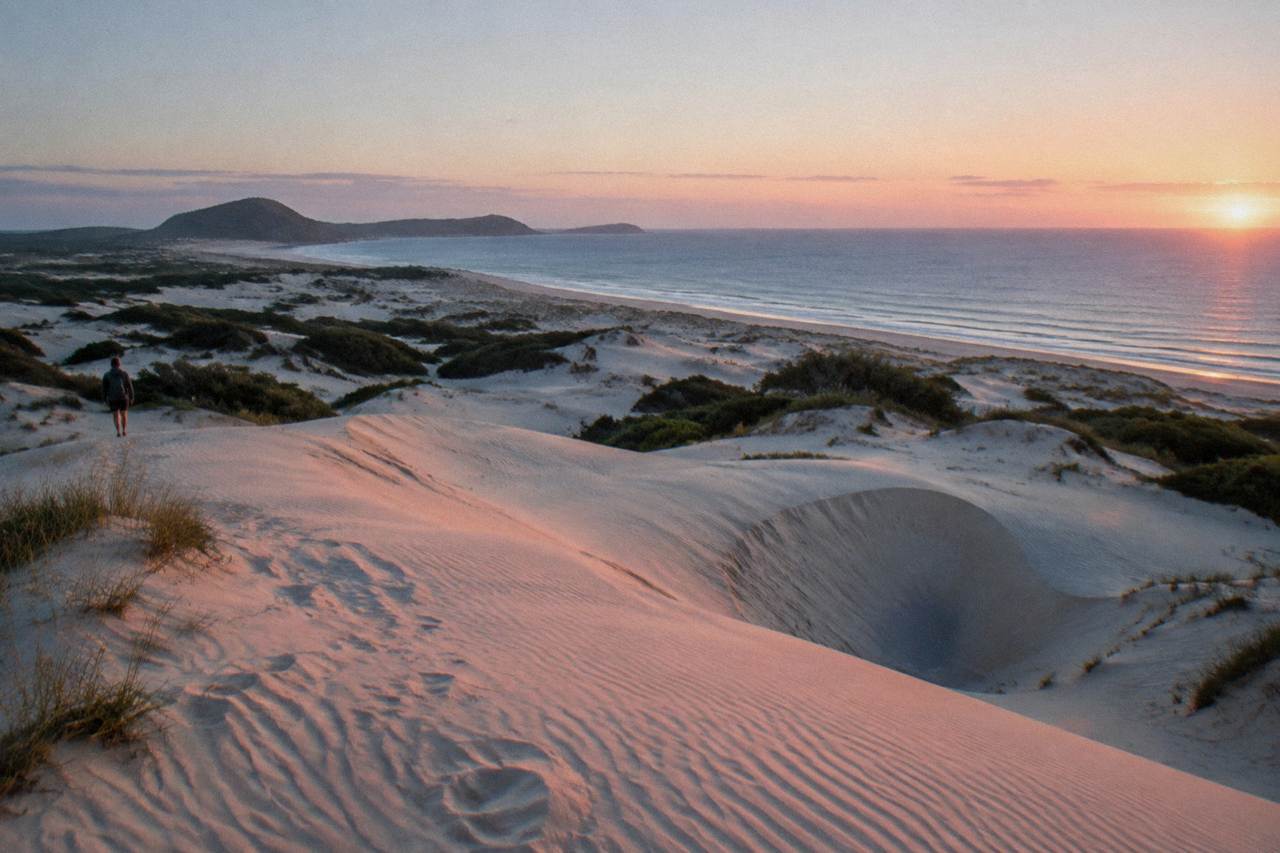
Ask ten websites which sand dune is the biggest in Australia and you will get ten different answers, most of them quoting a height in metres for a dune somewhere on the Stockton Bight at Port Stephens. Those height figures are the problem. Operators list different numbers, no official source confirms any of them, and the dunes themselves move, which means a measurement taken one year describes a hill that may have drifted, grown or flattened by the next. The claim that actually survives scrutiny is bigger and stranger than a single dune anyway: the Stockton Bight system is the largest moving coastal sand dune mass in the southern hemisphere, a 32 kilometre stretch of mobile sand owned by the Worimi Aboriginal community and co-managed with NSW National Parks. And if the weather turns while you're there, our guide to dune tours and indoor escapes on a rainy Port Stephens day explains what still runs in the wet.
What Is The Biggest Sand Dune In Australia?
There is no official "biggest single dune" crown in Australia, and no verified height figure for any individual dune on the Stockton Bight, because sources disagree and the sand keeps moving. What is verified, on the NSW National Parks record, is that the Stockton Bight dunes at Port Stephens form the largest moving coastal sand dune system in the southern hemisphere, and that Stockton itself, at 32 kilometres, is the state's longest beach. If those towering slopes have you itching to ride one, our guide to sandboarding versus snowboarding at Stockton Bight explains how the two sports actually compare.
That distinction between a dune and a dune system matters more than it first appears. A single dune is a hill with a crest, and hills of sand are temporary things on a coast where wind moves tonnes of material every year. A dune system is the whole living machine: the frontal dune facing the sea, the swales behind it, the blowouts, the forested hind dunes and the bare sand mass that creeps landward over decades. NSW National Parks describes the Stockton Bight landscape as one whose creation began well over 100,000 years ago, and the same official pages note more than 1,800 hectares of forest sitting behind the dunes, along with middens, campsites and burials of deep Aboriginal cultural significance.
So when travel writers crown "the biggest dune in Australia" with a precise height, they are usually compressing a whole system into one photogenic crest. No official height figure exists for these dunes, and operator claims conflict, so treat any number you hear with caution. What can be said, plainly, is that the bight's sand mass is enormous, mobile and the largest of its kind in the southern hemisphere, a claim that comes from the park's own managing authority rather than a tour brochure.
For visitors, the practical question is not which crest is tallest but how to stand in the middle of the system and feel its scale. The dune fields at Anna Bay, reachable through Birubi Point, put you directly into the moving sand, and three of the most direct ways in are bookable in one place:
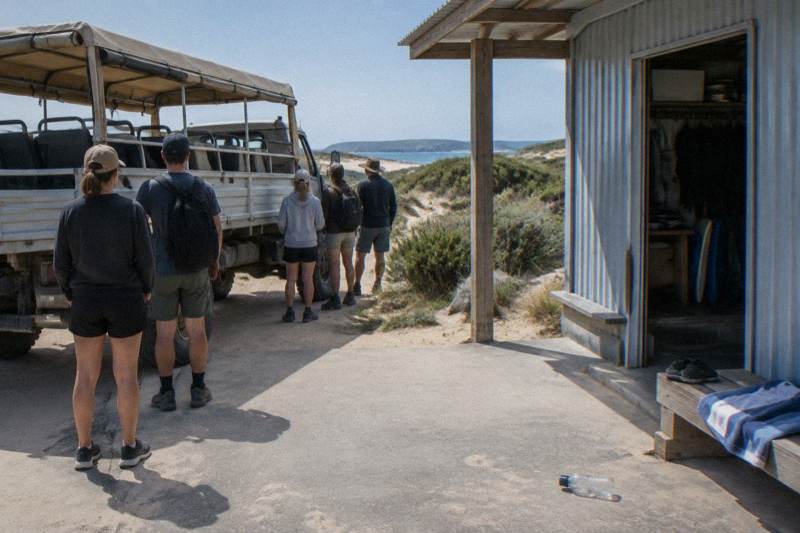
The Birubi Beach 4WD tour with sandboarding is the closest thing to a classic "big dunes" experience: a 75 minute ride across the sand from the Birubi Point side, rated 4.8 from 127 reviews and priced from $39.55 per person. The unlimited sandboarding session at 4WD Tours R Us, from $29.84, gives you more time on the hill itself, and the quad bike adventure from $82.57 puts a machine between you and the sand for a full hour. You can Check availability on the live listing before you commit to a date, since sessions fill on weekends and school holidays.
Where Is Stockton Bight And How Do You Get Onto The Sand?
Stockton Bight runs along the coast from Birubi Point at Anna Bay south toward Newcastle, about a 2.5 hour drive north of Sydney, with the dune fields spreading inland from the beach. Walkers enter free at the Anna Bay and Birubi Point ends; drivers need a Worimi beach vehicle permit, which has been sold online only since 3 March 2026.
The bight is the coastal edge of the Worimi Conservation Lands, a set of protected areas that includes Worimi National Park, Worimi State Conservation Area and Worimi Regional Park. The lands are owned by the Worimi Aboriginal community and jointly managed with NSW National Parks, an arrangement the park's official pages describe as a partnership that protects cultural and natural values while keeping the area open for recreation. Anna Bay is the northern gateway, the small suburb where Birubi Point looks out over the start of the dunes, and Nelson Bay, the region's main town, sits a short drive east around the bay. If you're weighing up where to base yourself for a day on the dunes, this guide to the difference between Port Stephens, Nelson Bay and Anna Bay helps you pick the right spot.
Getting onto the sand is refreshingly simple on foot. The official Worimi Conservation Lands page states that entry is free for walkers, cyclists and horse riders, no permit needed, and the walking routes from the Anna Bay and Birubi Point areas reach the dunes and the beach within minutes of the car parks. Sealed roads serve the point, so a regular two-wheel-drive car gets you to the trailheads fine. What you cannot do is swim at the Worimi beach itself: the park's own alert page states the beach is unpatrolled and not suitable for swimming due to hazardous surf, with a safety alert running from 23 September 2026 to 28 April 2027, and the nearest patrolled option is Birubi Beach.
Drivers face a different set of rules. Every 4WD and recreational vehicle on the beach needs a Worimi beach vehicle permit, and the prices are fixed on the official page: a 3-day permit costs A$33, an annual permit A$88, an annual pensioner permit A$44 and an annual Recreational Vehicle Area permit A$88 for conditionally registered quads and motorbikes. Since 3 March 2026 those permits have been available online only; the paper outlets are gone, though paper permits bought before the switch remain valid until they expire. NSW National Park annual passes do not work here, a point both the parks page and the Worimi board page make explicitly. If you would rather not study tide charts and permit conditions yourself, a guided tour sidesteps all of it, since tours include park entry.
How Tall Are The Stockton Dunes Really?
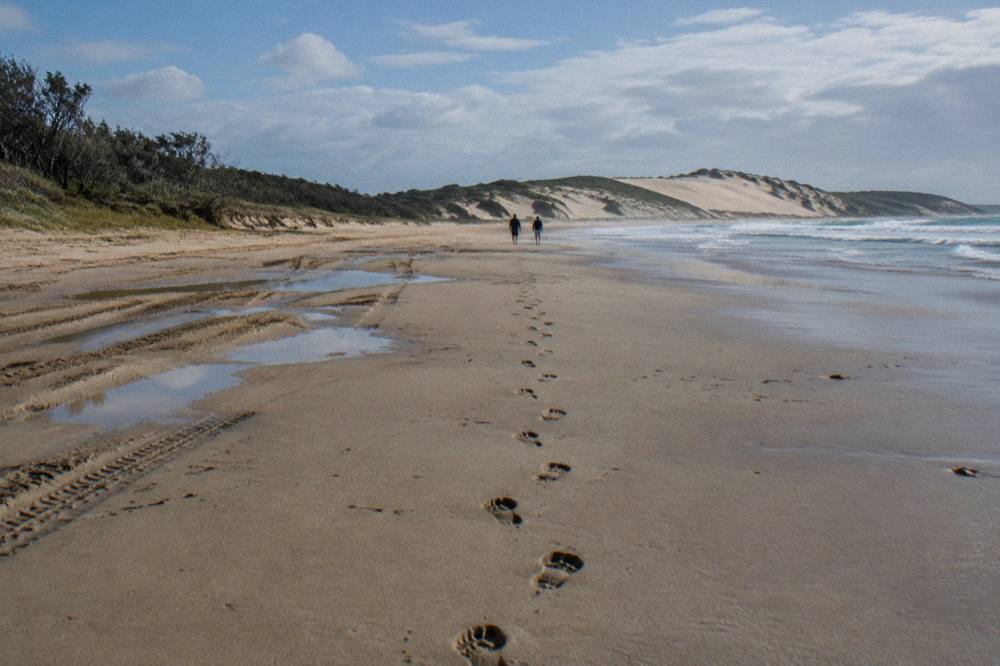
Nobody can honestly tell you, and any article that prints a single number is guessing. No official source confirms any figure, and a moving dune changes height season to season, so the only defensible statement is that the sand mass is very large and that its scale is best judged in person.
This deserves a proper explanation, because the height question is where most dune content online goes wrong. Sand dunes on an active foreland are not fixed landforms like mountains. Wind erodes them from one face and deposits sand on the other, so a dune can migrate several metres in a year. When three different commercial sources describing the same dune field produce three different heights, and the body responsible for the land publishes none, the honest conclusion is that no verified figure exists. No official height figure for the Stockton Bight dunes exists, and operator claims conflict, so no height is quoted here.
What the official record does support is scale of a different kind. NSW National Parks calls the Stockton dunes "the largest moving coastal sand dunes in the southern hemisphere" and describes Stockton as, at 32 kilometres, the state's longest beach. The Worimi Conservation Lands page adds that four-wheel-drive access covers more than 19 kilometres of beach front and over 350 hectares of dune driving in the Recreational Vehicle Area at the southern end. Those are system measurements, and they are the ones that survive checking. The visual reality for a visitor standing at Birubi Point is a horizon of sand ridges with no visible end, which is the impression the numbers are actually describing.
There is a good reason the height myth persists. A single big number is easy to write, easy to remember and easy to put in a caption under a photo of a steep slope. The trouble is that readers then arrive expecting a specific peak, and the dunes do not come with signposted heights. If a big number is what draws you to Port Stephens, let the southern-hemisphere superlative do that work instead: it is official, it is about the whole living system, and it is far more interesting than a contested measurement.
What Does "Largest Moving Coastal Sand Mass" Actually Mean?
It means the biggest continuously shifting body of coastal sand in the southern half of the world: a system where wind actively transports sand inland from the beach, rebuilding dunes and burying old landscapes, rather than a static desert like Australia's interior. The "coastal" and "moving" qualifiers are the whole claim, and they are what separate Stockton Bight from bigger but stationary desert dunes elsewhere.
Australia has taller sand hills in its deserts. The interior holds longitudinal dune fields that run for hundreds of kilometres, and some individual desert dunes are higher than anything on the coast. But those are effectively frozen landforms on the timescale of a human visit; they creep, but slowly, and they are nowhere near the sea. A mobile coastal sand mass is a different phenomenon. Sand arrives from the longshore drift of the beach, wind lifts it off the dry backshore and dumps it inland, foredunes grow and get breached, blowouts carve through them, and the whole mass migrates. On the Stockton Bight this process has been running for over 100,000 years according to the parks record, and it is still visibly at work: the bare white sand you board down at Anna Bay is not ancient relic, it is material that moved.
That movement is also why the land is managed so carefully. The official Worimi pages explain that driving is restricted to the waterfront between Gan Gan and Lavis Lane and to the Recreational Vehicle Area, never over the frontal dune or vegetation, partly because the frontal dune protects cultural sites and partly because past illegal driving caused erosion that led to park closures. The dunes hold recorded Aboriginal burials, middens and campsites, and the co-management arrangement with the Worimi community exists precisely because this is a cultural landscape, not a playground of anonymous sand. A visitor who understands that the dunes move, and that people have lived with them for tens of thousands of years, reads the landscape completely differently from one chasing a height record.
For comparison, here is how the verified superlatives around the bight actually stack up, using only figures from the official record:
| Claim | What the official record says | Source of the claim |
|---|---|---|
| Largest moving coastal sand dunes, southern hemisphere | Applies to the whole Stockton Bight system | NSW National Parks |
| Longest beach in NSW | Stockton, at 32 kilometres | NSW National Parks |
| 4WD beach front access | More than 19 kilometres between Gan Gan and Lavis Lane | Worimi Conservation Lands |
| Dune driving area | Over 350 hectares in the Recreational Vehicle Area | Worimi Conservation Lands |
| Single highest dune | No verified figure; operator claims conflict | No official height figure is published, and operator claims conflict |
Can You Walk Onto The Dunes For Free?
Yes, and this is one of the region's best cheap mornings out. Walkers, cyclists and horse riders enter the Worimi Conservation Lands free of charge with no permit, the walking access from the Anna Bay and Birubi Point side reaches the dunes quickly, and the view from the sand itself costs nothing. What costs money is the equipment: boards, quads, camels and guided 4WD rides are all paid experiences.
The free option deserves more attention than it gets, because so much dune content assumes you must book something. You do not. Park at the Birubi Point end of Anna Bay, walk out past the frontal dune, and you are standing inside the largest moving coastal sand mass in the southern hemisphere having paid nothing but the drive. The official entry terms are unambiguous on this: free for walkers, cyclists and horse riders, permit required only for vehicles. Our fuller write-up on the free side of the dunes is in the free activities at the Port Stephens dunes guide, which covers what a no-cost visit looks like hour by hour.
Two honest caveats come with the free walk. First, the beach within the park is unpatrolled and the current NPWS alert, running 23 September 2026 to 28 April 2027, states it is not suitable for swimming due to hazardous surf, so treat the visit as a walking one and swim at patrolled Birubi Beach if you want water. Second, the lands are always open in principle but may close for poor weather or fire danger, so it is worth a glance at the park's alert page on the morning you go. There are no toilets, water or bins out on the sand, which the official visitor information confirms, so carry what you need.
The paid experiences are what turn a walk into a ride, and the cheapest of them is genuinely cheap. Unlimited sandboarding with Sand Dune Safaris starts at $27.76 per person, rated 4.7 from 212 reviews, and it is the most reviewed budget sandboarding listing in the region after the 4WD Tours R Us session at $29.84 from 574 reviews. Sand Dune Safaris is also, by its own account, the only operator here offering both sit-down and stand-up boards, and NSW National Parks lists it as a licensed Worimi operator.
How Do You Best Experience A Dune System This Size?
Three formats put you deepest into the sand: unlimited sandboarding, quad bike tours and longer 4WD passenger tours. Sandboarding suits families and beginners, quads suit riders 16 and over who want speed, and the 3 hour passenger tours suit travellers who want the full beach-and-dunes circuit without driving themselves. Bookable prices run from $27.76 to $94 per person, plus one own-vehicle tag-along at $257.96 per vehicle.
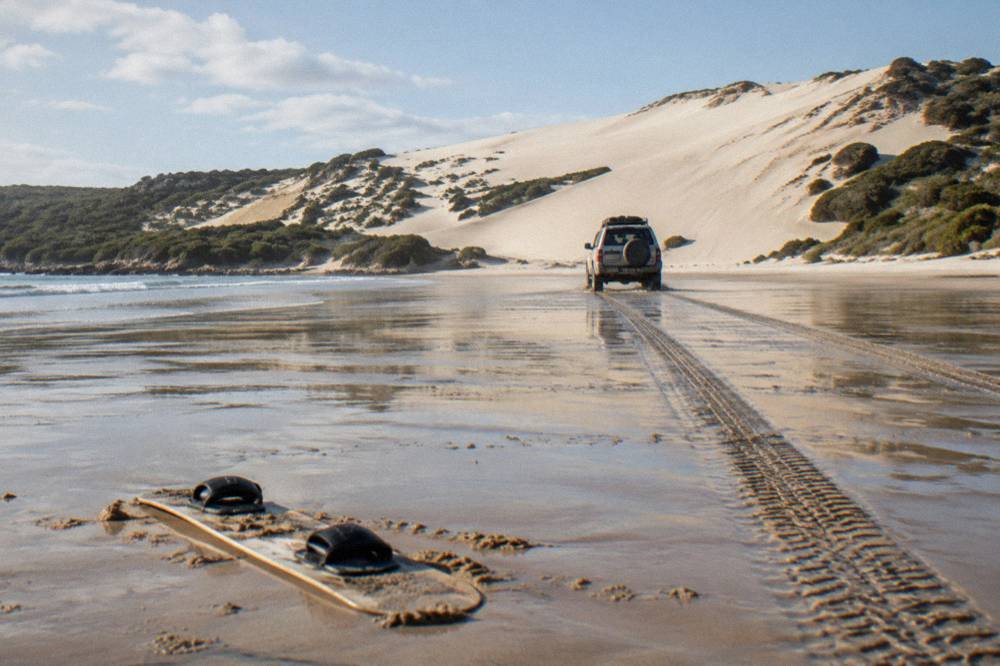
Choosing between them is mostly a question of who is travelling and how much sand you want in your shoes. The sandboarding sessions, described in detail in our sandboarding in Port Stephens guide, involve a short 4WD transfer out to the dune face, typically about 10 minutes, then one to two hours on the hill with boards and instruction included. Most visitors find an hour or two is plenty, partly because climbing back up the slope between runs is the real workout. The quad bike adventure, run by the Aboriginal-owned operator Sand Dune Adventures from the Murrook Culture Centre, takes riders 16 and over into higher dune country for a full hour, with transfers available Saturdays only and self-drive required on other days.
The passenger 4WD tours cover the most ground. The Port Stephens, Beach and Sand Dune 4WD Passenger Tour run by 4WD Tag-Along & Passenger Tours lasts 3 hours, carries up to 14 travellers in a small group, and is rated a perfect 5.0 from 30 reviews, priced from $94 per person. One thing to state plainly: this tour is non-refundable, so it is the one listing in the region where you should be certain of your date before booking. Its sister product, the tag-along tour for people driving their own 4WD, costs from $257.96 per vehicle with the first two people included, extra passengers pay a national parks fee of $6.50 on departure, and the Worimi beach vehicle permit is not included, which matters given the permit prices set out earlier.
Here is how the main bookable ways into the dunes compare on the basics, using the verified listing data:
| Experience | Format | Time on the sand | From price | Rating |
|---|---|---|---|---|
| Sand Dune Safaris sandboarding | Unlimited boarding with 4WD transfer | 1 to 2 hours typical | $27.76 per person | 4.7 from 212 reviews |
| 4WD Tours R Us sandboarding | Unlimited boarding session | 1 to 1.5 hours typical | $29.84 per person | 4.5 from 574 reviews |
| Birubi Beach 4WD tour with sandboarding | Guided 4WD ride plus boarding | 75 minutes | $39.55 per person | 4.8 from 127 reviews |
| Worimi quad bike adventure | Guided quad ride, drivers 16 and over | 1 hour | $82.57 per person | 4.8 from 254 reviews |
| Tag-along passenger tour | Small-group 4WD circuit, up to 14 | 3 hours | $94 per person | 5.0 from 30 reviews |
When Is The Best Time To See The Dunes At Their Biggest?
There is no season in which the dunes are measurably "bigger", but the practical best time to visit is the milder months, with spring and autumn offering comfortable sand temperatures and thinner crowds. Summer midday sand gets painfully hot underfoot, winter brings cooler wind off the water, and NSW school holidays, spring 28 September to 9 October 2026 and summer 18 December 2026 to 27 January 2027, pack the car parks at Anna Bay.
The dunes themselves do not take holidays. Sand moves year round, and the system is as impressive in a July wind as in a January glare, but the human experience of it changes a lot with the weather. Bureau of Meteorology averages for the Williamtown station, the official record nearest the bight, put mean maximum temperatures at 28.3 degrees in January against 17.2 in July, with rainfall spread fairly evenly through the year and spring the driest stretch at around 60 to 75 millimetres a month. Bare sand under a 28-degree sun is a different surface from bare sand at 20 degrees, and anyone planning to walk up a dune face repeatedly, sandboarding or not, should think about that before picking a midsummer noon.
Operators run in almost all conditions. The Port Stephens 4WD Tours listing states it operates rain, hail or shine, and the quad tours adapt routes to conditions. What does stop play is the park itself: the official position is that the lands are always open but may close for poor weather or fire danger, and a closure can appear at short notice, so the alert page is the authority on the day. Whale watching adds a seasonal bonus if your dune visit sits between May and November, when Port Stephens tourism says up to 40,000 humpbacks pass the coastline, with operators reporting whales with calves still moving south in late September and early October 2026. A morning on the sand and an afternoon on the water is a classic Port Stephens pairing, and the Port Stephens day trip planning guide covers how the two fit together.
Why The "Biggest Dune" Question Misses The Point
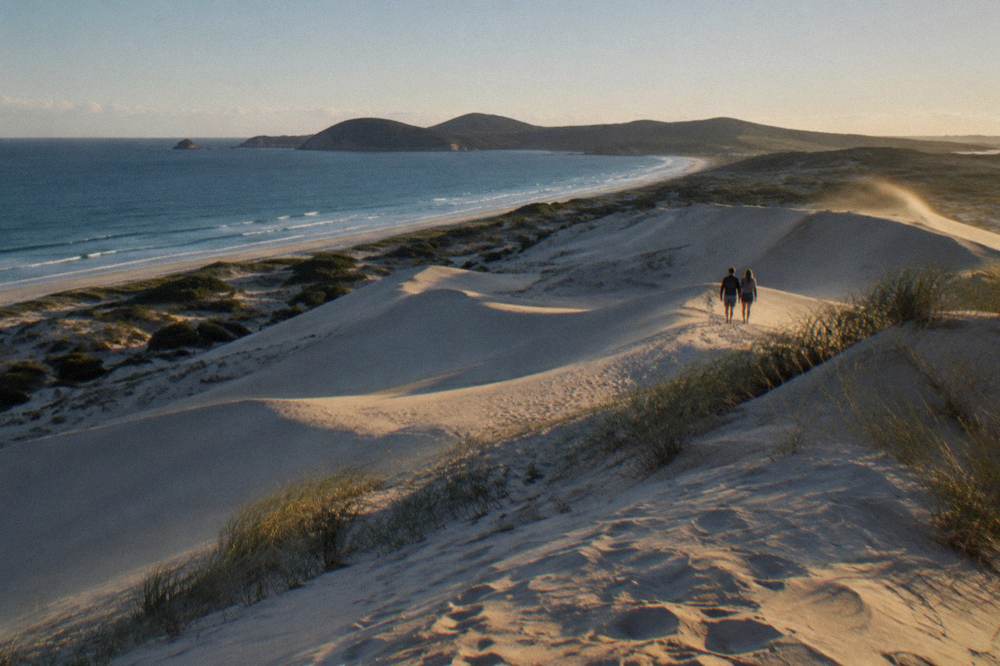
The search for a single record-holding dune distracts from what actually makes Stockton Bight extraordinary: it is a living, migrating sand system of southern-hemisphere scale, owned and co-managed by the Worimi people, sitting an easy drive from Sydney and open to anyone on foot for free. The height race is a marketing artefact; the cultural landscape, the moving sand and the sheer accessibility are the real story.
There is a quiet lesson in how this question gets asked. People want a number because numbers feel like proof, and a dune that is "the biggest" sounds like a destination worth a detour. But the number on offer is unreliable, the dune it describes moves anyway, and the thing that is genuinely verifiable is stranger: a 100,000-year-old sand machine, the largest of its kind in the southern hemisphere, still grinding slowly along the coast, still burying and revealing the landscape, with a continuous human story threaded through it that the official record describes in middens, campsites and burials. That is a far better reason to drive 2.5 hours from Sydney than a contested measurement.
It also explains why this site, Port Stephens Sand Dune Tours, spends more words on how to get onto the sand than on how tall it is. The experiences that make the dunes memorable are the ones that put you inside the system: sliding down a slope on a board, riding a quad over a ridge the wind rebuilt last month, or just walking out from Birubi Point with the sand squeaking underfoot. The dune you remember will not be the one with the best claim to a record, it will be the one you were standing on when the scale of the whole bight finally registered. For the full picture of the land itself, including its cultural management and access rules, see the Worimi Conservation Lands guide.
If you are ready to pick a way in, these three are the strongest options across formats and budgets:
Common Questions About The Biggest Sand Dune In Australia
What Is the Biggest Sand Dune in Australia?
There is no officially crowned single "biggest dune" in Australia. The verified record belongs to a system, not a hill: the Stockton Bight dunes at Port Stephens are the largest moving coastal sand dune system in the southern hemisphere, according to NSW National Parks, and Stockton is the state's longest beach at 32 kilometres.
How Tall Are the Stockton Sand Dunes?
No verified height figure exists. The sources contradict each other, and no official measurement has been published. The dunes also move, so any single number would date quickly. The official claim is about the size of the whole moving system, not one crest.
Where Are the Biggest Sand Dunes in Australia Located?
The Stockton Bight dunes sit on the Worimi Conservation Lands, running south from Birubi Point at Anna Bay toward Newcastle, about a 2.5 hour drive north of Sydney. Anna Bay is the northern gateway, with walking access from the Birubi Point area and 4WD access via Gan Gan Road, Lavis Lane or Fern Bay.
Can You Visit the Stockton Dunes for Free?
Yes. Walkers, cyclists and horse riders enter the Worimi Conservation Lands free with no permit, and the dunes are reachable on foot from the Anna Bay and Birubi Point side. Only vehicles need a beach vehicle permit, sold online only since 3 March 2026, priced from A$33 for a 3-day permit.
Is the Beach at the Stockton Dunes Safe for Swimming?
No. The beach within the park is unpatrolled and NPWS advises against swimming due to hazardous surf, with a safety alert running from 23 September 2026 to 28 April 2027. The nearest patrolled option is Birubi Beach at Anna Bay, which has lifeguard patrols during the warmer months.
What Is the Best Way to Experience the Big Dunes?
On foot if you want it free, on a sandboard if you want it cheap, on a quad if you want it fast, or in a guided 4WD if you want the full circuit. Bookable options run from $27.76 per person for unlimited sandboarding to $94 per person for a 3 hour small-group 4WD passenger tour.