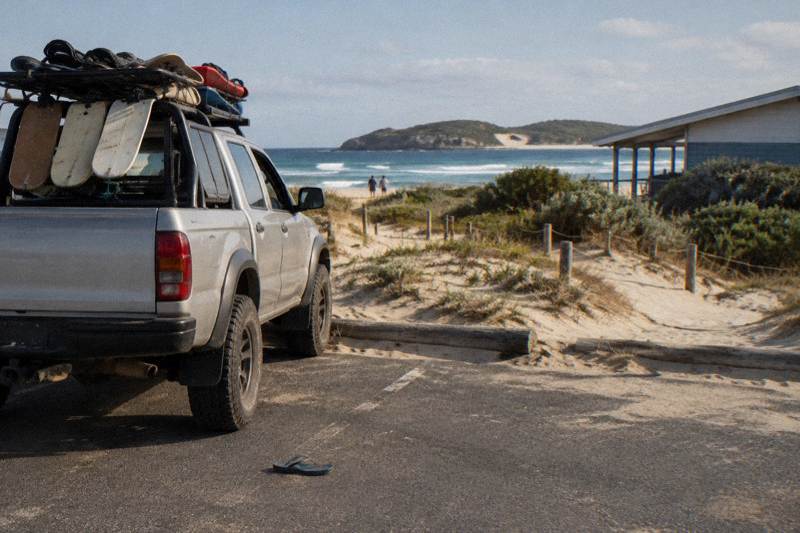
Is Sandboarding Just Like Snowboarding?
An honest comparison of sandboarding and snowboarding at Stockton Bight, Port Stephens: shared skills, key differences, where stand-up boarding exists, and which listing suits a snowboarder.
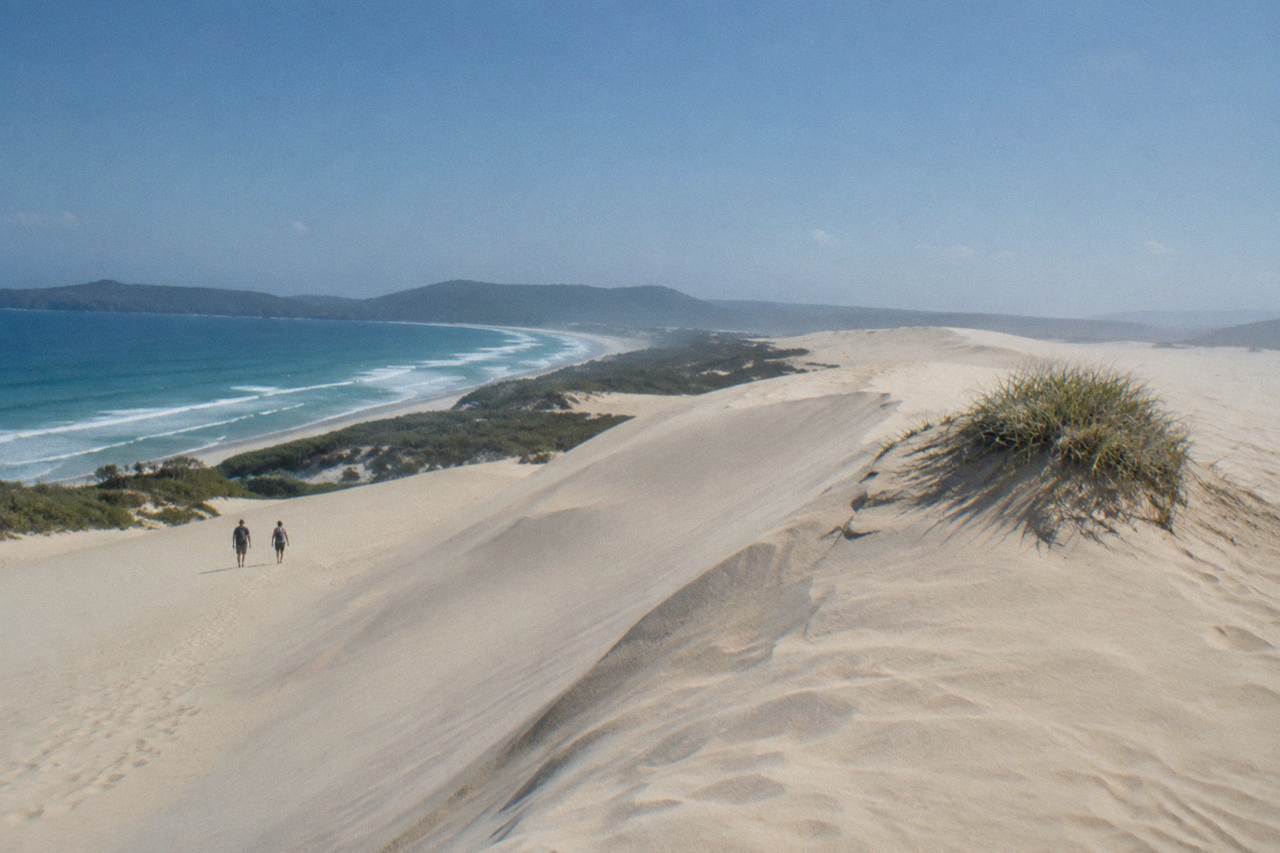
Sandboarding is the dune-country cousin of snowboarding: same sideways stance, same idea of sliding downhill, completely different surface. On the Stockton Bight dunes at Port Stephens, the comparison gets more complicated again, because most of the sandboarding on offer there is done sitting down, and the one operator offering stand-up boards frames it as its own skill. This article compares the two sports honestly, using what the operators themselves publish and what the official Worimi Conservation Lands pages say about the dunes. If you're still weighing up which coastal town to visit, our guide to choosing between Port Macquarie and Port Stephens compares the dunes, the bay and the beaches side by side.
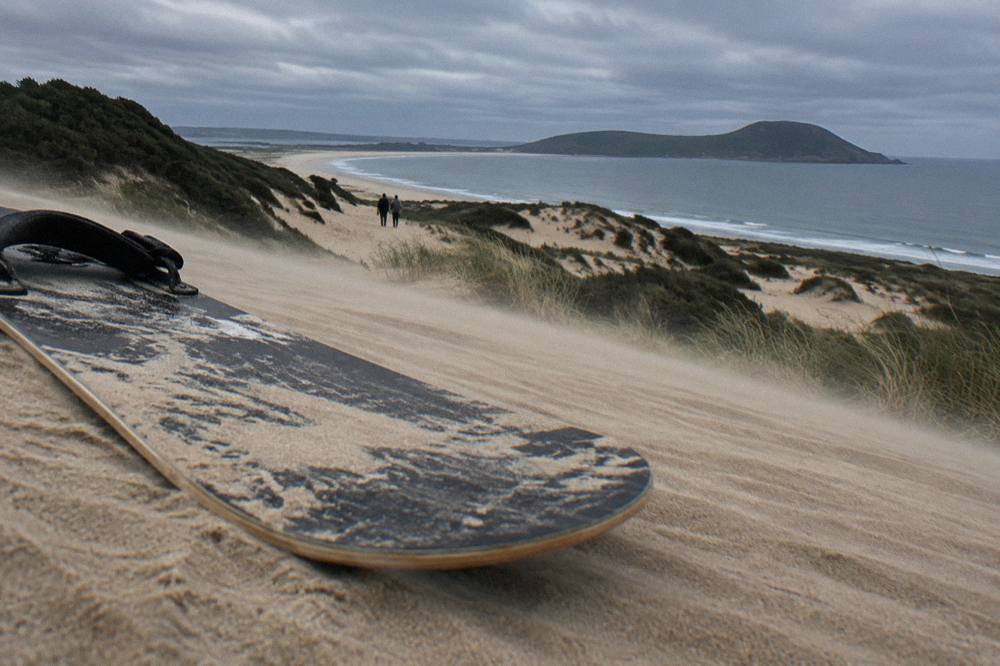
Is Sandboarding Just Like Snowboarding?
No, sandboarding is not just like snowboarding, though the two share a stance, a board shape and the thrill of sliding downhill. Sand has more friction than snow, so speeds are lower and runs are shorter; there are no lifts, so every run is earned by walking back up; and in Port Stephens the default style is a seated sled-ride rather than a stand-up carve. A snowboarder will recognise the movements but will not transfer their skills wholesale.
The honest answer starts with the surface. Snow is a low-friction surface that gets faster as it packs and melts; sand is granular, abrasive and slow by comparison. A waxed snowboard on a groomed piste can carry speed across a whole slope, while a sandboard scrubbs off pace within a few dozen metres and stops on flatter sand. That single physical difference drives almost everything else: the technique, the duration of a run, the kind of hill you need and the muscles you use climbing back up.
The second difference is the mountain infrastructure, or the lack of it. Snowboarding sits inside a lift-served resort economy; sandboarding sits on a dune where you walk, or where a 4WD shuttles you to the top of a designated slope. On the Port Stephens listings, a typical session involves a short 4WD transfer onto the dunes, then one to two hours of sliding, with boards and instruction included. Nobody rides a chairlift to the top of Stockton Bight.
Third, the default riding style is different. Snowboarding is stand-up by definition. Sandboarding at Port Stephens is mostly sit-down: you sit on a board with a waxed base, lean back and slide, which is closer to sledding than to carving. Only one operator here offers stand-up boards at all, and that shapes which listing a snowboarder should book. More on that below, and the fuller picture of the local scene is in the sandboarding guide for Port Stephens.
What Sandboarding And Snowboarding Genuinely Share
The shared ground is real: both use a flat-bottomed board ridden sideways, both reward a low centre of gravity and bent knees, both teach you to read a slope, and both deliver the same core sensation of sliding downhill under your own balance. A snowboarder arriving at the dunes already understands stance, edge thinking and fall-line selection, which gives them a head start over a first-timer. The vocabulary transfers well; the speed and the surface do not.
Stance is the most obvious inheritance. A stand-up sandboard is ridden with the same shoulder-parallel, knees-bent, weight-on-the-front-foot posture that a snowboarder spends their first painful days learning. The operator's own description of its stand-up sand surfing boards, with and without bindings, including tandem options, reads like a snowboard catalogue translated into sand. That is not an accident: the sport was modelled on snowboarding, and the boards are shaped like close cousins.
Balance instincts transfer too. Snowboarders have already learned the counterintuitive lesson that leaning back on a sliding board usually ends badly, and that committing weight down the fall line is what keeps the board running straight. On sand the stakes are lower, the speeds are slower and the landing is soft, but the instinct itself is the same one. Riders who already have it will slide further and fall less on day one.
The shared thrill is the point for most visitors. The sensation of the drop, the moment the board commits to the fall line, the spray of the surface kicking up behind: those feelings are recognisably the same sport at a different temperature. Riders on the live listings describe sandboarding in exactly the language snowboarders use, a fast slide down a steep face with a climb back up for another go. If the question is whether a snowboarder would enjoy it, the answer is that the core pleasure is familiar.
Where The Two Sports Diverge
The divergences are large: sand runs slower than snow, there are no lifts so every climb is on foot, the board needs wax rather than edges, the season is year-round rather than winter-bound, and the gear list is a pair of shoes and sunglasses rather than boots, bindings and goggles. Sandboarding is cheaper per session and shorter per run. A snowboarder who expects piste speeds will be disappointed; one who expects a fun, low-stakes slide will not.
The table below sets the differences side by side. It is a planning comparison drawn from how the two sports actually operate, not a promise about any particular day on the dunes.
| Aspect | Snowboarding | Sandboarding at Port Stephens |
|---|---|---|
| Surface | Snow, groomed or powder | Loose silica sand on the Stockton Bight dunes |
| Typical style | Stand-up only | Sit-down by default; stand-up on one operator's boards |
| Speed | High, lift-served slopes | Slower; sand friction stops the board quickly |
| Getting up the hill | Chairlift or gondola | Walk up, or a 4WD transfer to the slope |
| Season | Winter months | Year-round, weather permitting |
| Gear | Boots, bindings, helmet, goggles | Board and wax provided; closed shoes and sunglasses advised |
| Session shape | Multiple long runs all day | 1 to 2 hours of sliding, unlimited within the session |
| Learning curve | Days to link turns | Most riders slide on the first attempt |
The friction point deserves expansion because it changes technique more than newcomers expect. Sand does not reward the aggressive edge-loading that snow does; there is no edge to load. A stand-up sandboard is steered mostly by weight shift and by dragging a hand or a foot, and the board slows the moment the slope eases. Snowboarders used to carrying speed through a traverse will find the sand simply swallows their momentum. The adjustment is quick, but it is a real adjustment.
The lift question changes the whole shape of a session. On snow, a bad run costs a lift queue. On sand, a run costs a climb, and the climb is through soft sand under an Australian sun, which is its own workout. This is why the Port Stephens operators run 4WD transfers to the top of their slopes, and why sessions are structured as an hour or two of repeated slides rather than a full day. The dune does the work a chairlift would otherwise do, to a point, and then your legs take over.
Finally, the seasonality inverts completely. Snowboarding is a winter sport hemmed in by snowfall and opening dates; the dunes at Port Stephens sit in a coastal climate with mean maximum temperatures ranging from 17.2 degrees in July to 28.3 in January, and the lands are always open except when weather or fire danger closes them. The trade is that midsummer sand gets hot underfoot, which is why operators suggest closed shoes and why morning sessions are popular.
Can You Stand-Up Sandboard In Port Stephens?
Yes, but on one listing only. Sand Dune Safaris is the only Port Stephens operator offering both sit-down and stand-up boards, including boards with and without bindings, and it says so on its own activity page. The other two sandboarding listings here, Port Stephens 4WD Tours and 4WD Tours R Us, are sit-down experiences, and Port Stephens 4WD Tours prohibits stand-up boarding on its listing. A snowboarder wanting to ride standing must book accordingly.
This is the single most important booking detail for anyone arriving with snowboard muscle memory. The Sand Dune Safaris unlimited sandboarding listing, from $27.76 per person and rated 4.7 from 212 reviews, includes sit-down boards, beginner stand-up boards and pro stand-up boards, with children 3 and under free. The operator's page describes stand-up sand surfing as its own discipline, with tandem options for less confident riders. That range is what makes it the natural pick for a snowboarder.
The contrast is explicit elsewhere. The Port Stephens 4WD Tours listing, from $31.80 per person and rated 4.4 from 139 reviews, carries a plain note: no stand-up boarding. Its operator's page goes further, stating that only sit-down boarding is allowed and that the last 3:30pm session is capped near an hour of sandboarding time, with earlier arrival recommended for full access. 4WD Tours R Us, from $29.84 per person and rated 4.5 from 574 reviews, is likewise a sit-down session, and NSW National Parks lists it as a licensed Worimi sandboarding operator alongside Sand Dune Safaris.
None of this makes sit-down a lesser experience; it makes it a different one. Sitting low on a waxed board and sliding down a steep dune face is closer to a theme-park drop than to a carve, and for many families it is the better fit: less technique, less falling, more laughing. But a snowboarder asking whether sandboarding will feel like their sport should know that on two of the three local listings, the answer is no, it will feel like sledding. The board itself, and why sandboards are built the way they are, is covered in what kind of board is used for sandboarding.
Is Sandboarding Easier To Learn Than Snowboarding?
Most people slide on their first attempt, and the operators themselves say sandboarding is easier to learn, pointing to softer landings, slower speeds and beginner slopes on the same hill as steeper challenges. That is an operator opinion rather than a measured fact, but the reasoning is sound: sand forgives falls in a way packed snow does not, and there is no lift, no piste etiquette and no expensive gear standing between a beginner and their first run.
The claim comes from the operator's own page, which describes boards suitable for all ages and abilities, dunes of varying sizes including beginner slopes and a steep challenge slope, and instruction included on site. Frame it correctly: this is Sand Dune Safaris describing its own product, not an independent study. But the mechanics support it. Falling on sand at low speed hurts far less than catching an edge on ice, and a beginner who falls repeatedly can keep going rather than nursing a bruised hip back to the lift queue. The wider set of guides lives on Port Stephens Sand Dune Tours.
The learning curve difference matters for mixed groups. On a snowboard, a first day is mostly falling; on a sandboard, a first hour is mostly sliding, because the sit-down default removes the balance problem entirely. Stand-up sandboarding sits in between: the stance is familiar to a snowboarder and new to everyone else, and the soft surface makes the falling practice cheap. Beginners deciding between the two styles will find the full breakdown in is sandboarding easy for beginners.
For a snowboarder specifically, the honest framing is this: sandboarding will not test your snowboarding, it will give you a place to play with its ideas. The movements are recognisable, the consequences are small, and the hill is always open. Riders who arrive expecting a snow-sport substitute leave disappointed; riders who arrive expecting a fun afternoon on a dune leave happy, which is the question is sandboarding worth it answers at length.
What Kind Of Hill Are You Riding On?
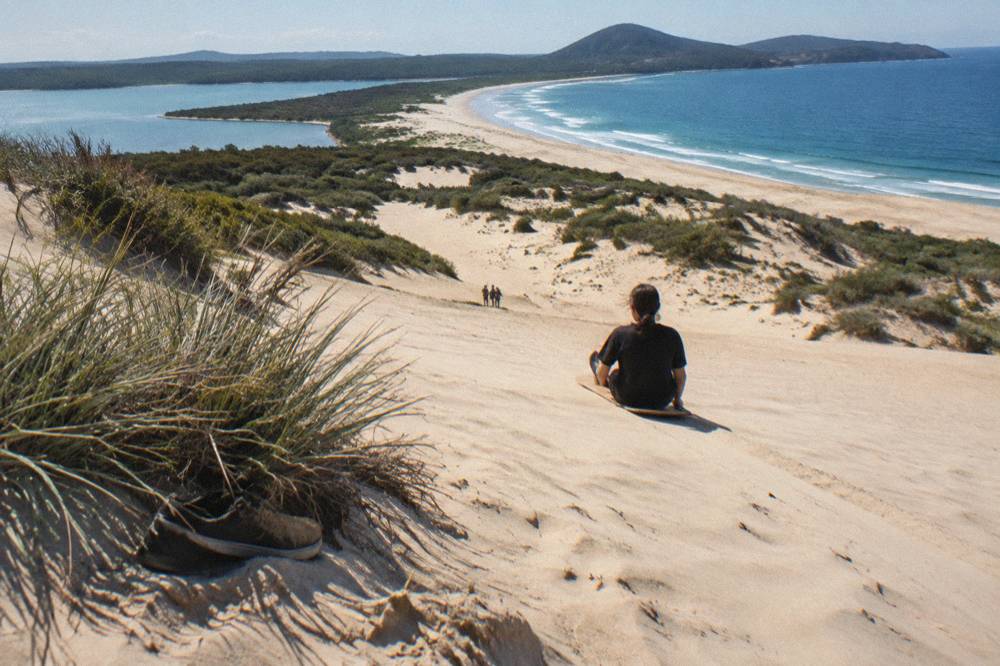
You are riding on sand, and a lot of it. Stockton Bight holds the largest moving coastal sand dunes in the southern hemisphere, per NSW National Parks, a 32 kilometre beach with a dune system behind it that shifts with wind and weather. Unlike a resort, the dune has no groomed runs, no fixed gradient and no official height figure; sources disagree on how tall the biggest dunes are, so no reliable number exists. If you're curious which dune actually takes the crown, our guide to Australia's biggest sand dune explains why the answer is less straightforward than you might expect.
That official description, the largest moving coastal sand mass in the southern hemisphere, is the verified claim and the only one worth repeating. Operator pages quote various height and slope figures, but those conflict with each other and no official measurement exists, so this site does not print one. What a rider actually experiences is simpler: steep faces of loose sand, a slope that changes shape between visits, and a surface that never behaves the same way twice because the wind rebuilt it overnight.
The mobility changes the riding in a way snow never does. A resort piste is machine-groomed into a predictable gradient; a dune face softens, steepens and migrates. Operators run their sessions on designated slopes within the Worimi Conservation Lands, which are owned by the local Worimi Aboriginal community and co-managed with NSW National Parks, and commercial sandboarding there requires a licensed operator holding a Parks Eco Pass. The land itself carries deep cultural significance, with middens, campsites and burials recorded behind the dunes, which is part of why free-riding anywhere on the dunes is not an option and guided, licensed sessions are the way in.
For a snowboarder, read that as the opposite of a backcountry day. You cannot tour the dune on your own board; you join a licensed session, use the operator's boards and ride the slope they set up. The trade is fair: you get a shuttle, instruction, equipment and legal access to a landscape that would otherwise be closed to casual riding. The broader access picture, including what walkers can do for free, is in the Worimi Conservation Lands guide.
Which Port Stephens Listing Suits A Snowboarder?
A snowboarder should book the Sand Dune Safaris unlimited sandboarding listing first, from $27.76 per person, because it is the only local option with stand-up boards, including pro-level boards for confident riders. The other two listings are cheaper or comparable but sit-down only. All three include boards, instruction and a 4WD transfer, and all three allow free cancellation, so the choice is about riding style, not risk.
The comparison below uses only verified listing figures.
| Listing | Style | From price | Rating | Stand-up boards |
|---|---|---|---|---|
| Sand Dune Safaris unlimited sandboarding | Sit-down and stand-up | $27.76 per person | 4.7 from 212 reviews | Yes, beginner and pro |
| 4WD Tours R Us unlimited sandboarding | Sit-down | $29.84 per person | 4.5 from 574 reviews | No |
| Port Stephens 4WD Tours unlimited sandboarding | Sit-down | $31.80 per person | 4.4 from 139 reviews | No, prohibited |
Price is a poor tiebreaker here because the three listings sit within a few dollars of each other; style is the real decision. A snowboarder who wants to stand should take the first row without hesitation. A group with nervous riders or small children might prefer either of the other two, and the 4WD Tours R Us listing carries the deepest review pool at 574 reviews, reflecting a family-owned business that started in February 2015. Meeting points differ slightly, Anna Bay Lower Car Park for two of them and 80 Gan Gan Road for the third, so check the listing for directions before you drive out.
Cancellation terms are worth a sentence because they differ from snow-country norms. All three sandboarding listings allow free cancellation, which is a friendlier posture than most ski schools offer. The one category listed here that does not refund is the tag-along 4WD tours, which are explicitly non-refundable, but none of those is needed for a sandboarding day. Check the live listing for the current session times before you commit to a morning.
How Should A Snowboarder Prepare For The Dunes?
Prepare for heat, soft sand and short climbs rather than for cold: wear closed shoes, bring sunglasses and water, expect to walk back up the slope between runs, and book a morning session in the warmer months when the sand surface is cooler underfoot. Sunscreen matters more than any technical gear, because the dunes offer no shade and the UV off pale sand is intense. Leave the snow gear at home; the operator provides the board.
The clothing question gets asked often enough that this site covers it separately in what to wear for sandboarding, but the snowboarder-specific version is short. Everything a snowboarder wears for insulation is wrong here. What transfers from a snow kit is the sun protection logic, just inverted: instead of goggles and a shell, you want sunglasses, a hat and sunscreen, and the operator's own advice favours bare feet or simple closed shoes over bulky boots. The sit-down sessions are forgiving of clothing choices; the stand-up sessions reward anything that lets you bend your knees.
Fitness expectations should be recalibrated too. Snowboarding spreads its effort across lift-served laps; sandboarding concentrates it into repeated climbs up a soft-sand slope in whatever the day's temperature is. The BoM Williamtown averages put mean maximums at 28.3 degrees in January and a mild 17.2 in July, so the same climb feels very different by season. One to two hours is the typical session length, and that is enough for most legs; the unlimited listings let strong riders stay longer within operating hours.
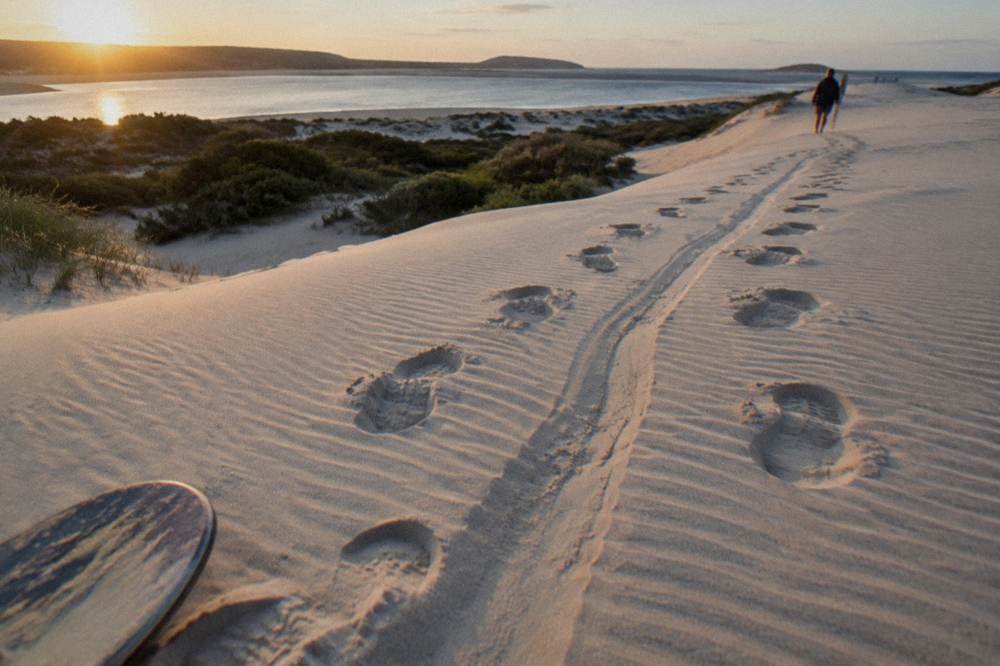
Timing the visit sits on top of that. The lands are always open but may close for poor weather or fire danger, and an active NPWS alert currently advises the Worimi beach is unsafe for swimming due to hazardous surf, from 23 September 2026 to 28 April 2027, so plan on sliding rather than swimming. Spring school holidays run 28 September to 9 October 2026 and the summer break runs 18 December 2026 to 27 January 2027, both busy windows at Anna Bay. A quieter weekday morning outside those blocks is the closest thing the dunes have to a fresh-piste day.
The Honest Verdict For Riders With Snowboard Experience
Sandboarding is not the same as snowboarding, and that difference is the point. It keeps the sideways stance and the sliding thrill, then swaps snow for sand, lifts for 4WD shuttles, and long fast runs for short soft ones. Experienced snowboarders who book stand-up boards at Sand Dune Safaris will find the closest thing the dunes offer to their sport, while a sit-down session delivers something simpler and more playful. Both are worth the drive from Sydney.
That verdict is easier to reach with the local context in view. Port Stephens sits a 2.5 hour drive north of Sydney, Anna Bay is the gateway settlement at the dune end, and the whole sandboarding economy there is built around a two-hour sliding session rather than a full mountain day. Riders comparing the two sports on cost will find sandboarding wins comfortably: the local listings run from $27.76 to $31.80 per person, against the lift tickets, rentals and accommodation a snow day demands. Riders comparing them on adrenaline should temper expectations, as the physics simply will not cooperate. For a closer look at what each of those options actually covers, the full price breakdown of every Port Stephens sandboarding listing spells out where the value sits.
The comparison also cuts the other way for people who have never snowboarded. Sandboarding is the low-consequence entry point: soft landings, cheap sessions, no lift queues and no specialist gear. Many riders take to the dune first and the piste later, which is why operators describe their slopes as suitable for all ages and abilities, with beginner and challenge faces on the same hill. Whichever direction you come from, the pairing works because the two sports rhyme rather than replicate.
For planning beyond the dune itself, this site's comparison of local listing prices and the homepage tour picker cover everything on offer here, from sandboarding through quad bikes to full Sydney day trips. The quad bike adventure, an Aboriginal-owned operation meeting at Murrook Culture Centre, is the other way to move fast across the sand, and the day trips from Sydney bundle the dunes with a dolphin cruise or a koala stop for visitors without a car. Start with the slope, then decide how much of the bight you want to cover.
Common Questions About Sandboarding And Snowboarding
Is Sandboarding Just Like Snowboarding?
No. The stance and the sliding sensation transfer, but sand runs slower than snow, there are no lifts, most Port Stephens sessions are sit-down, and only one local operator offers stand-up boards at all. Treat it as a cousin of the sport rather than a version of it.
Can you stand up on a sandboard in Port Stephens?
Yes, on the Sand Dune Safaris listing only. It offers sit-down boards, beginner stand-up boards and pro stand-up boards, some with bindings. The Port Stephens 4WD Tours listing prohibits stand-up boarding, and 4WD Tours R Us runs sit-down sessions.
Is sandboarding easier than snowboarding?
The operators say it is easier to learn, citing softer landings and beginner slopes, which is their opinion rather than a measured finding. In practice most first-timers slide on their first attempt, and the sit-down style removes most of the balance challenge.
Do you need snowboard gear to try sandboarding?
No. Boards, wax and instruction are included in the local listings, and the operator's advice is comfortable clothing with closed shoes. Sunglasses and sunscreen matter more than any technical equipment, since the dunes offer no shade.
How fast do you go on a sandboard?
Slower than on snow. Sand's friction scrubs speed quickly, so runs are short and speeds are modest even on steep faces. That is part of why the sport suits beginners and families, and why a snowboarder should not expect piste speeds.
How long does a sandboarding session last?
Most visitors spend 1 to 2 hours on the slope after a short 4WD transfer, and the unlimited listings let you keep sliding within operating hours. The last 3:30pm session at Port Stephens 4WD Tours is capped near an hour, so earlier arrival gives more time.