Is Sandboarding Easy For Beginners?
An honest answer for beginners: sit-down sandboarding on the Stockton Bight dunes needs no skill, stand-up takes practice, and every licensed operator teaches you on site.
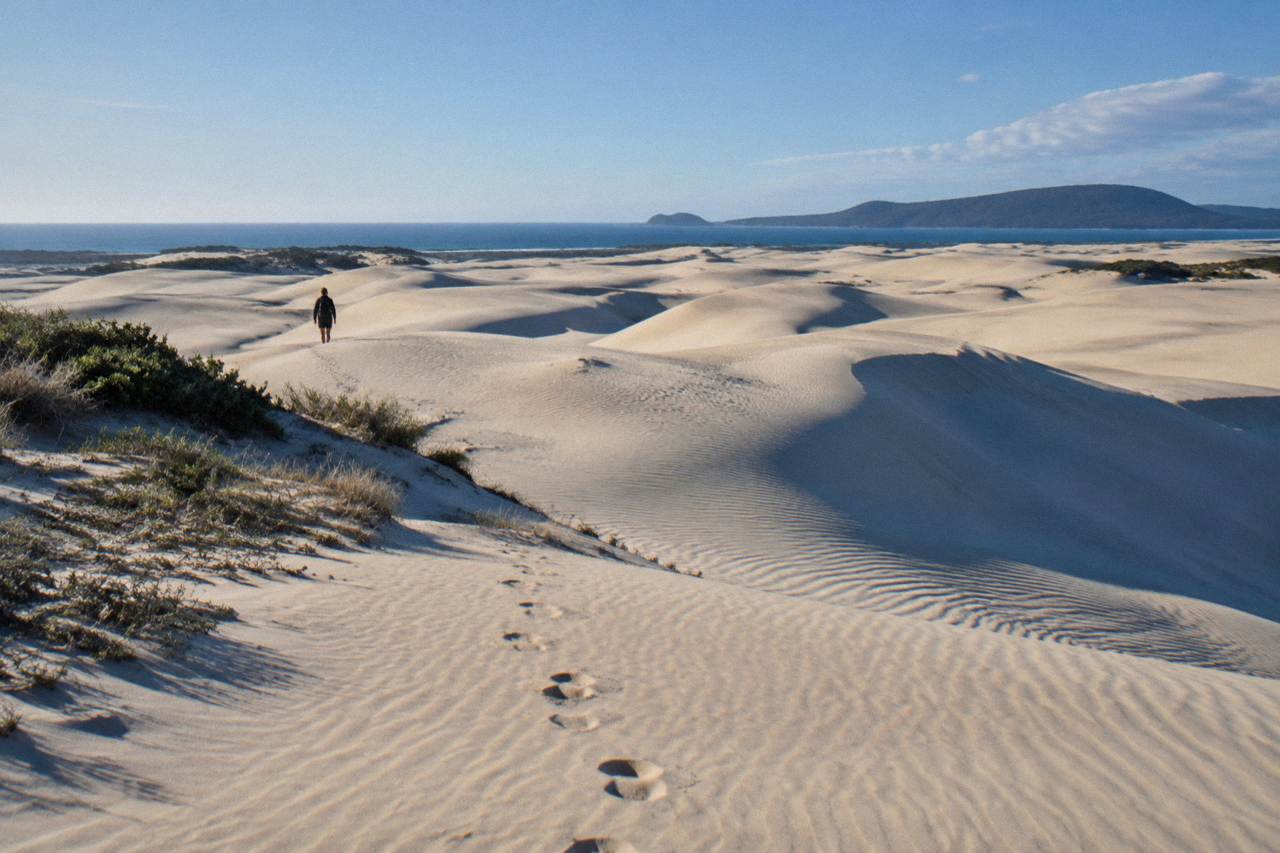
The beginner worry about sandboarding is usually the same one people have before their first ski lesson: a fear of being the only person who cannot do it. On the Stockton Bight dunes at Port Stephens, that worry is mostly misplaced. The default beginner experience here is a sit-down board, which requires no balance skill at all, and every licensed operator puts an instructor on the hill with you. The honest answer is that sit-down sandboarding is easy for almost everyone, stand-up sandboarding is a real skill, and the gap between the two is the whole story. If you already snowboard and are wondering whether your skills will transfer, our honest comparison of sandboarding and snowboarding at Stockton Bight covers exactly what carries over and what does not.
Is Sandboarding Easy For Beginners?
Yes, in its most common form. Sit-down sandboarding, the format every Port Stephens operator offers to first-timers, needs no prior skill: you sit on a board, push off, and slide to a stop in soft sand. Stand-up sandboarding is harder and closer to snowboarding, but even that comes with on-site instruction, gentle beginner slopes and forgiving landings. Most beginners are sliding within minutes. Before you head out, check whether visiting the Stockton Sand Dunes costs anything, since walking in is free but tours and rides are not.
The reason sit-down boarding is so accessible comes down to physics and furniture. A sit-down board is a moulded plank with a seat and a handhold; you point it downhill, lean back slightly, and gravity does the rest. There is no edge control to learn, no carve, no lift queue. The stopping distance is short and the landing surface is sand, which is why operators describe it as suitable for all ages and abilities. NSW National Parks lists guided sandboarding on the Worimi lands, with operators describing it as suitable for all ages and abilities, and the licensed operators here, per the official NPWS visitor page, supply the boards and the supervision as part of the session.
Stand-up boarding is where the honest caveats start. It shares its stance and its edge logic with snowboarding, and the first few attempts usually end with the rider sitting down abruptly. The saving grace is that the sand is soft, the runs are short, and you can walk back up the slope you just fell down rather than riding a chairlift to try again. Operators themselves frame the learning curve as shorter than snowboarding's, though that is their opinion rather than a measured fact; what is verifiable is that instruction is included on site at every licensed session.
It also helps that the whole environment is built around first-timers. The dunes used for the sessions have slopes of more than one steepness, so a nervous beginner can start on a gentle face and graduate to the steeper challenge slope only if the first runs feel good. The instructors are used to mixed groups: on any given hill there will be small children on sit-down boards, teenagers attempting stand-up runs, and adults who came only to watch and got talked into one slide. Nobody stands out as the beginner, because everyone is one.
What Board Types Can Beginners Use At Anna Bay?
Two formats exist on the Anna Bay dunes: sit-down boards, which every licensed operator supplies and which need no skill, and stand-up boards, which only one operator currently offers. Sand Dune Safaris says it is the only Port Stephens company providing both sit-down and stand-up styles. Port Stephens 4WD Tours allows sit-down boarding only, and 4WD Tours R Us runs sit-down sessions on the same dune system.
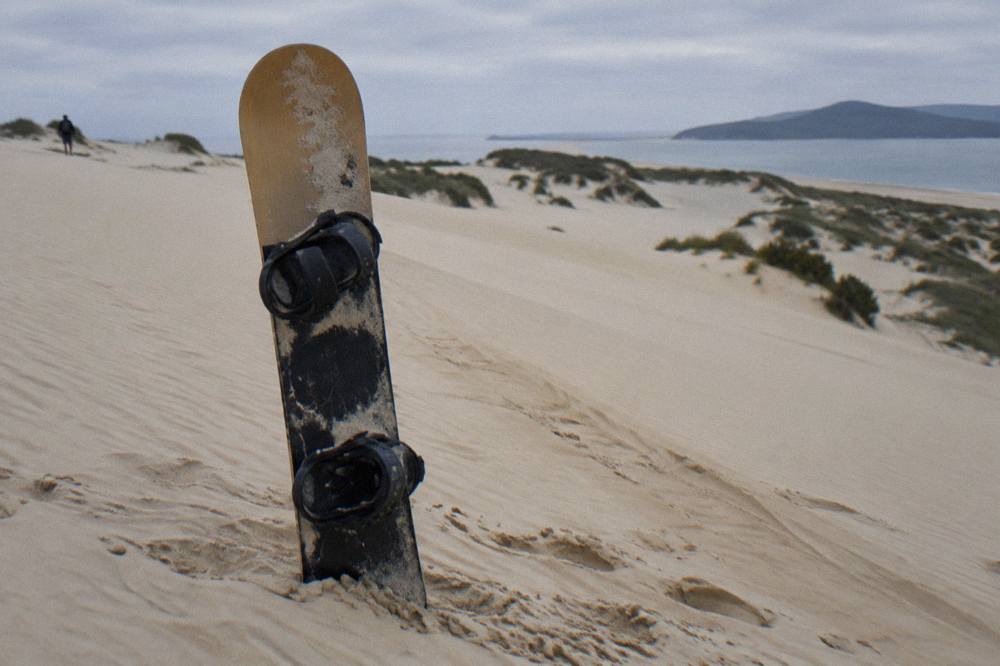
The sit-down board is the beginner workhorse. It is stable, slow to tip over, and forgiving of bad posture. Children ride them, grandparents ride them, and the worst outcome of a bad run is usually a face full of sand. The stand-up board, by contrast, is a waxed plank you ride standing, sometimes with bindings, and it demands the same weight-shift instincts as its snow cousin. Sand Dune Safaris is the operator that offers both, including tandem options where a beginner rides with someone more experienced; the operator's own activity page describes both styles and the beginner slopes it uses.
| Board format | Who offers it | Skill needed | Beginner verdict |
|---|---|---|---|
| Sit-down board | All licensed Anna Bay operators | None | The easy entry point, first run within minutes |
| Stand-up board (no bindings) | Sand Dune Safaris only | Moderate | Learnable in a session, expect early falls |
| Stand-up board (with bindings) | Sand Dune Safaris only | Moderate to high | Closest to snowboarding, best for the ambitious |
The format choice matters more than the operator choice for a nervous beginner. If the goal is simply to slide down a dune and enjoy the view, a sit-down session anywhere on the Bight will deliver. If the goal is to feel like a snowboarder without the lift ticket, the stand-up option narrows the field to one operator, and it is worth checking session times on that listing before committing to a date, because weekend slots fill first. Whichever format you pick, the boards themselves are always supplied; nobody brings their own, and there is no equipment rental step to get wrong.
A quick word on the tandem option, because it is the least advertised beginner shortcut. A tandem ride puts a beginner on the same board as an experienced rider or an instructor, which removes the balance problem entirely while still delivering the sensation of a stand-up descent. It is the closest thing on the dunes to a guaranteed first-time success, and it exists only because one operator chose to offer both formats. For families with one confident rider and one nervous one, that detail alone can decide the booking.
How Hard Is Stand-Up Sandboarding Compared With Snowboarding?
Stand-up sandboarding borrows snowboarding's stance and edge control but removes the speed, the hard ice and the lift queues, which makes it easier to learn in practice. Falls land in soft sand, runs last seconds, and you can climb back up and retry instantly. The balance instincts still take a few sessions to bed in, so a beginner should expect wobbles and tumbles on day one.
The comparison is worth spelling out because most people asking it already snowboard or intend to. On snow, a beginner day involves a magic carpet, a bruised tailbone and a long walk in boots. On sand, a beginner day involves a short climb up a slope you can see the bottom of, a run of a few seconds, and a soft stop. The failure mode is gentler. What does not transfer away is the core skill: shifting weight between heels and toes to steer, and keeping the board flat instead of catching an edge. Sand edges are more forgiving than steel snowboard edges, but they still exist.
The other difference is repetition speed. A sandboard run is over almost before it starts, which sounds like a downside but is actually the fastest way to learn. More attempts per hour means more corrections per hour. Operators on the Bight report that most stand-up beginners link a few controlled runs within their first hour, though that is operator framing rather than a measured statistic. The verifiable structure is this: sessions run 1 to 2 hours on the hill after a roughly 10 minute 4WD transfer out to the dunes, with unlimited runs inside that window, and instruction included.
One honest limit: stand-up sandboarding is tiring in a way sit-down boarding is not. Every run ends with a walk back up. Beginners who underestimate the climb, and the summer heat on bare sand, often switch to sit-down boards halfway through. There is no shame in that; it is the format most of the dune is using anyway.
Snowboarders should also temper one expectation. Sand does not glide the way snow does, so a stand-up sandboard never builds the sustained speed of a blue run, and the technique is more about controlled sliding than carving. Some riders find that disappointing for a run or two, then discover that the shorter, slower runs let them attempt things they would never try on ice in their first season. The dune rewards experimentation precisely because the stakes are low.
What Should First-Timers Expect On Their First Session?
A first session runs simply: check in at the operator's meeting point, take a short 4WD transfer out to the dunes, receive a board and a safety briefing, then slide for 1 to 2 hours with instructors on the hill. Boards, transfer and instruction are included in every licensed session. Expect soft landings, a hot climb back up, and no need to book a second session to feel successful.
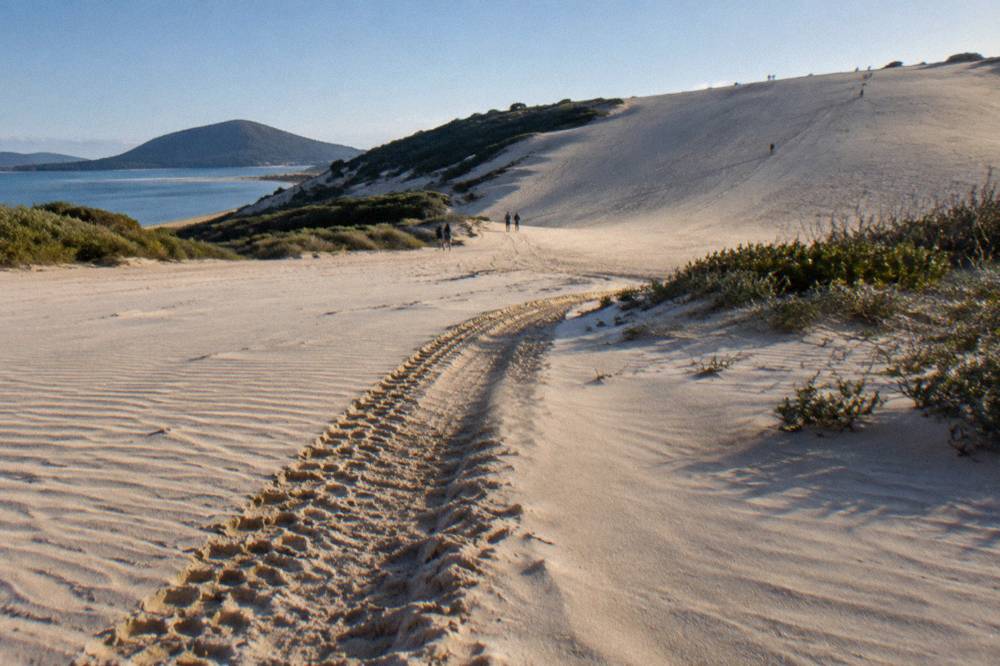
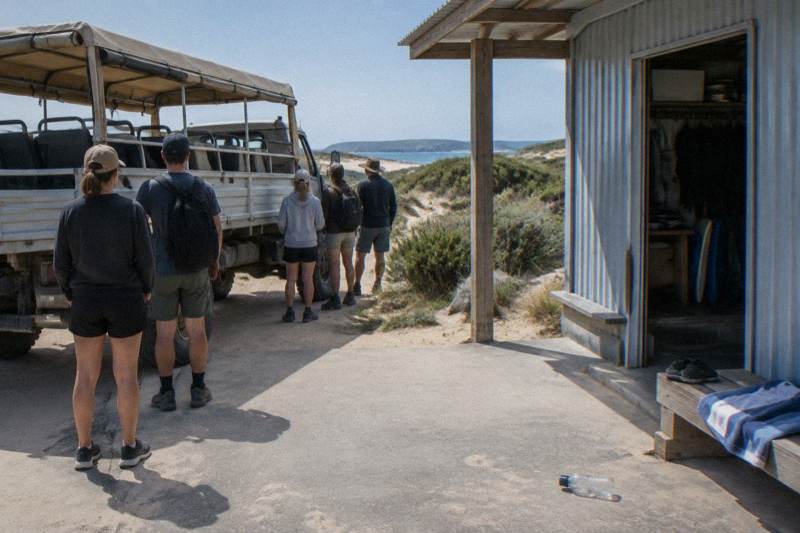
The logistics are the same across the licensed operators. You meet at a set point, at Anna Bay for most sessions: the Sand Dune Safaris booth at the Lower Car Park, the 4WD Tours R Us base on Gan Gan Road, or the Port Stephens 4WD Tours reception trailer. There is no hotel pickup on the standard sandboarding listings, so you drive yourself to the meeting point. From there a 4WD carries the group out onto the dunes, a drive of roughly 10 minutes, and the hill you land on has slopes of more than one steepness: gentle runs for beginners and a steeper challenge slope for the confident. The wider set of guides lives on Port Stephens Sand Dune Tours.
The session itself is unstructured in the best way. Once briefed, you slide as many times as you like within the window, and the instructors circulate rather than run a formal class. The 4WD Tours R Us session, the most reviewed sandboarding listing in Port Stephens at 4.5 from 574 reviews, runs from $29.84 per person with unlimited time on the hill, and it is the listing this site points most beginners toward; you can Check availability at the live listing for session times. The operator is family-owned and has run Worimi sandboarding since February 2015, and NPWS lists it as a licensed commercial tour operator with a Parks Eco Pass, so the tour price includes the park entry fee.
Two practical notes from the operator pages. Port Stephens 4WD Tours caps its last 3:30pm session at about an hour of sandboarding, so late arrivals get less hill time; the operator itself recommends arriving earlier for full access. And its sit-down-only rule is enforced, so stand-up hopefuls should book with Sand Dune Safaris instead. For a fuller treatment of formats and prices, the sandboarding in Port Stephens guide breaks down every listing side by side.
How Long Does It Take To Learn Sandboarding?
Sit-down sandboarding takes about one run: the first slide is usually competent and the second is comfortable. Stand-up sandboarding takes most beginners 30 to 60 minutes to link controlled runs, and a session or two to feel fluent. Neither format requires lessons beyond what is already included on the hill, and nobody needs a second booking to reach a satisfying level on a first visit.
Learning speed on sand is helped by three things the mountain cannot offer. The runs are short, so mistakes cost seconds rather than a whole piste. The surface is soft, so the fear of falling, the thing that actually slows learning, fades quickly. And the feedback is instant: if you leaned wrong, you are already sitting in the sand and know exactly why. Most of the difficulty beginners report is not the boarding but the climb, the heat and the sand in everything, which is a wardrobe and timing problem rather than a skill problem.
The progression for an ambitious beginner looks like this: first hour, sit-down runs and one or two stand-up attempts ending in falls; second hour, stand-up runs that stay upright for most of the slope; by the end of a single 2 hour session, most people who wanted to stand up are standing up. That pace matches the session structure, since the unlimited format means nobody is hurried off the hill. If the first session hooks you, the is sandboarding worth it post weighs the experience against the cost, and the answer for most beginners is favourable.
Age barely changes the equation on the sit-down side. The Sand Dune Safaris listing takes children 3 and under free, and the operator describes its slopes as suitable for all ages and abilities, which in practice means the same board, the same briefing and the same gentle slope serve a four year old and a seventy four year old. Stand-up boarding skews older simply because it demands more from the legs, but there is no licence, no prior experience and no fitness test on any listing in the Port Stephens lineup.
Which Port Stephens Operator Suits A First-Timer Best?
For a pure first-time sit-down session, 4WD Tours R Us is the strongest default: the most reviewed listing, from $29.84, unlimited time, free cancellation. For a beginner who wants to try standing up, Sand Dune Safaris is the only operator offering both formats, from $27.76. For a taste of boarding inside a broader dune ride, the Port Stephens 4WD Tours Birubi Beach tour combines a 75 minute 4WD trip with boarding, from $39.55.
The honest differences between the three are small on paper and real in practice. All three meet around Anna Bay, all include boards, transfer and instruction, and all three carry free cancellation, so a nervous beginner loses nothing by booking ahead and changing plans if the weather sours. The distinguishing features are format and shape: 4WD Tours R Us is the high-volume sit-down session with the deepest review pool; Sand Dune Safaris adds the stand-up and tandem options on the same hill; Port Stephens 4WD Tours wraps its sit-down boarding inside a scenic 4WD beach and dune run rated 4.8 from 127 reviews. If you're unsure which board style suits you, our guide to sit-down and stand-up sandboard types on the Stockton dunes explains what each tour hands you.
| Operator listing | From price | Rating | Format | Best for a beginner who wants |
|---|---|---|---|---|
| 4WD Tours R Us unlimited sandboarding | $29.84 | 4.5 from 574 reviews | Sit-down | The simplest, cheapest first session |
| Sand Dune Safaris unlimited sandboarding | $27.76 | 4.7 from 212 reviews | Sit-down and stand-up | To try both styles on one hill |
| Port Stephens 4WD Tours Birubi Beach tour | $39.55 | 4.8 from 127 reviews | 4WD tour plus sit-down | Boarding inside a sightseeing ride |
One caution applies to the wider dune market, not these three: the two 4WD Tag-Along listings are non-refundable, and neither is a sandboarding product, so a beginner booking on price alone should read the cancellation line before paying. The three listings above all refund. Before committing, compare the trio against the dune tour prices compared guide, which puts every Port Stephens listing, boarding and otherwise, on one table.
What Should Beginners Wear And Bring?
Wear what you would wear for a hot beach walk: comfortable casual clothes you do not mind filling with sand, a hat, sunscreen and water. Closed shoes or bare feet both work on the boards, and the operators recommend bare feet over shoes for grip on sit-down runs. Bring nothing valuable, because sand gets into everything and nothing on the dunes is lockable.
The sand itself is the main wardrobe consideration. It holds heat on sunny days, it grinds into pockets and shoes, and it does not wash out of some fabrics gracefully. Loose clothing wins over tight, and a long-sleeve light shirt is a better sun shield than sunscreen alone on a two hour session. The what to wear for sandboarding post covers the full kit list, but the short version for a beginner is: dress for the beach, expect sand in the car for a week, and leave the good sunglasses at home.
Timing shapes comfort as much as clothing. The BoM averages for nearby Williamtown put January mean maximums at 28.3 degrees and July at 17.2, with spring the driest stretch of the year at 60 to 75 mm of rain across the month, so a morning session in the shoulder months is the gentlest introduction a beginner can give themselves. The lands are always open but may close for poor weather or fire danger, and the Worimi beach itself is unpatrolled with a swimming-unsafe alert running to 28 April 2027, so the session is a boarding one, not a swimming one. The best time to visit the dunes post unpacks the seasons in more detail.
The last beginner question is usually about fitness, and the answer is reassuring: no session on the Bight requires fitness beyond a short uphill walk in soft sand. The 4WD does the travelling, the board does the descending, and the only exertion is the climb between runs, which you control by choosing a shorter slope. Port Stephens makes the entry unusually gentle, which is exactly why so many first-timers here end the day planning a second session.
Common Questions About Beginner Sandboarding
Is Sandboarding Easy for Beginners?
In its sit-down form, yes: the format needs no balance skill and most beginners slide competently on their first run. Stand-up sandboarding is harder and closer to snowboarding, but every licensed Port Stephens operator includes instruction on the hill, and soft sand makes the learning falls gentle.
Do You Need Lessons Before Sandboarding at Port Stephens?
No. Every licensed session on the Worimi lands includes a safety briefing and on-hill instruction as part of the price, alongside board hire and the 4WD transfer out to the dunes. There is no separate lesson product to buy and no skill prerequisite to meet.
Is Sandboarding Harder Than Snowboarding?
Stand-up sandboarding uses the same stance and edge instincts as snowboarding, so the core skill transfers. Most beginners find sand easier in practice because runs are short, landings are soft and retries are instant. Sit-down sandboarding is not comparable at all: it needs essentially no skill.
Can Children Do Sandboarding on the Stockton Dunes?
Yes. Operators describe their sessions as suitable for all ages and abilities, and sit-down boards are the standard children's format. On the Sand Dune Safaris listing, children 3 and under ride free; check the age terms on each listing before booking, as they differ slightly between operators.
How Many Runs Do Beginners Get in a Session?
As many as the session window allows. The standard structure is a roughly 10 minute 4WD transfer each way and 1 to 2 hours on the hill, with unlimited runs inside that time. The only cap is at Port Stephens 4WD Tours, where the last 3:30pm session is limited to about an hour of boarding.
What Happens if a Beginner Cannot Do It?
Almost nothing dramatic. A sit-down board that will not behave still slides to a soft stop in sand, and instructors move beginners to gentler slopes. Because the three beginner-friendly listings all carry free cancellation, a genuinely nervous first-timer can also change or cancel the booking before the session rather than risk the day.