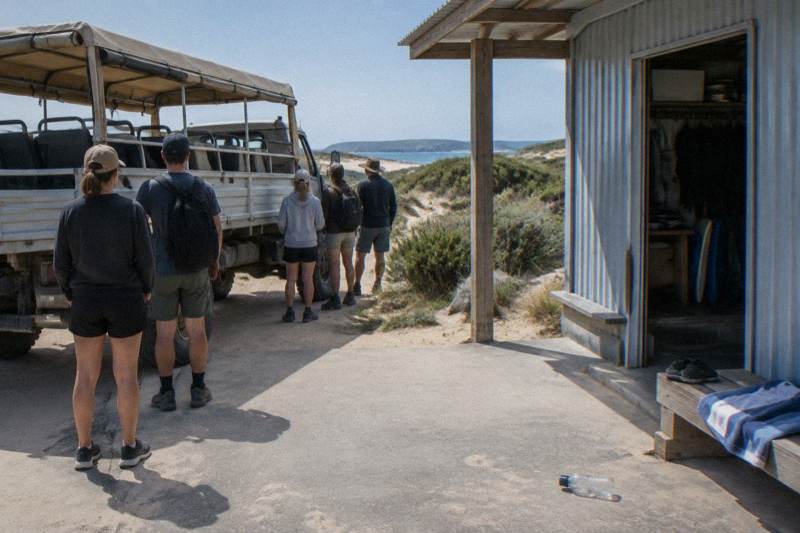
What Should You Wear For Sandboarding?
What to wear sandboarding at Stockton Bight: barefoot advice, sun protection, sand-proof clothing choices, and what the Port Stephens operators provide.
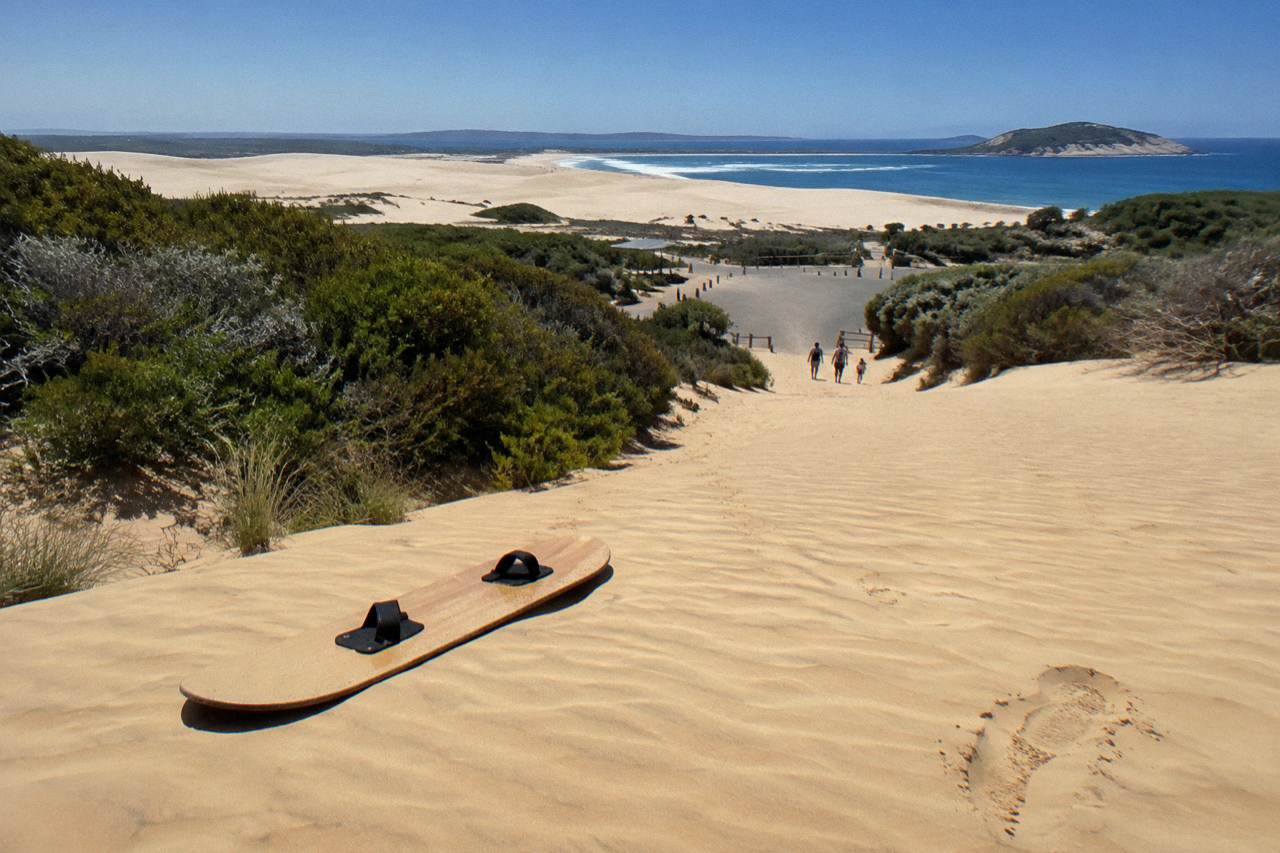
Sandboarding on the Stockton Bight dunes at Port Stephens is one of the few adventure activities where the packing list is genuinely short. There is no special boot, no glove, no technical layer, and one operator in Anna Bay actively recommends riding barefoot. What actually matters is sun protection, clothing that tolerates a day of fine sand, and knowing in advance what the tour operators already hand you on the dune, which is more than most people assume: a board, instruction, and on one listing, water. If a camel ride on the same Birubi Point beach is also on your list, the pants versus shorts question for camel rides covers what that operator tells guests to wear.
The dunes themselves are the reason the kit question keeps coming up. Stockton Bight holds the largest moving coastal sand dunes in the southern hemisphere, and the surface you slide on is soft, dry and, on a clear afternoon, hot enough to make footwear a real decision rather than an afterthought. Get the clothing basics right and the session is comfortable from the first run; get them wrong and the walk back up the hill becomes the hardest part of the day.
What Should You Wear For Sandboarding?
Wear light, close-weave clothing that covers your shoulders, shoes you can slip off easily or go barefoot, a brimmed hat, sunglasses and sunscreen, and bring a full water bottle. Port Stephens operators provide the sandboard, instruction and a 4WD transfer to the dunes, so no specialist gear is required. One Anna Bay operator recommends barefoot riding over shoes on the sand.
That is the whole answer, but the reasoning behind each item is worth understanding because the dune environment is unlike a beach day or a snow trip. The sand at Stockton Bight is fine and dry, which means it works its way into loose fabric, open shoes and any pocket left unzipped. It also reflects light strongly, so sun exposure comes from above and below at once, a detail that catches out visitors who dressed for a normal bushwalk.
The good news is that the barrier to entry is deliberately low. The unlimited sandboarding session with 4WD Tours R Us, the most reviewed product on this site at 4.5 from 574 reviews, includes board hire and instruction with unlimited time on the hill, from $29.84 per person. You can check the live price and times before you pack a single thing, and the same goes for the other Anna Bay operators. Nothing here asks you to bring equipment.
The three sessions above cover the practical range at Anna Bay: a pure unlimited sandboarding hill, a sit-down only variant, and a 75 minute 4WD beach tour with boarding included. All three meet at Anna Bay locations, all include the board and instruction, and all but the Birubi beach tour are built around hours of repeated slides rather than a single run. What you wear is identical for each.
Do You Wear Shoes Or Go Barefoot On The Dunes?
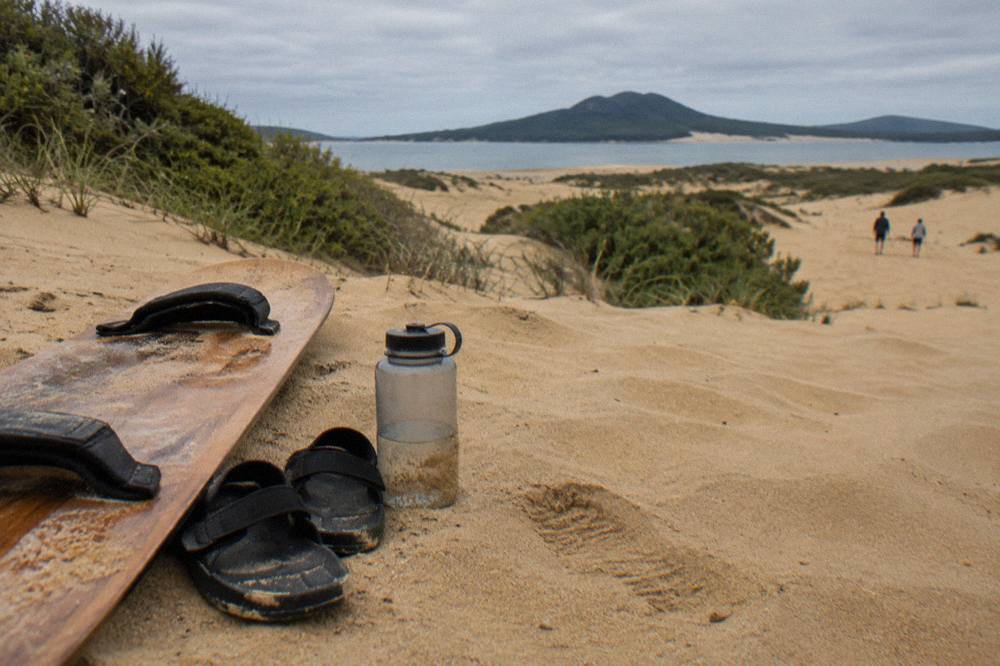
One operator, Port Stephens 4WD Tours, explicitly recommends riding barefoot and describes shoes as the worse option on soft sand, while the other Anna Bay operators leave footwear to the rider. Practical advice for Stockton Bight is bare feet for the ride itself, with sandals or slip-on shoes for walking between the car park, the transfer vehicle and the hill.
The barefoot recommendation comes from the operator's own tour page, which notes that most riders find bare feet easier for both gripping the board on sit-down runs and feeling the sand when climbing back up. Sand that has baked in the sun for hours is hot underfoot by mid-afternoon, so the walking sections are where sandals earn their place. A pair you can flick off and carry is the standard pattern on the dune: shoes on for the 10 minute 4WD transfer, shoes off at the top of the run.
What does not work well is anything with a heel, a stiff sole or a mesh upper. Fine sand pours through mesh running shoes within minutes and stays there for the rest of the day, and a heavy sole makes the climb back up the slope more tiring than it needs to be. Thongs work for the flat sections but are easy to lose on a steep face; a sandal with a heel strap is the safer middle ground if you want more than bare feet.
The same logic applies to socks, which are worth bringing only as a backup for a cold morning. Winter sessions at Port Stephens run with mean minimum temperatures around 6.5 to 8 degrees in July and August, and sand that has been cool overnight is comfortable barefoot by late morning but can be sharp on the feet at a 9:30am start. A cheap pair of socks in the bag costs nothing and solves the one situation bare feet cannot.
What Clothing Actually Works On A Sand Dune?
Long, loose, light-coloured clothing in a close weave beats shorts and a t-shirt for a full sandboarding session at Stockton Bight. Sand grinds against bare skin on every slide and every climb, so covered knees and elbows stay comfortable longer, and a close weave keeps fine sand out of the fabric itself. Avoid anything with loose pockets, frayed edges or delicate fabric.
The counterintuitive part is that covering up is cooler, not hotter, on a dune. There is no shade on the hill, the sand reflects heat from below, and skin that is directly exposed takes both loads at once. Loose long sleeves and trousers in cotton or a light synthetic vent heat while blocking the reflection, which is the same logic desert travellers have used forever. Riders who show up in board shorts generally add a layer or shorten the session.
Sand is the second factor. It behaves like a fine abrasive, and on a sit-down board it contacts your legs, hands and backside at speed on every run. A pair of leggings or tracksuit pants under shorts is a common combination for exactly this reason: the shorts look normal in the car park, the leggings take the sand. Denim works but stays damp with sweat and fills with sand at the hems, so it sits in the middle of the pack.
The table below is a planning summary, not a shopping list. Every item on it is ordinary clothing; nothing needs to be bought from a specialist shop, and nothing on it is required by any operator's terms of booking.
| Item | What works | What to avoid | Why |
|---|---|---|---|
| Tops | Loose long-sleeve cotton or UPF shirt | Sleeveless tops, mesh fabric | Blocks sand reflection and sunburn on shoulders |
| Bottoms | Leggings, tracksuit pants or close-weave trousers | Board shorts alone, frayed denim | Skin contact with sand on every slide |
| Feet | Bare feet on the board, heel-strap sandals for walking | Mesh running shoes, thongs on steep faces | Sand pours through mesh; operator recommends barefoot riding |
| Head | Wide-brim hat with a chin strap or cord | Loose caps that fly off on runs | Wind on the dune face is stronger than at the car park |
| Eyes | Sunglasses with a strap | Expensive loose pairs | Fine sand scratches lenses and pairs get dropped mid-slide |
| Extras | Water bottle, small towel, zip-lock bag for keys and phone | Open pockets, delicate fabrics | Sand enters everything that is not sealed |
If the clothing plan is settled and the only open question is which session to book, the sit-down Unlimited Sandboarding Adventure is the listing where leg and seat coverage matters most, since it involves no stand-up boarding at all. It is worth a quick look at the live listing before the day, because the free cancellation policy means locking in a session early costs nothing if the forecast turns.
How Do You Handle Sun, Wind And Heat On The Dunes?
Sun protection is the single most important part of sandboarding kit at Port Stephens: sunscreen reapplied every two hours, sunglasses with a strap, and a hat that will not blow off. The dune face has no shade, the sand reflects sunlight upward, and mean summer maximum temperatures at Williamtown reach 28.3 degrees in January, so heat management is a genuine safety issue, not a comfort detail.
The climate record for the area, measured at Williamtown since 1942, shows why this deserves its own section. Mean maximum temperatures sit at 28.3 degrees in January, 27.7 in February and 27.5 in December, with mean minimums of 18.2 degrees on the warmest nights. Rainfall is actually lowest in the dune season's shoulder months, 60.1mm on average in September and 73.8mm in August, so the odds of a clear, high-sun day are good and the odds of needing a rain jacket are modest.
On the dune itself, three practical rules cover most of it. First, sunscreen goes on before the transfer and comes with you, because sweat and sand remove it faster than a beach day does. Second, a hat needs a cord or a chin strap, because the wind on an exposed slope is stronger than it is at the Anna Bay car park and a plain cap will not survive a full session. Third, water is non-negotiable: the Port Stephens 4WD Tours listing is the one that includes water with the session, but do not rely on that alone for a family, and the operators' own pages note that there are no facilities, no taps and no bins out on the Worimi lands. If a camel ride is on your list for the same outing, our guide to whether camel rides at Port Stephens hurt the animals covers the operator's rules and the science in plain terms.
A small towel earns its place twice over: it wipes sand off hands before you handle a phone or camera, and it doubles as a seat pad on hot sand while you wait for your turn. Cameras and phones should live in a zip-lock bag or a sealed pocket, not just because of sand but because a phone dropped mid-slide is genuinely hard to find on a moving dune face.
The Unlimited Sandboarding Adventure run by Port Stephens 4WD Tours is sit-down only, with no stand-up boarding, so clothing that protects your seat and legs matters more there than on a stand-up session. The listing, from $31.80 per person with a 4.4 rating from 139 reviews, includes boards, transfers and instruction, and it is worth checking the session times before you commit to a clothing plan for a hot afternoon.
What Do The Port Stephens Operators Provide?
Every sandboarding operator at Anna Bay provides the boards and on-dune instruction, and every listing on this site includes the 4WD transfer out to the hill, so the only personal items you truly need are clothing, sun protection and water. One listing, the Port Stephens 4WD Tours sandboarding session, also includes water. Children aged 3 and under ride free with Sand Dune Safaris.
The inclusion list matters because it removes most of the "do I need to rent equipment" anxiety that snow visitors bring with them. There is no boot fitting, no board size selection and no wax or waxing fee. The Sand Dune Safaris session, from $27.76 per person and rated 4.7 from 212 reviews, hands riders sit-down boards, beginner stand-up boards and pro stand-up boards, making it the only operator at Port Stephens offering both styles, as the operator's own page states. 4WD Tours R Us, family-owned since February 2015 and rated 4.5 from 574 reviews, is licensed by NSW National Parks as a Worimi tour operator, and its boards and instruction are included in the from-price of $29.84. If you're wondering which board style suits you, the guide to sit-down and stand-up sandboard types explains how each one handles on the dunes.
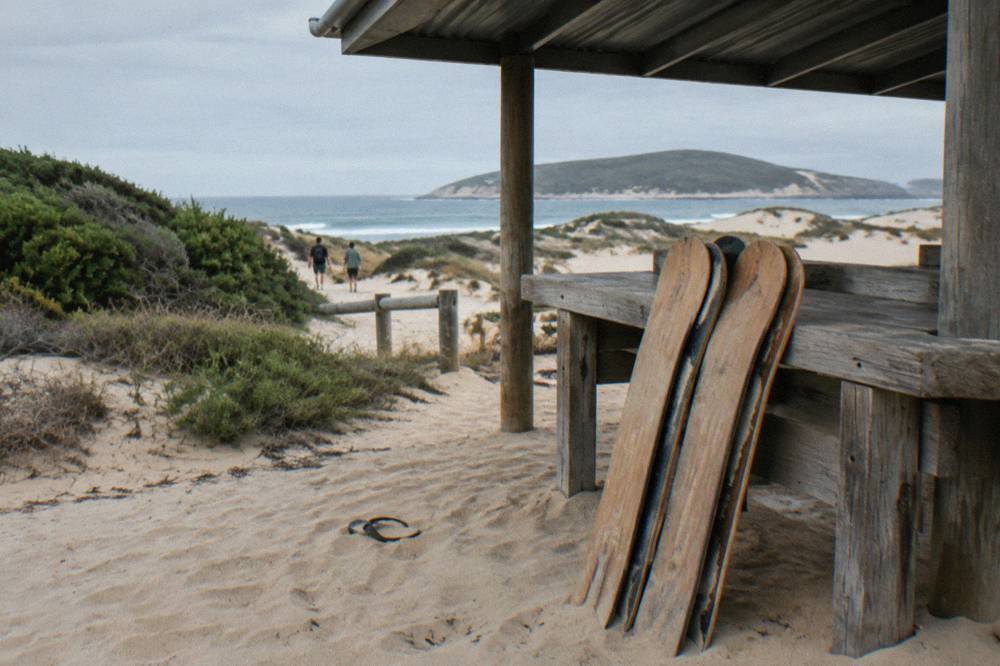
What no operator provides is clothing or footwear of any kind, and none of the listings mention a wetsuit, a glove or a padded short, which makes sense given the medium. If you are coming from a snowboarding background and own gear, leave all of it at home: snow boots fill with sand within minutes, snow gloves overheat immediately, and snowboard bindings do not exist here. The beginner sandboarding guide covers the technique side of that transition in more detail.
For families, the practical clothing note is that children's kit follows the same rules in miniature, with one addition: a full change of clothes in the car, including shoes, makes the drive back to Nelson Bay or Sydney far more pleasant. Sand travels home with every rider regardless of what they wore, but a sealed bag for the worn set keeps it out of the car seats.
Does The Season Change What You Should Wear?
Season changes the emphasis of the kit list, not the list itself: summer at Port Stephens is about heat, sun and hot sand, with mean January maximums of 28.3 degrees, while winter mornings drop to mean minimums of 6.5 to 8 degrees and reward a warm layer you can shed. Spring and autumn sit in between and are the most comfortable sessions of the year.
Winter riders should treat the first hour like a cold morning walk: a warm top, long trousers and socks for the climb, with the option to strip back as the sun climbs. The sand itself is never frozen or wet the way snow is, so the board behaves the same in July as in January, and the session still runs. The one genuinely seasonal clothing decision is wind, which is stronger and colder off the coast in the middle of the year, and a light windproof layer over a t-shirt handles it.
Summer riders flip the priorities entirely. The hottest part of the dune day is the early afternoon, when the sand surface is at its hottest underfoot and the reflected light is strongest, and the operators' later sessions are the ones where bare feet stop being comfortable. A morning session avoids both problems, and the last 3:30pm session at Port Stephens 4WD Tours is capped near an hour of sandboarding time, so an earlier arrival buys a longer ride in any case.
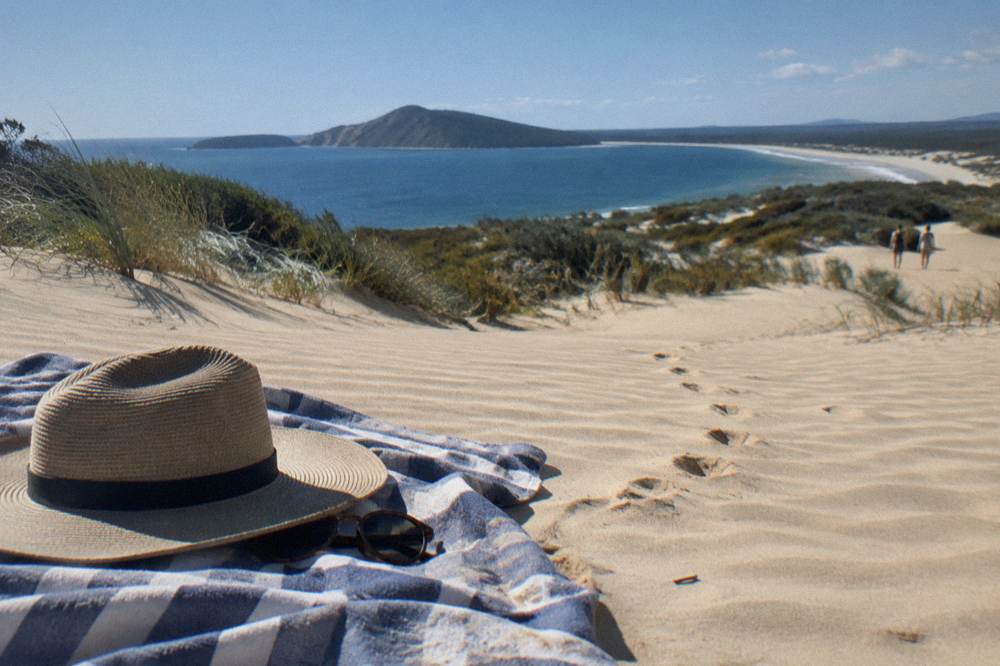
School holidays compress the whole calendar. NSW spring holidays run 28 September to 9 October 2026 and the summer break runs 18 December 2026 to 27 January 2027, and those windows bring the busiest dunes of the year, which mostly affects how closely you guard a bag of belongings rather than what you wear. The Worimi Conservation Lands are always open but may close for poor weather or fire danger, so a quick check of the NPWS alerts page before you dress for the day is part of the routine. The same page lists a beach unsafe for swimming notice for the Worimi beach, applying from 23 September 2026 to 28 April 2027.
The Birubi Beach 4WD tour with sandboarding, rated 4.8 from 127 reviews and from $39.55 per person, is the option that most rewards simple clothing choices, because its 75 minute format keeps you off the hill during the hottest and windiest parts of a long day. It is worth checking availability if the forecast looks fierce, since the format suits a mixed-weather day better than an unlimited session does.
Is There Anything You Should Not Bring To The Dunes?
Leave behind mesh shoes, loose hats, expensive loose sunglasses, drones and anything you cannot afford to lose in sand. Drones are prohibited on the Oakfield camel rides at neighbouring Birubi Point, and on the dunes the practical bans are simpler: no driving over the frontal dune, no glass, and no assumption that anything dropped on a slope will be found.
The drone point comes from the Oakfield Ranch FAQ, which prohibits them on its camel rides at Birubi Point, and the general principle carries to the dunes: the Worimi Conservation Lands are Aboriginal-owned, co-managed with NSW National Parks, and hold cultural sites, middens and burials that the land's rules protect. A camera phone in a sealed pocket takes better holiday photos than a drone does here anyway.
The sand-loss point deserves more respect than it usually gets. A dropped key, an unstrapped hat or an earring that comes off mid-slide can vanish into soft sand in seconds, and on a moving dune face it may genuinely not come back. The routine that works is minimal pockets: keys and phone in one sealed bag, a card rather than a full wallet, and nothing in shirt pockets at all, because shirt pockets empty themselves on the first steep run.
That minimalism also answers the "what bag do I bring" question. A small day pack that fits in the transfer vehicle is plenty, and it should hold only the water, the sunscreen, the towel and the sealed valuables bag. Larger bags stay in the car at Anna Bay, and every operator's meeting point, from the Sand Dune Safaris booth at the Anna Bay Lower Car Park to the 4WD Tours R Us base at 80 Gan Gan Road, is a short walk from parking.
Common Questions About Sandboarding Kit
What Should You Wear for Sandboarding?
Light, close-weave clothing that covers your shoulders and knees, sandals or bare feet, a hat with a strap, sunglasses and sunscreen, plus a water bottle. Port Stephens operators provide the boards, instruction and 4WD transfer, so no specialist gear is needed.
Do You Need Special Shoes for Sandboarding?
No. One Anna Bay operator, Port Stephens 4WD Tours, recommends riding barefoot, and the practical pattern is bare feet on the board with heel-strap sandals for walking. Mesh running shoes fill with sand quickly and are best left in the car.
Is It Too Hot to Sandboard in Summer?
Sessions still run in summer, when mean January maximums at Williamtown reach 28.3 degrees, but a morning slot avoids the hottest sand and strongest reflected light. Bring more water than you think you need, as there are no taps or facilities on the Worimi lands.
Should You Wear Long Pants or Shorts for Sandboarding?
Long pants or leggings are more comfortable for a full session because sand contacts your legs on every slide and climb. Shorts are fine for a short tour format, and many riders wear both, with the layer underneath taking the sand.
Do the Port Stephens Operators Provide Boards?
Yes. Every sandboarding listing on this site includes board hire and instruction, and Sand Dune Safaris is the only local operator offering both sit-down and stand-up boards. One listing, the Port Stephens 4WD Tours session, also includes water.
What Should You Leave Behind When Sandboarding?
Mesh shoes, loose hats, expensive unstrapped sunglasses and full wallets. Keep keys and phone in a sealed bag, since anything dropped on soft sand on a moving dune face can be very hard to find.
The kit answer at Stockton Bight is short because the operators carry the equipment load: board, instruction and transfer are in every listing, water is in one, and the rest is ordinary clothing chosen for sun and sand. Riders who plan around bare feet, covered knees and a sealed pocket for valuables arrive dressed as well as anyone can be for a hill of moving sand, and the homepage comparison on Port Stephens Sand Dune Tours lays out the full session lineup for anyone still choosing between the Anna Bay operators.